

Turn Eggs Into A Tasty Old-School Dessert With Just 3 Extra Ingredients
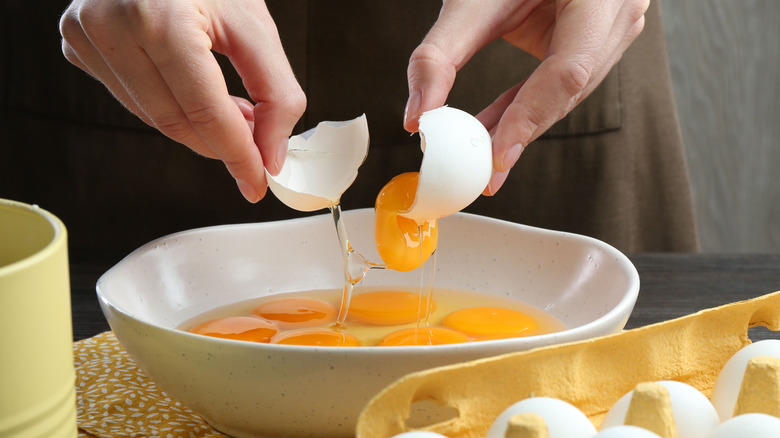
Even if your pantry and fridge are down to just basic staples, there's one dessert you can still throw together: custard. Besides eggs, you only need milk, sugar, and vanilla, plus maybe 5 or 10 minutes on the stove.
Custard is a seriously old-school dessert: The process of whisking eggs into milk and thickening it goes back to ancient Rome, where a similar egg-and-milk dish sweetened with honey appeared in a cookbook under the name "tiropatina." It's considered an ancestor of modern-day custard, and along the way, the dish became popular in England (by the Tudor period around the 16th century, court jesters would apparently even jump into huge bowls of it). In continental Europe, it was also popular in France as crème anglaise ("English cream"), a more liquid version of the dessert that's often poured over desserts or fruit.
As a simple dish, custard is pretty flexible: It can figure into baked goods like Portuguese pasteis de nata or various cakes. Even if you're not looking to make something elaborate, there are still some ways to shake it up. For example, the thickness can vary a lot depending on how many eggs you add and how long you cook it; more eggs will also make it richer. (You don't need thickeners like cornstarch, although some cooks suggest them to help prevent the milk from curdling.) But even with how simple it is to make, there are steps you can take to ensure the best results.
Tips for making and elevating custard
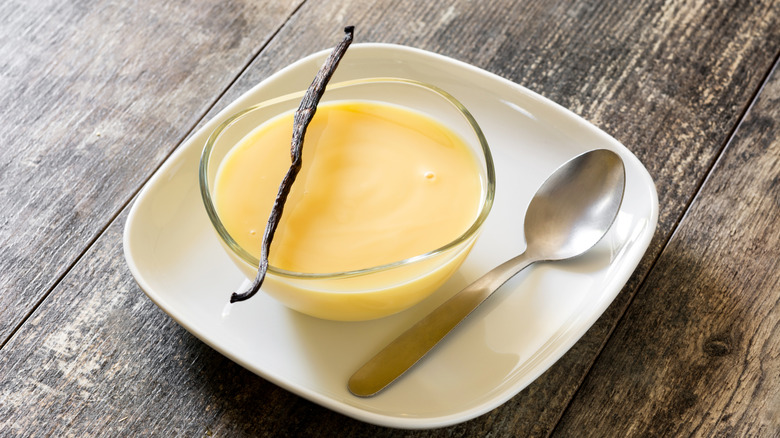
Making custard may be fairly straightforward, but it still demands your attention. Generally, you'll whisk egg yolks with sugar while warming up milk separately, then slowly pour the heated milk into the egg-sugar mix while whisking so it doesn't scramble. This all goes in a pot over low heat — don't try to speed up the process by making it hotter: Egg proteins start to set around 140 degrees Fahrenheit, so reaching that temperature too fast will net you unappealing, sweet scrambled eggs. Stir the mixture constantly until it's thick enough to coat the back of your stirring spoon. If you're worried about lumps, you can strain it through a sieve before serving.
From here, you can dive in and enjoy it warm on its own, but there's also no shortage of worthy additions. If you've got some berries in the fridge, you can pour it over a bowlful (this also works with chilled custard in summer). Warm custard also shines over cakes or crumbles, a classic English move. Of course, there's the classic English dessert of trifle, with custard, fruit, and wine-soaked sponge cake all layered together. You can also fancy up the custard itself by adding extras like citrus peel, cinnamon, or pumpkin spice mix to the milk to infuse it as it warms. Subbing in some cream in place of milk will add richness, and you can get extra decadent by adding a splash of brown liquor like rum or brandy. You can even take that custard, churn it like ice cream, and freeze it for a rich Wisconsin classic, frozen custard.