

Mexican Crema Vs Sour Cream: Is There Really A Difference?
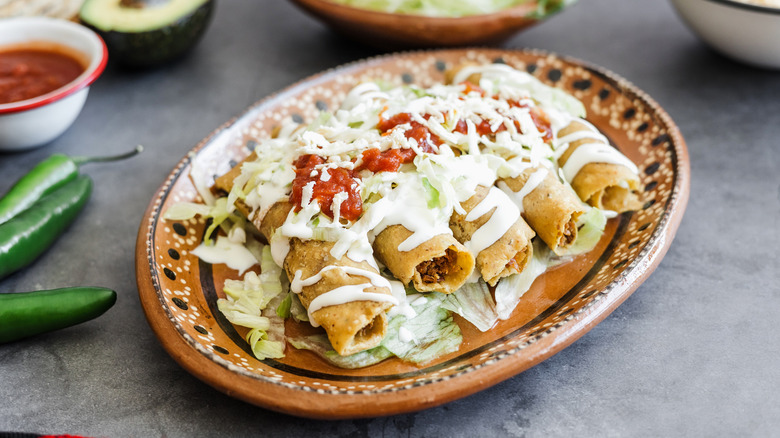
Have you ever gone to a traditional Mexican restaurant and tried to recreate that delicious topping on your burrito or tacos? You get home, pull out your store-bought sour cream, add it to your dish, but it's not the same. The one you tried at the restaurant was thin and drizzled lightly over your meal, and this one is more tart and thick, not quite the drizzle you were hoping for.
While both are classic cultured dairy products often used as a topping for dishes, their flavor and texture profiles are vastly different. Standard American sour cream delivers a thick texture with an acidic tang, whereas Mexican crema is noticeably richer in flavor, while being thin enough to pour.
The difference comes down to how each one is made, specifically the fat content and fermentation. Store-bought sour cream is made by introducing lactic acid bacteria to light cream, creating a firm set with roughly 18% to 20% butterfat. In contrast, traditional Mexican crema is typically made by souring heavy cream with cultured buttermilk, resulting in a luscious dairy staple with around 30% butterfat and lower acidity overall. Their production methods not only affect their flavor and texture, but also create distinct roles in the kitchen.
How to use Mexican crema and sour cream in the kitchen
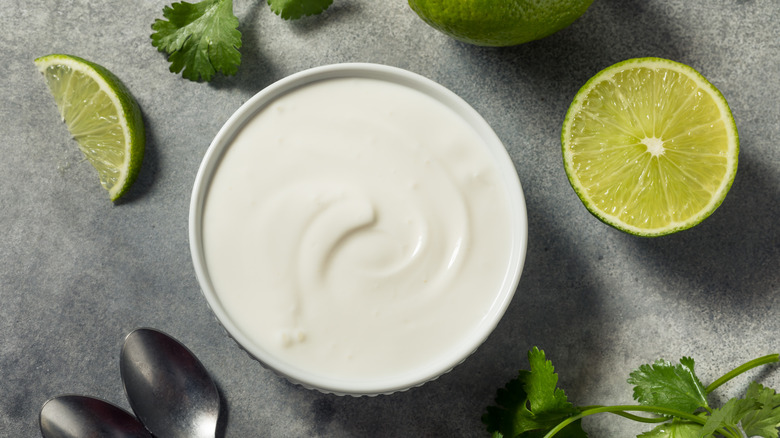
Considering their distinction in fat percentages, each cream behaves differently when exposed to heat. Sour cream's lower fat content will cause the cream to curdle or break if added directly into boiling liquids or a hot skillet. Adding crema to warm traditional Mexican dishes is common, but substituting it with sour cream can ruin the dish's texture when the heat causes it to curdle. The 30% butterfat in the Mexican crema allows it to blend seamlessly into warm soups and simmering sauces without separating, also creating a subtle neutralizer for spicy Mexican dishes.
The higher acidity in sour cream creates a firmer nature by causing proteins to coagulate, making it ideal for a finishing touch on baked potatoes, a rich base for classic dips, or extra moisture for baked goods, for example a pumpkin pie with sour cream. Meanwhile, the Mexican crema's fluidity makes for a perfect finish for classic Mexican dishes like chilaquiles, enchiladas, Mexican street corn, or tacos.
Sour cream is widely accessible and budget friendly, retailing for $2 to $3 for a 16-ounce tub at a standard grocery store. There is also the option of commercial containers labeled "Mexican crema" or "crema Mexicana," though you might run the risk of finding a thinned-out version of sour cream. Both sour cream and Mexican crema can be made at home by culturing cream overnight, so to obtain a more traditional result, a quick homemade version of crema may be the best way to go.