

Give Filet Mignon An Umami Overhaul With An Overlooked Japanese Seasoning
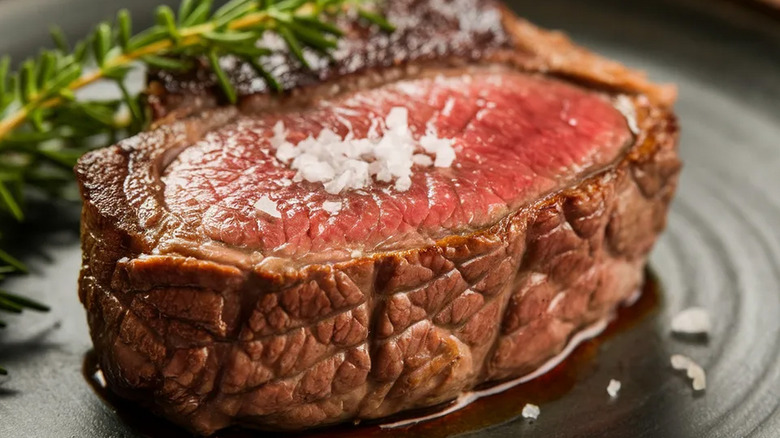
Oh the joy of digging into a perfectly seared, juicy, fork-tender filet mignon. The buttery, melt-in-your-mouth meat brings a smile to your lips and a sparkle to your eyes. Its a palate-pleasing masterpiece, indeed. But, it could be better! Sprinkling savory, salty, crunchy furikake on the warm, rested meat will kick up its fabulous flavors and amp up the meat's umami notes. Ooh, la, la!
Filet mignon is a luscious, lean cut of beef with little-to-no tough connective tissue. This scrumptious tenderloin comes from a non-weight bearing section of the cow's lower spine — in front of its hind legs — and has less natural umami than fattier cuts like ribeye, porterhouse, and brisket. In restaurants, chef's often cook filet mignon with a hard sear to create a golden-brown crust and pair it with umami-rich toppings like mushrooms, aged cheese, and miso butter to enhance its umami flavor. Adding furikake will do the same.
A blend of seaweed, sesame seeds, dried fish, salt, and other dried ingredients, furikake is a seasoning powerhouse that packs a punch. Literally translated as, "sprinkle over," this seasoning blend is eaten over rice to add texture and flavor, particularly umami. Furikake can contain dried eggs, fish, or meat, but the seaweed in this zippy blend also has naturally occurring glutamate, which is key to umami flavor. Meat has umami on its own, but furikake enhances that flavor and adds a satisfying crunch and a burst of added flavor from the salt.
When adding furikake to filet mignon, sear, roast or grill the meat and then let it rest. You don't want to add the furikake before cooking, as it will burn. Instead, while the steak is still warm, sprinkle or rub furikake on the top and sides and voilà! Its ready to serve.
Fun with furikake
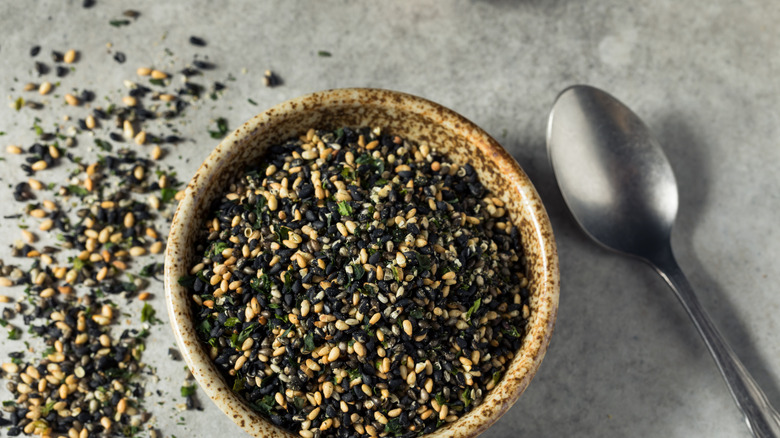
Furikake is a staple of Japanese cuisine. It can be sprinkled over rice, poke bowls, bento boxes, eggs, noodles, fish, veggies and more. The flavorful blend was brainchild of Japanese pharmacist Suekichi Yoshimaru from Kumamoto, who in the early 1900s created a calcium-rich powder from dried fish to supplement Japan's calcium-poor diet. To mask the stinky fish powder, he added roasted sesame seed, poppy seeds, and seaweed. As it gained popularity, the blend gained nicknames like "friend of rice" and "friend of the dining table."
When Japanese immigrants moved to Hawaii, they brought along their beloved furikake, and it eventually made its way to the U.S. mainland. Now, decades later, chefs have embraced the condiment's versatility and it has became a fusion food powerhouse in restaurants. You'll find furikake sprinkled atop fries, udon carbonara, salads, burgers and on all types of foods it wasn't original intended for. But this experimentation doesn't have to be confined to professional kitchens; you can lean into furikake's versatile nature at home too.
Furikake is not only great on all cuts of seared, grilled, and roasted meats, it will bring zing to grilled chicken, roasted pork, steamed fish, and veggies. But don't stop there. You can jazz up your fries, pep up your pasta, or or elevate hors d'oeuvres at your next cocktail party. Sprinkle furikake on smoked salmon canopies, blistered shishito peppers, cauliflower bites, or upgrade hummus. There are countless ingredients that can boost umami in a dish, but a quick sprinkle of furikake