

How The American Civil War Helped Create One Of Mumbai's Most Famous Street Foods
Mumbai, India, has a rich street food culture that includes the must-try sandwich vada pav with its fried potato patty, and the beloved pav bhaji, mashed vegetables in a tomato-based gravy that's served with pan-seared bread. If you noticed these dishes share a root word in their names, it comes from the kind of bread both dishes feature: a fluffy roll called pav or pao. While vada pav has only been around since the 1960s, pav bhaji dates back a hundred years earlier and came about, in a way, thanks to the U.S. Civil War.
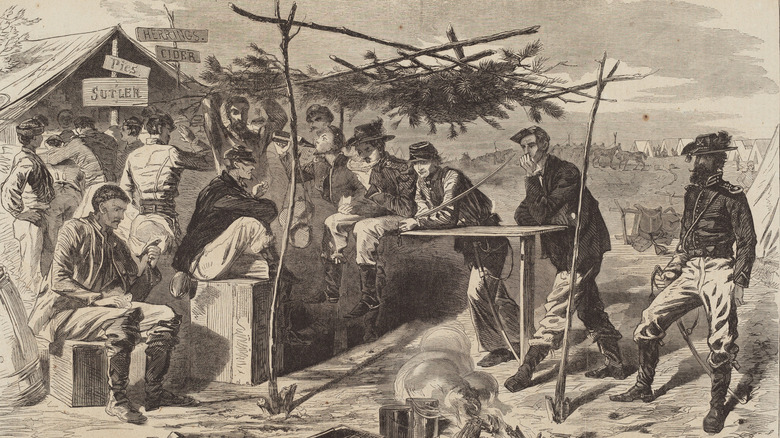
As part of the bloody and bitter war between the North and South from 1861 to 1865, the Union blockaded Confederate ports in part to prevent them from exporting cotton, the South's main crop, to international markets, especially to the British, which was a huge importer. As a result, Mumbai's cotton brokers and mill workers had to toil for long hours well into the night in order to meet Britain's demand for cotton. These various workers needed a quick, easy, and nourishing meal, and Mumbai's street food vendors came up with a new dish, pav bhaji, that did just that. Vendors used leftover vegetables and bread bought from Portuguese monks, instead of roti, a more common Indian flatbread made with finely ground flour.
What makes pav bhaji special
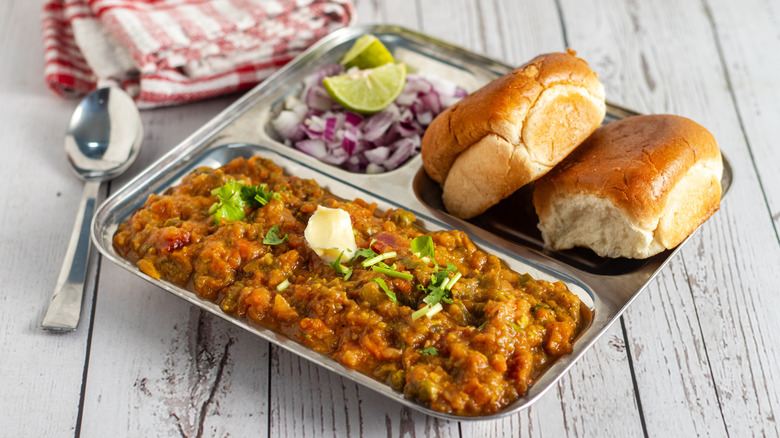
Beyond pav bhaji's unusual history, this dish has a lot of other things that make it special. Pav bhaji can be made with a variety of vegetables; ingredients are often based on seasonal availability, but it generally has potatoes or other starchy vegetables, along with ingredients like carrots, cauliflower, bell peppers, and peas that are mashed and cooked with tomatoes on a tava, also spelled tawa, which is a large flat griddle. Other variations can include ingredients as varied as cheese or bananas.
The dish has its own spice mix, called bhaji masala, which includes some key Indian spices like cumin and coriander, as well as black and green cardamom, cinnamon, cloves, and mango powder, among other ingredients. It's finished off with a large pat of butter and cilantro and served with a lemon wedge and chopped onions. The pav bread is similar to a soft dinner roll that's been seared in butter on the tava. Pav bhaji can be eaten in various ways, from dunking the bread and using it as a scoop to using the pav like a bun and stuffing the gravy inside to make a slider of sorts. Without the U.S. Civil War's strain on the international cotton market and the entrepreneurial spirit of Mumbai's street food vendors, this super popular Indian street food may have never come to be.