

The Meaty Vegetable You Should Be Marinating For 10X More Flavor
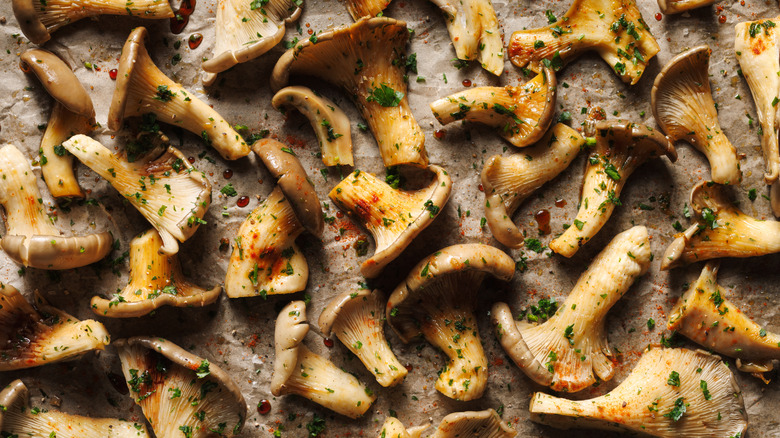
Generally, when we think about mushrooms, marinades are not the first thing that comes to mind, and for that reason we've all been missing out. Their rich, meaty, and chewy texture – a natural combination rare to find in other produce — works just as well whether they're used as a substitute for meat or as a tasty side or ingredient in another dish. When they are prepared correctly, a good marinade can make them 10 times tastier.
Mushrooms are around 90–95% water, are composed of tough chitin, and have small, pipe-like channels inside. These features give them a sponge-like structure that allows them to soak up a marinade's flavor. From large, hearty portobellos all the way to uniquely flat wood ears, they all are sponges to some extent by nature, although tough varieties such as reishi aren't typical choices for cooking.
Mushrooms can be marinated before cooking, or tossed in a flavorful marinade afterward instead. You can even marinate small white button mushrooms for several days in an acidic marinade and eat them uncooked (though we recommend cooking, as it enhances their umami flavor). This versatility makes marinating mushrooms worth adding to your culinary practices. The best marinade depends on the flavors you're looking for: From sweet, smoky soy-based blends, to tangy, herby vinaigrettes, or spicy chili oil mixtures, the different types of mushrooms can hold all of them. The key to locking in flavor and texture in marinated mushrooms lies in how you prep and cook them.
Prep your mushrooms for the best flavor and texture
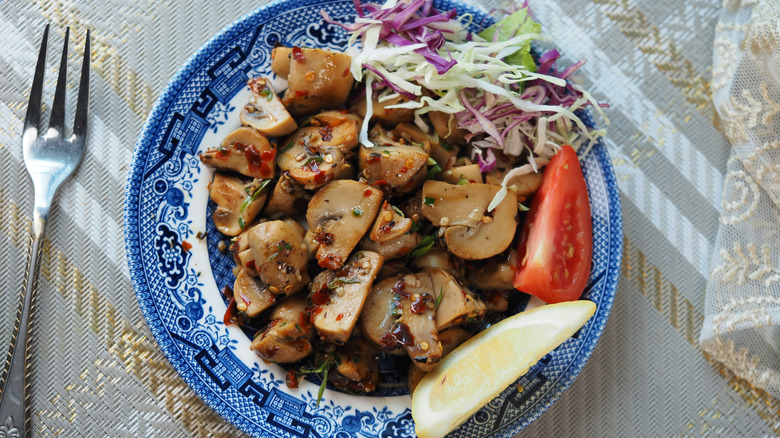
Before your fungi hit the marinade, proper prep is key. For standard culinary mushrooms like shiitake, portobello, cremini, or button, trim their stems, then rinse under cold water. Briefly soaking and rubbing crevices to dislodge dirt is fine, too. For king oyster mushrooms, recipes often call for slicing them into ¼-inch pieces after washing.
Marination time largely depends on the texture of the mushrooms you're using. Creminis and white buttons do best with a 30-minute to two-hour marinade, while more porous shiitakes don't need more than an hour. Portobello caps absorb plenty of flavor with a 30-minute marinade, too, though they're sturdy enough that a four-hour soak won't turn them mushy. Wood ears are a crunchy mushroom that, once rehydrated, can be left to marinate even overnight to fully absorb flavor.
To cook your mushrooms properly, don't overcrowd your hot pan when searing, and ensure their liquid evaporates before browning to prevent sogginess. This is especially important for pre-marinated mushrooms, whose extra moisture can cause them to steam instead of sear. If you're marinating after the cooking has been done, cooking that natural water out first empties their internal sponge. You can then toss your mushrooms in your marinade while they're still hot, so they instantly soak up the flavor.
Serve your balsamic-brushed portobello caps in burgers, or grill them up for a hearty, plant-based steak served over a bed of mashed potatoes. Scoop buttery, garlicky button or cremini mushrooms onto a slice of sourdough for breakfast, while gochujang king oysters work well over rice or noodles for an Asian dinner. The options are nearly endless — and super flavorful.