

This Functioning '50s Stove Is So Advanced, You'd Think It Was From The Future
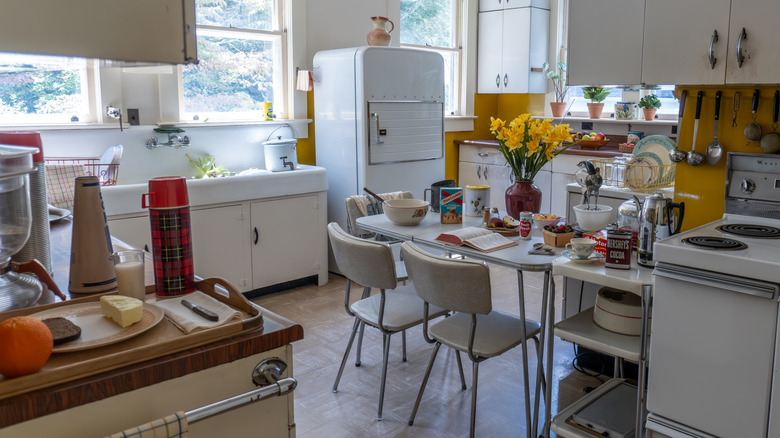
Today's ovens alert you when your roast is ready and allow you to control the burners from your phone, even if you're out of the house. And yet, these appliances look outdated compared to the futuristic functions of Chambers stoves. These 1950s-era titans of the kitchen came equipped with a trademarked ThermoOven and ThermoWell, which enabled you to heat up the stove for a period of time before turning it off altogether. The rock-wool insulation and cast iron interior trapped the heat inside so it continued cooking the contents of the oven or the pot resting inside the top well (similar to the inspiration for the electric slow cooker).
Chambers stoves also often included a griddle on the top surface, which flipped open and was lit from below, serving as a broiler for items placed in a pan below the same flame. Imagine making eggs and toast on the griddle while bacon cooked to a perfect crisp directly below it. This is how families aspired to cook in the post-Depression era leading all the way up to the '60s. But Chambers stoves were costly to manufacture and even costlier to ship, because each appliance weighed hundreds of pounds. Manufacturers like Frigidaire shifted focus to lightweight ranges that didn't have the same functions but looked modern and gave you what you needed — burners and an oven — at a more affordable price.
What it's like to live with a Chambers stove
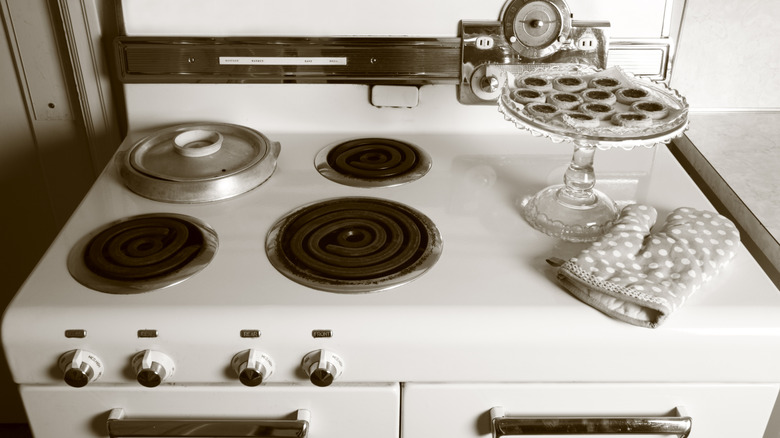
Chambers stoves were (and, in a way, still are) the pinnacle of quality, status, and luxury. The stoves were expensive when new and have only gone up in price. You may be able to find "as-is" models at estate sales or in classifieds, with prices ranging between $400 to $2,000. Or you can turn to specialty vintage appliance shops that restore these behemoths and resell them for $6,000 or more.
But the cost of ownership doesn't end when you bring it home. Beyond making a 400-pound stovefit within a modern kitchen setup, you must also ensure your kitchen floor can actually handle that weight. If it doesn't, a subfloor reinforcement project will be necessary. Also, replacement parts are difficult to find, since the company and brand no longer exist. And finally, in today's climate, having a stove that collects heat for a long period of time during hot summer nights can be both problematic and pricey.
Visit the Consumer Electronics Show, and brands like LG and Samsung will draw you into model kitchens of the future with stoves that regulate heat in real time and monitor your food. But all these stoves require you to use electricity nonstop to run the electronic components, as well as gas (in the case of gas ranges), from the start to end of cooking any meal. In an era of appliances made to be upgraded every five to 10 years while maintaining constant connection to the devices in our pockets, the Chambers stove remains an appliance ahead of its time and built to age with a home, rather than end up in a landfill.