

Soaking Food Storage Containers In Vinegar — What It's For And Why It's Recommended?
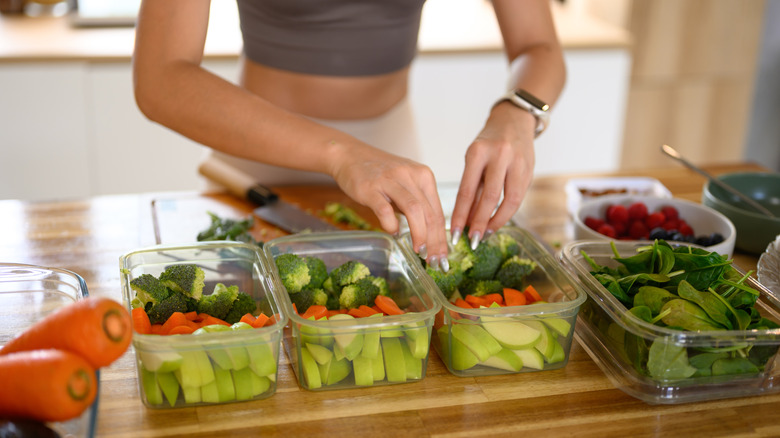
Getting your kitchen sparkly clean doesn't have to be complicated. White vinegar has lots of practical uses for getting your kitchen fresh and spotless. Though it's not technically a disinfectant and is less effective than commercial antimicrobial cleansers in terms of killing germs, it's fantastic at dissolving grease, removing grime, and addressing stains. In fact, keeping a cup of white vinegar on your counter helps neutralize odors, something invaluable when it comes to kitchens, which are natural producers of all kinds of smells, many of which don't mix.
These properties are particularly useful when cleaning plastic food storage containers. Provided there are no signs it's time to throw your plastic containers away, there's no reason to discard them just because they're oily, smelly, or stained. Instead, try soaking them in a 1:1 solution of water and white vinegar to neutralize odors, loosen stains, and get rid of that weird, perpetual greasy film for good. You can also use this technique on stinky glass containers, but avoid soaking metal containers in vinegar; as an acid, it may corrode your container, or ruin the finish on stainless steel.
The process is fairly straightforward. Simply fill a clean plastic tub (this may corrode stainless steel sinks) with equal parts warm water and white vinegar, then gently submerge your containers in the mixture. Light staining and a musty smell may require only 30 minutes in the vinegar bath, but containers with severe stains and smells can soak up to overnight.
Do's and don'ts of using vinegar to clean food containers
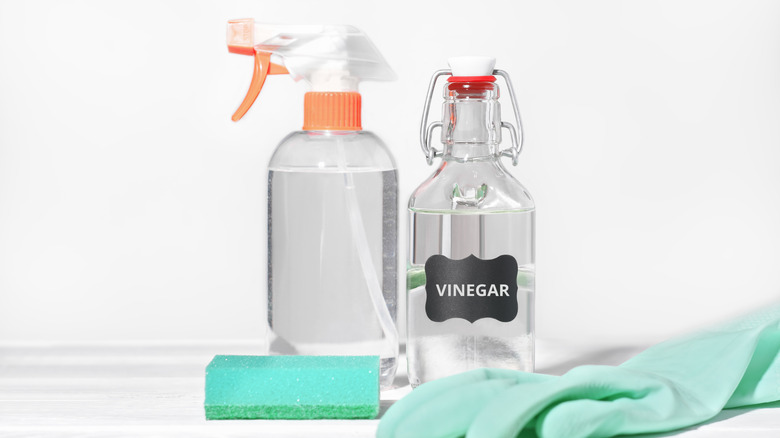
After soaking, rinse your containers and let them air dry completely. This step is important, because lingering moisture can foster bacteria and mold growth. Remember, vinegar isn't great at killing germs, so your containers may look squeaky clean, but they're not disinfected unless you washed them with an antibacterial dish soap before or after the vinegar soak. In fact, it's a good idea to give them a quick handwash to eradicate any lingering germs before air drying, just to be sure your efforts don't go to waste.
If you notice some particularly stubborn stains that persist, it's safe to use baking soda as a soft scrub on both plastic and glass. Simply make a loose paste of baking soda and water (don't use vinegar, which makes the baking soda fizz) and smear it on the stain, letting it sit for a few minutes if the stain is especially heavy. Then, gently scrub the area with a clean towel or dish cloth. Avoid using abrasive scrubber pads that could damage the surface, or sponges that may counterproductively transfer odors or germs onto your containers. Once clean, stain-free, and dry, store your containers without the lids on to prevent the air inside them from becoming stale and developing an odor. If you have enough space, try storing your containers in a plate rack inside your cabinets.