

The Boomer-Beloved Frozen Staple That's Slowly Disappearing From Grocery Store Shelves

Food trends constantly come and go, so it's no surprise when once-hot items like cronuts and cupcakes fade away in place of cold foam, fibermaxxing, or any of the other big trends of 2026. But sometimes it's not just trendy foods that fall by the wayside. Even products that were considered pantry staples at one point can become obsolete thanks to changing tastes, shifting habits, or even modern machinery. Such is the sad case of frozen cans of juice concentrate. Younger generations may not remember, but lots of children of the '50s and '60s grew up drinking juice made by mixing frozen concentrate with water. Those cardboard cans were one of the many ingredients that used to dominate boomers' kitchens, ready to deliver OJ at a moment's notice. Today, however, companies like Minute Maid that produced frozen juice concentrates have discontinued them.
So what happened? People didn't stop drinking orange juice or lemonade, of course. Instead, juice drinkers simply decided over time that they preferred buying it in liquid form as it became more available, because it was easier to open a container than do all that measuring and mixing. The death of frozen concentrate was also due to a targeted marketing shift from brands such as Tropicana, who promoted slogans like "not from concentrate" to persuade people to buy its pasteurized fresh juice in the late 1980s and throughout the 1990s.
We don't need juice concentrate anymore
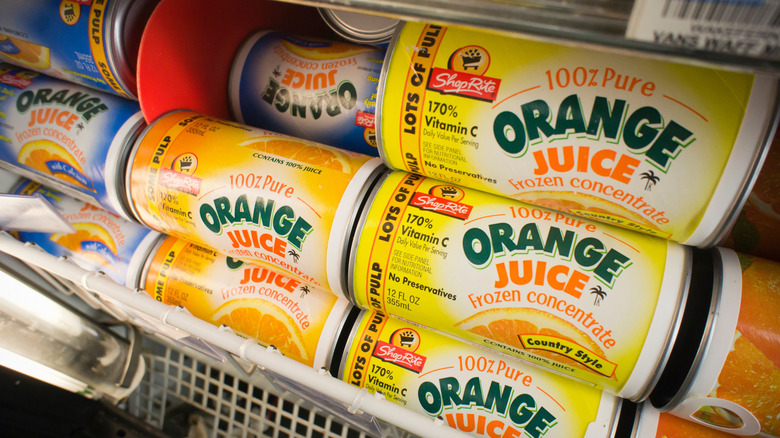
To understand the downfall of frozen concentrated fruit juice, it helps to know how it came about in the first place. When it was invented in the early 1940s, bottled orange juice was not a practical staple in the United States. Refrigerated trucks and home refrigerators were relatively new products at the time, and interstate highways wouldn't come about until the 1950s, so transporting fresh juice across the country without spoilage or fermentation was a challenge. Frozen juice also didn't work because it loses color and flavor when it's thawed.
It wasn't until WWII that scientists developed a better solution. When the U.S. government needed a way to provide troops with a source of vitamin C, researchers found a method to remove the liquid from juice at a low temperature, then add a small amount of fresh juice back to the concentrate to give it the right flavor. The result was a convenient, shelf-stable frozen concentrate that lasted longer than fresh juice and could easily be reconstituted at home with a few cups of water.
Fast forward to today, and the decline in frozen concentrate makes much more sense. Modern refrigeration, transportation, and year-round access to citrus fruits makes fresh-squeezed juice easy to find at any grocery store, so there's simply no need for the frozen stuff. If you still love concentrate, however, don't worry because lots of grocery stores still sell their own private-label versions of the tubes, though for how long is anyone's guess.