

Not Peas Or Beans — This $1 Canned Vegetable Packs Loads Of Fiber And Protein
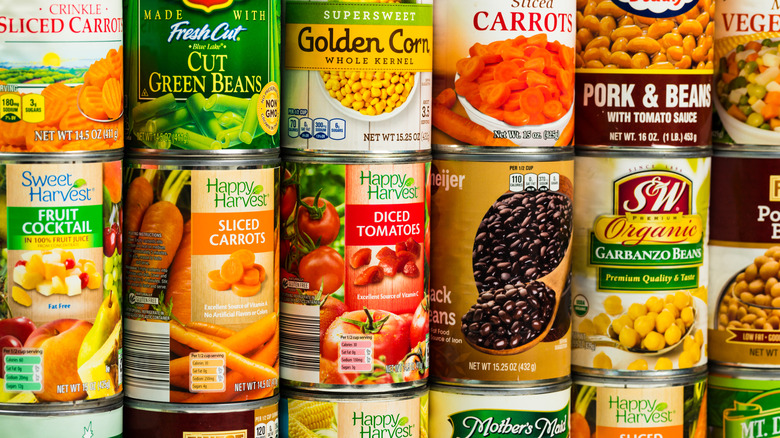
Super convenient, packed with nutrients, and incredibly delicious, canned beans and peas can easily turn a simple meal into a satisfying dish. They're also surprisingly filling, and since they're precooked, you can toss them into fresh salads, or even use them to make hearty soups, stews, and casseroles, without actually spending hours in the kitchen. All it takes is your favorite spices, herbs, and some sort of allium to make canned beans taste homemade. However, there's one more legume that also deserves a spot in your pantry, and that's canned lentils.
Canned lentils are not only a great source of fiber, but also the budget-friendly protein you should be stocking. For instance, a 15-ounce can of USDA-certified Great Value Organic Lentils costs around $1 at Walmart. According to the USDA, 3.5 ounces (which is about 100 grams) of dry lentils contain 23.6 grams of protein, and around 8 grams of fiber. The same amount of cooked lentils provides around 9 grams of protein, as they absorb water and nearly triple in weight during the cooking process.
On top of that, that exact serving would provide about 17% of the recommended daily value of iron. Unopened canned lentils can stay good for over three years when stored properly. Just keep them in a cool, dark, and dry place, such as your pantry or your cupboard. That way, whenever you're short on time, you'll always have something tasty within reach. Of course, for this it would be helpful to know a few easy recipes that can bring out their complex nutty and earthy flavors.
Check the label before picking up a can of lentils at the store
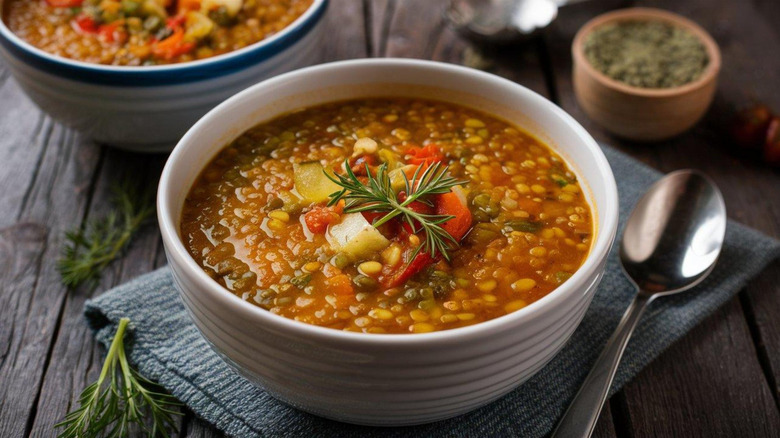
Before just picking up the first can of lentils that catches your eye, make sure to take a closer look at its label. Whenever possible, opt for low-sodium or no-salt-added options to keep your sodium intake in check. However, if your canned lentils do contain added salt, drain and rinse them under running water. This simple trick will remove up to 60% of the sodium they contain.
Another important thing to check is the lentil variety (whether brown, green, red, yellow, or black). That's because every variety has its own distinct texture and works best in certain dishes. With that in mind, green and brown lentils are firmer, meaning they hold their shape well. That's why they're commonly used in salads. Tiny, round black lentils (better known as beluga lentils) also retain their form after cooking. This makes them stand out in tacos and burrito bowls. Meanwhile, red lentils, especially split varieties, soften during cooking, which is why they're great for curries and purees.
Once you've found a canned lentil variety that works best for you, don't be afraid to experiment with different recipes and flavors. Lentils are, as a matter of fact, the canned vegetarian staple that's a perfect topping on baked potatoes. You could also shape them into vegetarian patties for a delicious homemade burger, or perhaps even blend them into a creamy, delicious dip the next time you have friends over. They're so versatile, you'll never run out of delicious ideas for how to use them.