

If You Want To Ensure Your Salmon Is Wild Caught, Always Buy This Kind
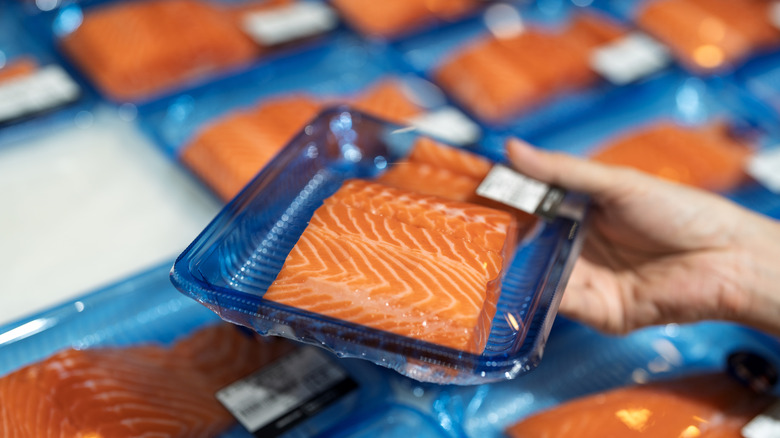
Whether at a fish market or grocery store, picking out salmon is not the easiest decision to make. You have so many different labels to consider, from organic to sustainably sourced as well as the more confusing ocean-raised. Thankfully, one easy way to avoid all the confusing labels while still ensuring your fish is wild caught is to buy salmon from Alaska. That's because the state of Alaska outlawed all finfish farming in an effort to support its natural wildlife and prevent the diseases that are common in farm populations.
Alaskan salmon are highly regarded for their flavor, and it's been this way for a long time. The state long ago understood overfishing would create a problem, but rather than turn to farms it focused on ways of supplying fish that would allow them to continue to reproduce. Alaska is considered the model for sustainable commercial fishing in the United States, with fisheries adhering to strict rules that limit the number of salmon that can be gathered based on the existing population. This is known as a supply-driven food system, and it's one of the best ways to ensure there's a healthy supply every year because the practice allows enough adult salmon to swim upstream through Alaskan rivers to spawn for the next year.
Why wild caught matters
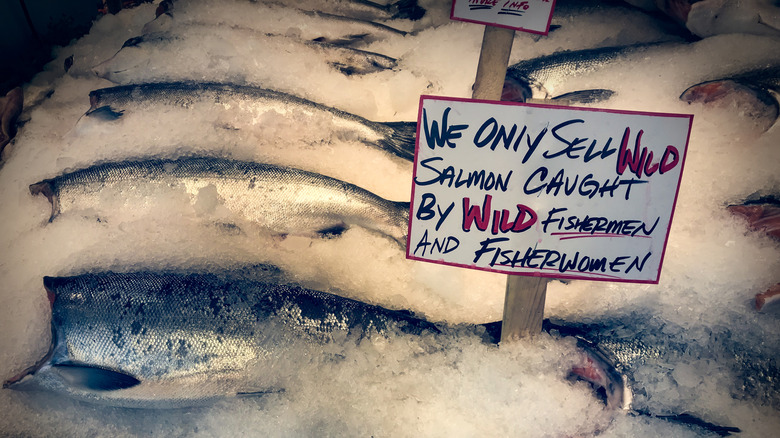
There are key differences between farm-raised and wild-caught salmon. One major difference is fat content. Salmon in farms live in a contained area with little space to move and behave naturally. They live relatively sedentary lifestyles and collect more fat because of it, which you can see in the form of white lines that run through the flesh of the fillets you pick up. Meanwhile, Alaskan salmon fight currents and stay in constant motion looking for food and avoiding predators. When placed side by side, the difference is easy to spot, as the fatty lines on wild Alaskan fillets are thinner than the aquaculture equivalent.
Another way to differentiate wild from captive fish is by its color. Wild Alaskan salmon forage for their food, and their diet gives their flesh a more vibrant color ranging from red to orange to pink. Aquaculture salmon live primarily on a diet of plant-based feed, which is why their flesh tends to have a more muted pink color. This color is sometimes artificially boosted by adding color additives to the feed. As we mentioned, fish from farms are also more susceptible to disease outbreaks due to their close proximity to each other so their diet often includes antibiotics. Thanks to Alaska prioritizing sustainable fishing and banning fish farms, you can rest assured that every Alaskan salmon you find at the grocery store or fish market is lean, ocean-fed, and dye-free.