

The No-Cook Swap That Transforms Pasta With Bold, Fresh Flavor
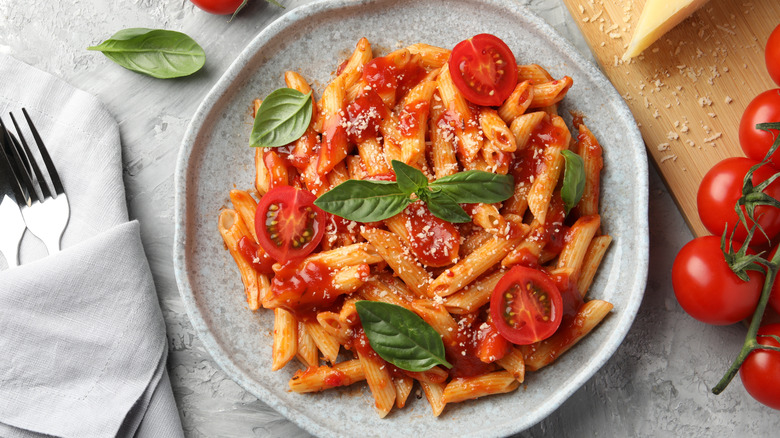
The best thing about pasta is the range of ways it can be cooked and served to suit nearly anyone's taste. You might never tire of eating it, but sometimes you need something besides the usual cream or marinara sauces. A no-cook tomato sauce offers a pleasant change of pace with its bright, acidic flavor, preserving the tang that can be lost to sweetness when cooking tomatoes. Swap it in for any recipe that uses homemade or jarred cooked tomato sauce and enjoy its unforgettable zing.
No-cook tomato sauce consists of ripe or overripe tomatoes — preferably any variety that's tender and juicy, such as beefsteak — with the seeds and core removed to reduce bitterness. Garlic, fresh basil, salt, and olive oil are the basic components. Various recipes add chile flakes, sugar, and an acid, such as lemon juice or vinegar. Once the ingredients are combined, the sauce sits at room temperature for anywhere from 10 minutes to several hours to let the flavors marinate. Although this recipe doesn't involve cooking, the sauce takes on a subdued warmth from the freshly boiled pasta.
No-cook tomato sauce takes its cues from the Italian staple pasta alla checca, which marries a colorful range of tomato varieties with onions, basil, and olive oil. It's a popular summer food in Italy, giving the stove a break when the outdoor temperatures start soaring. This no-cook sauce is one of many excellent dishes that bring the taste of Italy to your kitchen.
Getting the best flavor and texture from no-cook pasta sauce
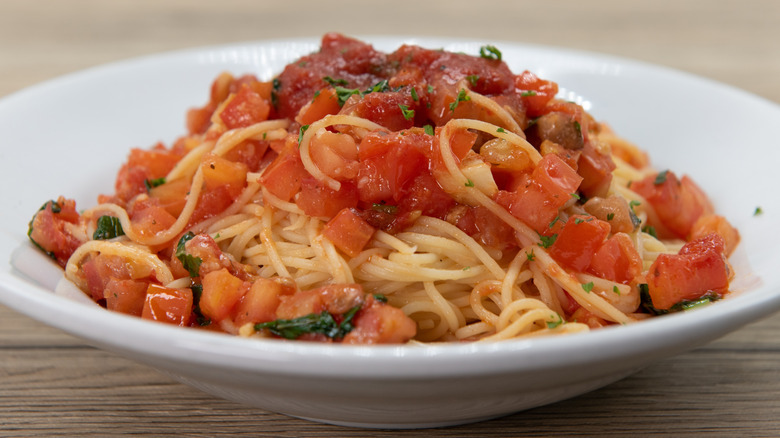
Raw tomato sauce is best made during tomato season, when you have access to the freshest, most flavorful options. During the offseason, you run the risk of watery, bland tomatoes. Because this sauce isn't thick, you want to avoid introducing extra water. If you can't wait until warm weather comes around to try this dish, make it with the only tomatoes you should buy during winter: small varieties, such as cherry and grape.
Long, thin pasta noodles, such as spaghetti, capellini, and linguine, are typical of this dish, but you can use any shape you prefer. As expected of a pasta recipe, the noodles should be boiled until al dente. Overcooked pasta can become mushy when tossed with sauce, but an al dente texture holds up better in liquid. Soggy pasta is less of an issue with a thinner sauce like this, but the pasta still soaks up the tomatoes' moisture.
For a richer, more complex flavor, add Parmigiano-Reggiano or Grana Padano to the sauce before tossing it with the pasta, or sprinkle it on top. Mixing the cheese and tomato sauce before adding the pasta lets the flavors meld thoroughly. The next time you need food ideas when it's too hot to cook, put this recipe at the top of your list. Enjoy its simple preparation that yields a boldly delicious meal.