

Sirloin And Picanha Steak Come From The Same Cut — What's The Difference And Which Is Cheaper?
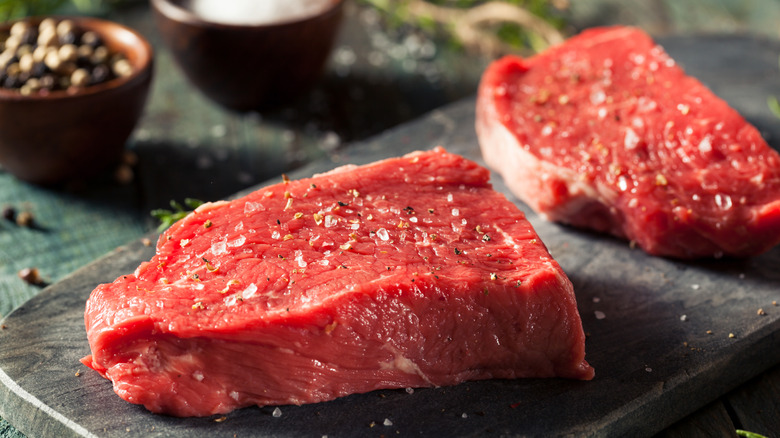
Between sirloin and picanha steaks, sirloin is probably more familiar to many Americans, as a cut that's lean, flavorful, and not too pricey, although those who have visited Brazilian-style steakhouses have probably encountered picanha. But even they may not have realized that there's some pretty substantial overlap between the two — although the two cuts aren't the same.
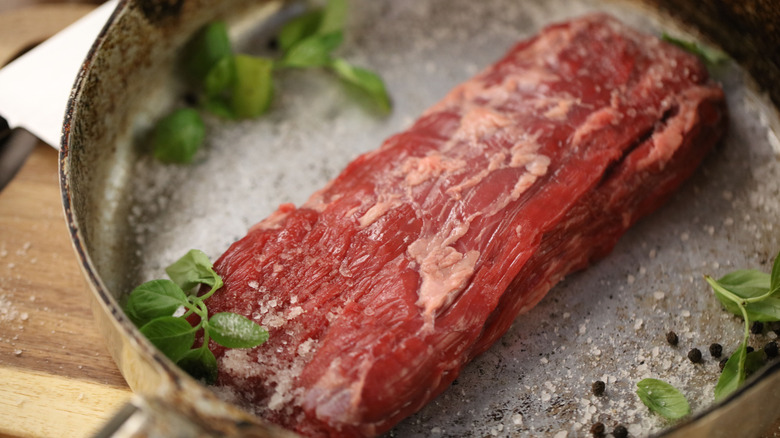
First, some clarification. Although sirloin comes from the rear hindquarters of the cow, there are two main sirloin cuts to know about: top and bottom sirloin. The top sirloin (pictured above) is the one that's fairly similar to picanha, while the bottom sirloin is a whole other cut that's sometimes also divided further into some other cuts like the bavette (pictured below). Bottom sirloin is the tougher of the two since it comes from a spot closer to the legs, so it gets more of a workout.
With that out of the way, one big thing to know is that top sirloin and picanha are from exactly the same muscle. However, the way they're cut means that you're not quite getting the same thing if you order both, and the main difference comes down to a question of fat.
Sirloin, two ways
Since it's more familiar, let's start with sirloin. As its name suggests, top sirloin comes from the upper part of the cow's hindquarters (so, up top on its back). It's really quite a lean steak: For 3 ounces of meat, you'll get less than 5 grams of fat. Without much fat to keep it juicy, it's not a steak you'll want to overcook, so a go-to method is to grill or sear it on high heat and definitely don't push it past medium unless you like your beef dry and chewy. (Be sure to let it rest a few minutes once it's off the grill). You can find it for $10 to $15 per pound, a good chunk cheaper than options like strip or ribeye, which will be closer to $20.
Further down towards the legs are the bottom sirloin cuts, and there are three of them: tri-tip, ball tip (or petite sirloin) and bavette (or flap). Although bottom sirloin is overall tougher, the tri-tip is somewhat of an exception: It can be grilled or seared, but you'll still want to slice it across the grain for tenderness. The other two cuts are both lean and somewhat tougher — they'll generally do best when marinated to tenderize the meat, or perhaps sliced thinly for a dish like fajitas. Expect to find them for cheaper than top sirloin, maybe under $10 per pound if you're lucky. What unites these cuts is that they're not similar to picanha in the way sirloin is.
Picanha: top sirloin with an added extra
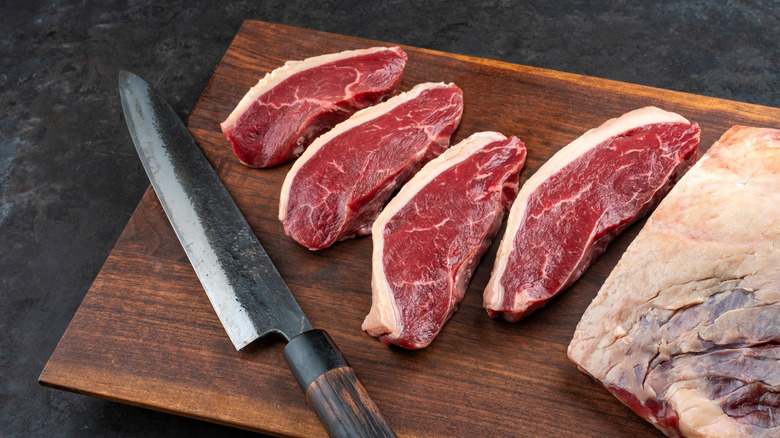
As mentioned, picanha (pictured above) is the same muscle as top sirloin, but you'll notice that it looks different. That's because it keeps the muscle's fat cap (as well as the membrane that separates it from the meat), whereas a top sirloin steak served in the United States will usually have that layer of fat cut off. It may also be sold under the names top sirloin cap or coulotte.
The idea is that as the steak cooks, the fat cap slowly renders and bastes the steak, giving it flavor that would usually come from marbling (the streaks of fat within the meat; top sirloin is light on this). Of course, if you want to get that basting action, you'll need to cook picanha the right way, and just leaning on a quick, fast sear as with top sirloin wouldn't be ideal. In Brazilian cooking (where picanha is a classic), a go-to method is to curl the cut up in a C-shape and skewer it: It's then cooked rotisserie-style, rotated over a fire, so the fat drips into the meat. Alternatively, indirect heat works well, for example, roasted in the oven or with indirect grill heat (so, the "cool" side of a grill, without direct flames).
Picanha is typically pricier than sirloin cuts: It's not so common and therefore arguably commands specialty pricing (you may have to venture to a butcher shop to get it, not the supermarket) — $18-ish per pound (and it may come in a large 2- to 3-pound piece, too).