

If Your Pot Roast Is Missing Robust Flavor, Add A Few Splashes Of This Classic Sauce
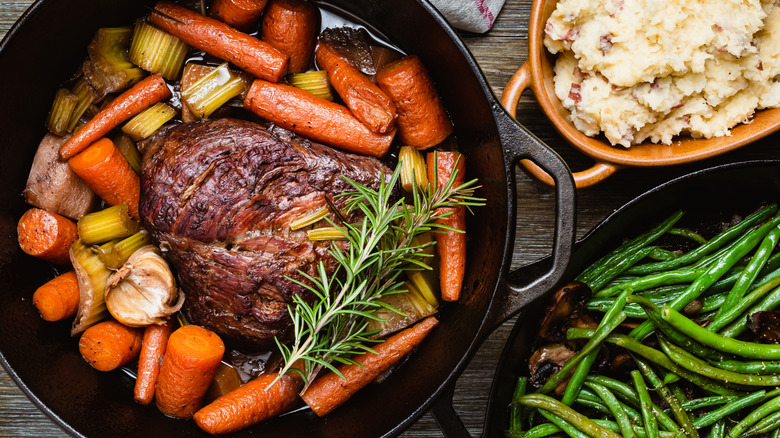
There is little worse than shopping for the perfect hunk of pot roast chuck, dressing it up with a dry rub, faithfully browning it on the stovetop to develop plenty of flavorful color, and braising it in your carefully considered liquid for hours in the oven or slow cooker, only to have it come out tasting gray. Plenty of otherwise accomplished home chefs know the feeling. One might apply plenty of the seasonings that make a pot roast great and still end up with a bland slab of serviceable-at-best beef. When a future pot roast opportunity rolls round, a bit of Worcestershire sauce is just the thing to pep it up. You can even add some splashes to your existing favorite pot roast recipe, absent a ton of other tinkering.
Worcestershire sauce is a fermented liquid that packs a lot of umami quality into a relatively scant volume. Even just a drop on the tongue saturates the palate with savory richness, thanks largely to the naturally occurring (and thus naturally flavor enhancing) monosodium glutamate in a typical Worcestershire sauce's anchovies. A standard bottle's onion, garlic, cloves, slight sweeteners, and mild chiles are tops for a pot roast, too. Worcestershire sauce makes everything else it touches more robust, so a mere tablespoon or two stirred in with your usual braising agent helps enhance all the flavors you may have already thought you perfected. You just need to keep the timing right.
Adding Worcestershire sauce to pot roast for umami success
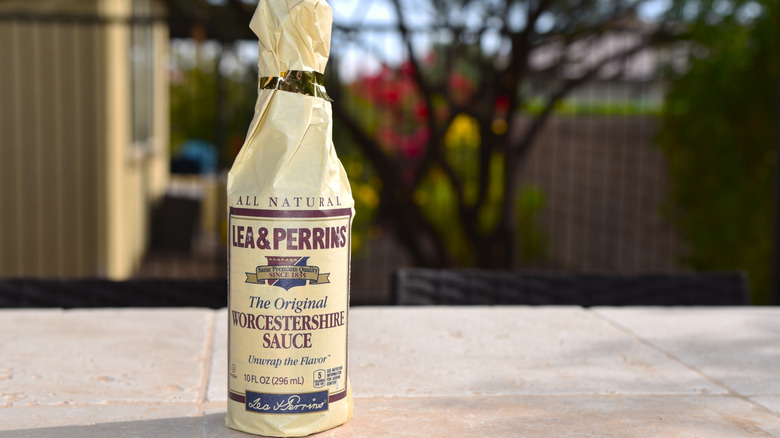
Depending on how bland your last pot roast turned out, you may be tempted to layer this one's flavors. However, the best time for your Worcestershire sauce upgrade is after you brown the beef. The absence of moisture is what helps enable the Maillard reaction, so adding wet Worcestershire sauce only gets in the way of browning, and Worcestershire's sugars are likely to burn in any case.
Instead, adding Worcestershire sauce to the broth, stock, wine, beer, or combined cooking liquid thereof you're braising the beef in is the best way to let it distribute throughout the pot. This affords the longest amount of time that the Worcestershire sauce can make contact with the meat for maximum effect. Once the pot roast is done, it won't taste fishy, or even considerably more allium-forward than usual, but it should have that coveted additional savory quality that makes for a more substantial, satisfying bite — and all you had to do was unscrew a bottle.