

Not Grilled, Baked, Or Smoked: Pork Ribs Fall Apart With One Hands-Off Method
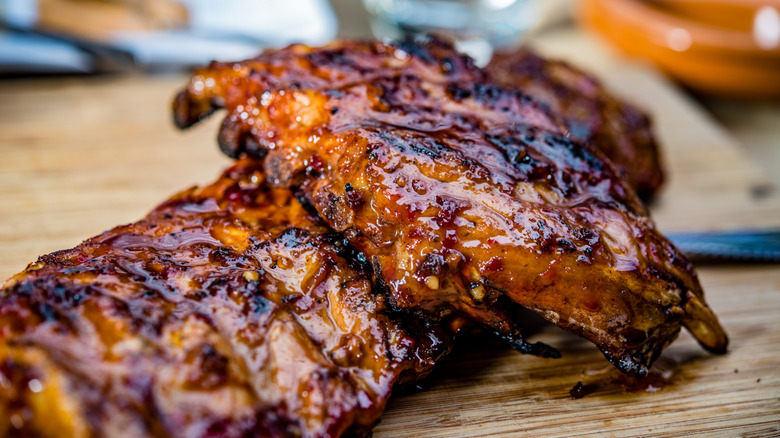
Pork ribs, when cooked low and slow for a long time, are one of the most delectable meat-treats at any barbecue or dinner table. If you have a smoker and eight or 10 hours to kill, you'll get outstanding ribs. Or you could spend a few hours basting them in an oven or over a hot grill. Each technique requires attention throughout the cooking process, and you risk ending up with dry, tough meat. But another, more hands-off method — braising — makes juicy, fall-off-the-bone meat packed with flavor, with minimal involvement on your end while they cook.
Braising is a means of slow-cooking meat with trapped moisture. Not quite boiling, not quite roasting, braised meats are often first browned in a pan, then sit for hours in a Dutch oven, heavy pot, or deep-sided roasting pan with just enough liquid to almost cover them. It's a great way to tenderize tougher cuts of meat, like pork ribs. The method infuses them with rich flavors while breaking down tough connective tissues and melting chewy collagen inside the muscle fibers. Though short ribs and baby backs are commonly braised, you're free to use this technique with any type of pork rib.
On its own, braising doesn't deliver the crispy exteriors you'd get from dry roasting or grilling, but there's no denying the results are super tender and full of flavor. To add color or char, you can briefly fry them ahead of braising, broil them at the end for 10 or 15 minutes, or pop them on the grill for a few minutes at the end. Other than that, it's a matter of setting the meat in the pot with your desired spices, ingredients, and braising liquid, covering it, and waiting for two or three hours until it's time to eat.
Time and moisture are key for fall-off-the-bone pork ribs
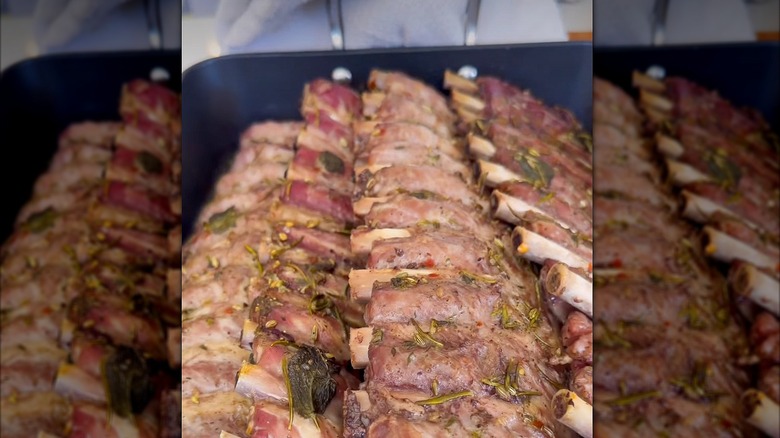
No matter which recipe you use, there are few common steps when braising pork ribs. Most recipes call for removing the tough silver membrane or peritoneum, though there are ways to make the membrane easier to eat. Second, ribs generally need a day or two of prep, usually seasoning them with salt and spices or soaking them in a brine, letting them marinate in the refrigerator. Some Asian-influenced dishes blanch the meat in water instead. And while browning ribs in a pan or on the grill adds texture and color, this dry-cooking step can be optional, depending on your time, resources, and recipe. Finally, there are two methods of braising; here you want some variation on braisage, or long braising, to fully break down and tenderize the meat.
Once you've prepped and browned your meat and sautéed any veggies, place it in a deep, thick-walled dish that can be set on a stovetop or in the oven. The goal here is to trap the moisture, letting it do the work for you. Add enough liquid so they're nearly submerged. Most recipes mix spices into the braising liquid — stock, water, wine, beer — but you can also season the exposed ribs.
Generally, braising involves covering the dish and cooking for two or three hours at around 325 or 350 degrees Fahrenheit, but you can also cook racks of ribs uncovered, if you turn the meat every 30 minutes and top off the liquid as needed. In addition to being a nearly fool-proof method for crafting tender, flavorful meat, the beauty of braising is that it can be customized with a multitude of seasonings, braising liquids, and spices allowing you to create anything from coffee and bourbon braised short ribs to Korean-inspired dishes.