

There Are 4 Types Of Pork Ribs — Which Is The Most Tender?
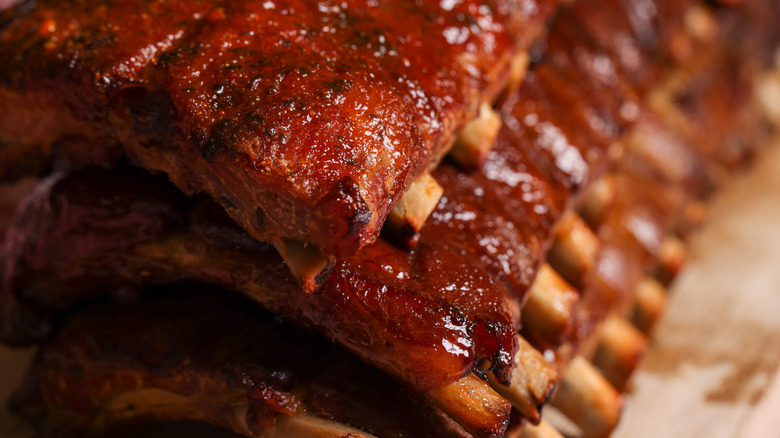
When you're craving a delicious rack of BBQ pork ribs, you might look forward to tasting the tangy sauce, or spice rub and anticipate the meat's flavor — but you're probably also craving tenderness. When preparing or purchasing pork ribs, it's essential to know the difference between the four types of ribs and how tender each cut of meat is when cooked properly.
The four main types of pork ribs are baby back ribs, spare ribs, country-style ribs, and St. Louis-style spare ribs, which are formally called "Pork Ribs, St. Louis Style" by the USDA. (St. Louis-style ribs are in a category of their own apart from other types of spare ribs because they're trimmed differently, and this affects overall tenderness and prep methods.) Of these types of ribs, baby back ribs are the most tender, though each one has strong points.
Some consider baby backs to be the favorite cut among the pork ribs because of their easy-to-eat size, quick cooking time, and their incredible tender texture. For ravenous eaters, baby back ribs are often enjoyed as a whole rack of 8-13 ribs, or as mini-racks of 3-4 ribs for lighter dining. But you can also ask your butcher to cut baby back ribs in a new way, such as single rib pieces, to turn your baby back ribs into a popular party food.
Comparing the tenderness and flavor of pork ribs
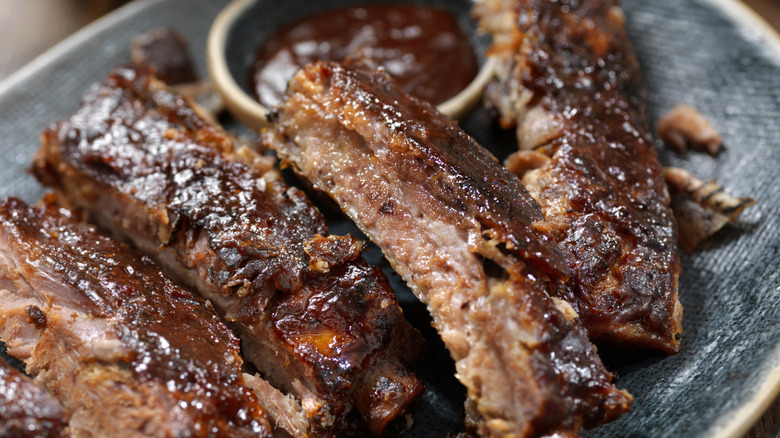
Tenderness in pork is determined by muscle fibers and collagen. Baby back ribs come from the upper section of the rib cage, near the backbone, and are shorter and smaller, and have leaner meat than the other ribs. The baby back muscles aren't worked as hard, and have less collagen, so they cook quickly to become fall-off-the-bone tender. Using our recipe for baby back ribs with homemade sauce — plus a handful of ingredients to make a spice rub and BBQ sauce — you can easily prepare a rack of baby back ribs in the oven in just over two hours.
Thick spare ribs come from nearer to the belly, and have more fat, tougher fibers, and more connective tissue. In choosing between spare ribs and baby back ribs, the obvious difference is the greater tenderness of baby backs, but taste is also notable; spare ribs are meaty and rich, while baby backs are sweet and a bit lighter.
St. Louis-style spare ribs are spare ribs with the breastbone, cartilage, and skirt meat removed. Some cooks say they're easier to prepare because they're more regular in size and flatter than spare ribs. St. Louis-style spare ribs benefit from the 3-1-1 method to make tender and juicy pork ribs, though they won't be as tender as baby backs. Country style ribs aren't actually ribs, but are cut near the shoulder blade, making this cut more like a pork chop. They're the most meaty, but also can be fatty and tough, so they benefit from being pre-tenderized. Ultimately, if you want the most tender ribs, your best choice is baby back ribs.