

Why So Many Fast Food Chains Test New Menu Items In Ohio
When fast food chains test new menu items to see if they'll catch on, they don't typically roll them out everywhere at once. They often introduce novelties to just a handful of restaurants, and one location that is particularly popular is Ohio — and specifically, Columbus. The idea is that Columbus is considered a market that is representative of the overall demographics of the United States, and especially so-called "Middle America."
There are a few things fast food chains like about Columbus: It offers a good mix of urban, suburban, and rural lifestyles all in fairly close proximity, and it mixes a fairly good economy without a high cost of living: Its income is relatively average without too much extreme wealth or poverty, and there are different groups present like families, students, young professionals, and immigrants. A former Wendy's executive told Axios Columbus that he considered the city a "dream market," arguing that items that hit the spot in Columbus tend to do well elsewhere.
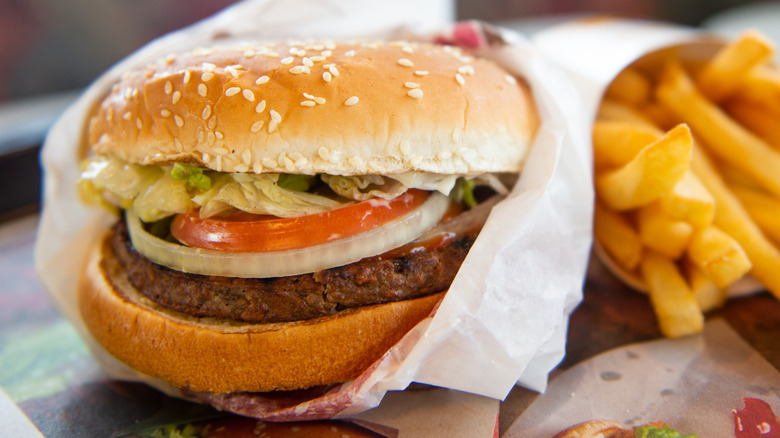
Burger King has had a few success stories come out of Columbus-based testing: You can thank the city for bringing its (arguably not great) mozzarella fries and the Impossible Whopper nationwide. Of course, not everything gets out of the test stage: at Starbucks; stout-flavored Dark Barrel Latte flopped in Columbus (although it was also tested in Florida). The jury is still out on Burger King sliders, which were available in Columbus around April and May of 2026 (as well as Portland, Oregon), and there doesn't seem to have been any public announcement about whether they'll surface elsewhere.
But is Columbus really the perfect test market?
As you might have guessed from those above products being tested in both Columbus and other locations, Ohio isn't the lone decider of which fast food items get a nationwide release. This is because while Columbus has certain demographic perks, it's not perfect: For example, its Latino population is well below the national average. A WalletHub ranking of cities that best resemble the overall demographics of the United States actually places Columbus fourth, behind Cincinnati, Oklahoma City, and Indianapolis.
Correspondingly, there have been signs that Columbus' position as the go-to fast food test city might be slipping; Canadian coffee giant Tim Hortons already ditched Columbus as its testing hub around a decade ago, and now varies its test markets depending on the product (that chain used Columbus to assess its now-available-everywhere dark roast coffee). That said, the city still has some things going for it: Its larger student population is a plus, since younger students might be seen as more likely trend-setters. Plus, for some chains like Wendy's and White Castle, which are headquartered in the city's suburbs, it's convenient. More subjectively, Columbusites are considered to have tastes that aren't too fancy, which is another plus (the idea being that residents of bigger cities may turn their nose up at fast food). So, if you live in Columbus, it's still worth keeping an eye out for fast food novelties, but other cities may also see more of them in future.