

The Cooking Method That Makes Traditional Southern Fried Chicken Different From All Others
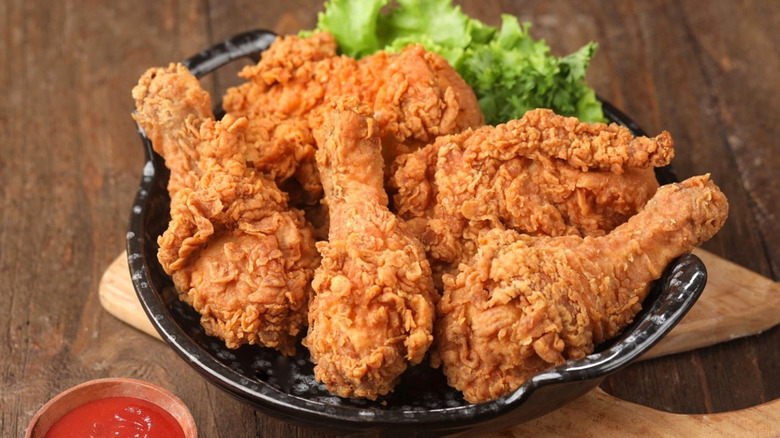
In the Southern United States, frying chicken is a ritual, giving home cooks a deep sense of pride as they share the wealth with their loved ones. Classic fried chicken is simple to make and requires only a few ingredients, including a dredging station of flour and egg wash. I have fond and distinct memories of my college roommate frying up a batch on Sundays, making our apartment smell like any proper Southern restaurant worth its salt. (Certainly not a bad thing.) But we weren't using a deep fryer, or any old lightweight pan we had handy. We were pan-frying in her seasoned cast-iron skillet, given to her by her mother as a housewarming gift when we moved into our college apartment. Frying chicken in a heavy-bottomed skillet — cast-iron or no — is a cooking method commonly used for traditional Southern fried chicken.
Heavy-bottomed pans and skillets absorb and distribute heat more evenly than thinner pots or pans, lowering the likelihood of burning. As you only need enough oil to come about halfway up the chicken, there's less waste than with a deep fryer. You also don't have to keep an eye out on the temperature of the oil, which will drop when adding protein, giving you greater control over the cooking process. While any neutral oil, such as canola or vegetable oil, will do, traditionalists may turn to Crisco solid shortening or lard for a richer flavor.
How to make Southern fried chicken in a skillet
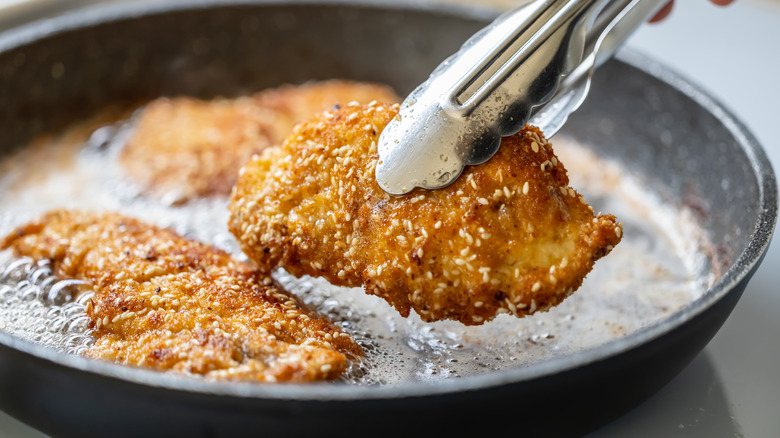
A few tips to heed on your quest for fried chicken glory: First and foremost, always season your chicken prior to dredging, which is, by far, the most important part of the process, as it ensures a crispy crust. Once dredged — and shaken to remove any excess flour — let the chicken rest uncovered on a wire rack for a few minutes before frying to let the coating properly adhere to the meat. (Pro tip: double dredging will give you an even crispier crust.)
It's also recommended start with an oil temperature of 350 degrees Fahrenheit, as it will drop once the chicken is added to the pan. (An oil temperature of 325 degrees Fahrenheit once the chicken is added gets good results, but going below that can lead to soggy fried chicken.) Maintain a steady temperature with a candy or clip-on thermometer, and let the oil return to 350 degrees before adding the next batch. (If you don't have a candy thermometer handy, an instant-read thermometer will do the trick.)
Start the actual frying process by heating enough oil to come about halfway up the chicken — which may vary depending on its size — in a large, heavy-bottomed skillet or cast-iron pan over medium-high heat until it reaches 350 degrees Fahrenheit. Working in batches to avoid overcrowding the pan, carefully add the dredged chicken to the hot oil. Fry on each side, turning frequently to get an even golden exterior, until the chicken is deeply golden brown and cooked through, roughly 15 minutes, or until the thickest part of the chicken piece reads 160 degrees Fahrenheit. When transferring the chicken to a wire rack, salt it immediately for an extra punch of flavor. And bam: juicy, crunchy fried chicken at the ready.