

This Comforting Midwest Meal Transforms A Budget-Friendly Steak Cut For Unmatched Flavor
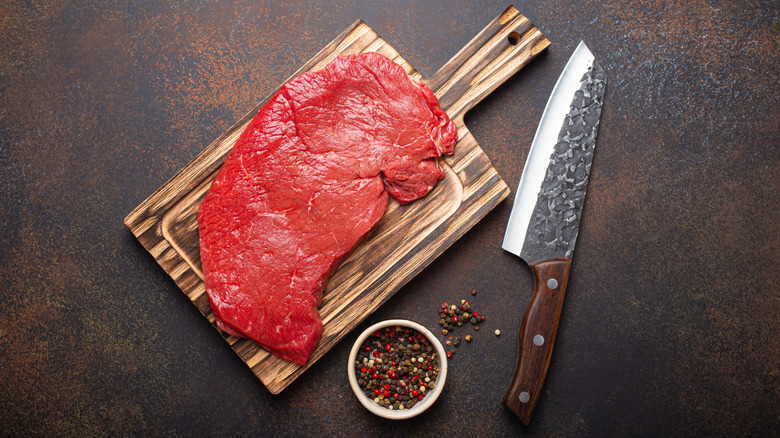
If you're from the Midwest or have spent any time in the region, it's likely at some point you were served an old-school steak dish with a confusing name, but with a rich tomato-based gravy and fork-tender beef (it used to be on our family's meal rotation when we were kids). It's called Swiss steak and uses the magic of braising to transform a tough, but inexpensive, steak cut like top round into a deliciously savory, beefy, and comforting main course. Braising involves first searing a cut of meat and then slowly cooking it in a liquid for several hours at a low temperature until it has become tender. Although the dish is called "Swiss" it's not a recipe from that European nation, but gets its name from the other process that helps guarantee tender beef.
It's called swissing, a term borrowed from the English textile industry, and originally referred to pounding or flattening fabric to help make it softer. With Swiss steak, the meat is pounded out flat to help tenderize it. The classic Midwest version is then slow cooked in a gravy of tomatoes and onions, and typically includes carrots and celery in the dish. That said, the early recipes we found for Swiss steak were quite different.
Swiss steak has changed over time
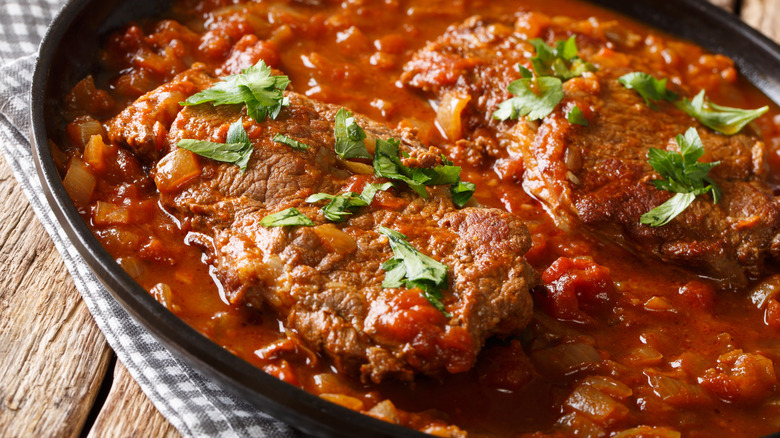
We've found references to Swiss steak dating to the late 19th century, although these recipes didn't include tomatoes, onions, or carrots, but rather incorporated a more traditional gravy made from water, the steak juices, and flour. The earliest recipe that resembles the classic Midwest version with tomato gravy comes from the August 14, 1909 edition of the "Adams County Free Press" in Corning, Iowa. Reynold's Wrap, the aluminum foil brand, helped popularize Swiss steak in the 1940s by featuring a version of the recipe that we're most familiar with today on its packaging.
Over the years, there have been a slew of variations, including those made with brown gravy with onions and mushrooms, others that build off of the tomato-based version and incorporate other ingredients like basil or green peppers, and some that don't have a gravy at all. When it comes to the steak cut, there are a few choices, although top round seems to be the standard. Some folks prefer other inexpensive cuts like eye of round, bottom round, or cube steak.
Why this dish became a Midwest staple is up for debate but it may have to do with the region's residents being known for being thrifty and practical. It also fits into its culinary wheelhouse of Midwestern comfort foods, like goulash or Johnny Marzetti casserole. If you've never tried Swiss steak, or haven't had it since childhood, there are a ton of recipes online for this economical and tasty dish.