

West Coast IPAs Vs East Coast IPAs: What's The Difference?
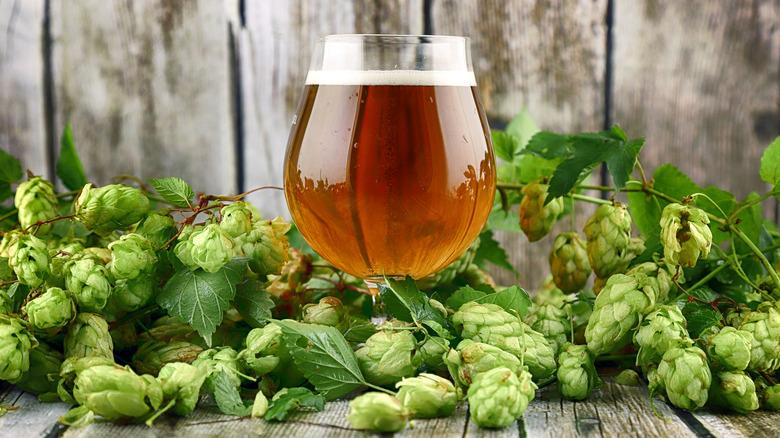
The India Pale Ale, or IPA, was developed to survive long trips between the British islands and India during the 1700s, using extra hops as a natural preservative. (The modern craft brewing scene that many of us associate IPAs with today didn't start gaining popularity until centuries later, in the 1960s.)
While there are multiple variations of IPAs today, one constant distinction is West Coast and East Coast IPA, which can be confusing. An IPA is a more bitter beer that's also stronger in alcohol level, with most IPAs in the 5.5% to 7.5% alcohol by volume (ABV) range. Both styles of IPAs begin with malted barley that's mixed with hot water to eventually form a liquid called wort. After this stage of the process is where the coastal distinctions begin.
The next step in brewing is to boil the wort. It's during this step that West Coast IPA brewers introduce hops. As the brew ferments, the ale yeast consumes much of the remaining sugars. The result of all this is a dry beer with a hoppy bite and aromas evoking the northern California or Pacific Northwest forests, including pine, citrus, and resin notes, plus a golden to nearly amber look in a glass. Leading West Coast IPAs include Stone IPA, Russian River's Blind Pig, and Coronado Brewing Weekend Vibes. Growing up in Southern California, this is the classic profile I expect when buying an IPA without a west or east differentiation.
The Atlantic brings the haze
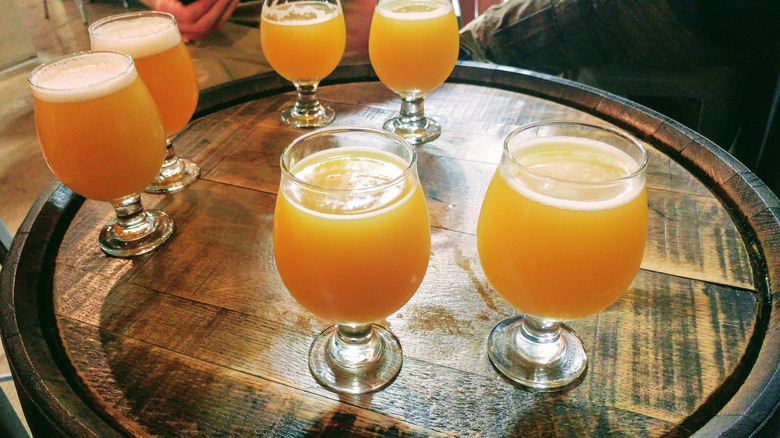
The East Coast IPA is a relatively young style in craft brewing. It originated in the northeastern states around the '80s and '90s, which is why East Coast IPAs are commonly known as New England IPAs. Upon first taste, you might think an East Coast IPA is closer to a more balanced pale ale, but it's actually not looking for balance, but rather to tip the scales away from bitterness. Hops are added to malt after boiling the wort to preserve the aromatics expected from an IPA without the strong resin tastes. Brewers also turn to modified yeast strains that yield a larger variety of flavors. The process also results in a cloudy appearance and you'll often see these referred to as Hazy IPAs. Examples of East Coast IPAs include Dogfish Head Brew Notes, Sierra Nevada's Hazy Little Thing, and Druthers No Excuses.
When pouring each IPA side by side in identical pint glasses, appearance should be the first thing to notice due to the haziness of the East Coast IPA. Its westside counterpart can sometimes appear as clean as a commercial lager but that similarity disappears once the citrus aroma punches you in the nose. Upon tasting, the West Coast IPA should be a drier, more bitter beer, where the East Coast brew might surprise you with its juice-like properties reminiscent of slow afternoons in the North Atlantic. It's not about picking a side — it's not an East Coast/West Coast hip-hop beef — it's about understanding the taste you're craving at that moment.