

Cabernet Sauvignon Vs Merlot: What's The Difference?
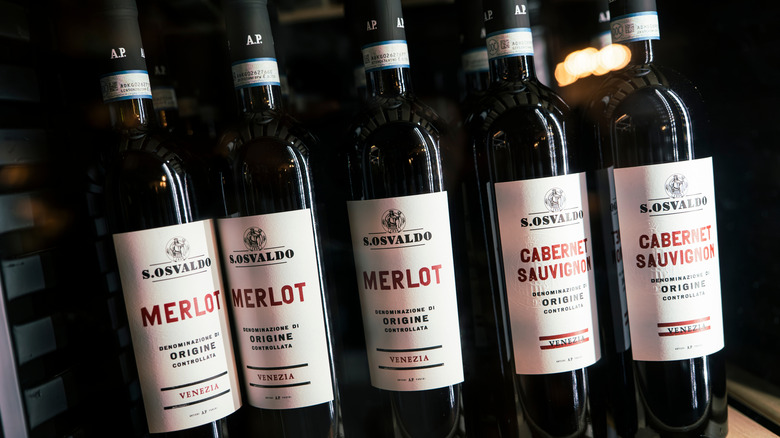
When we think of red wine, many of us instantly picture a bold, full-bodied cabernet sauvignon or a smooth, balanced merlot. The former tends to have higher tannins and a longer aging time, while the latter is less acidic. But despite their distinct styles, cabernet sauvignon and merlot have much more in common than meets the eye. That shouldn't come as much of a surprise. To begin with, both cultivars trace their roots to France's Bordeaux wine region (where they first appeared sometime in the 17th century), and share cabernet franc as a parent.
In addition, they are incredibly versatile. They typically produce medium- to full-bodied dry red wines with noticeable tannins and exhibit flavors and aromas that range from red to dark fruits. Cabernet sauvignon and merlot work well as both varietal wines and blends. As a matter of fact, they happen to be among the main varieties used in classic Bordeaux red blends (alongside cabernet franc, petit verdot, malbec, and carménère). That said, both are excellent red wine options for pot roast.
The two are among the most popular red wines among wine enthusiasts, and are actually the first and second most widely planted red grapes in the world. The two varieties benefit greatly from oak aging, by gaining more complexity and a richer texture. Some common secondary aromas they develop through the process can include vanilla, toast, and spice. With so many shared traits between cabernet sauvignon and merlot, you'll want to tell which one works best with your meal and memorize their key differences.
When it comes to red grapes, cabernet sauvignon wears the crown
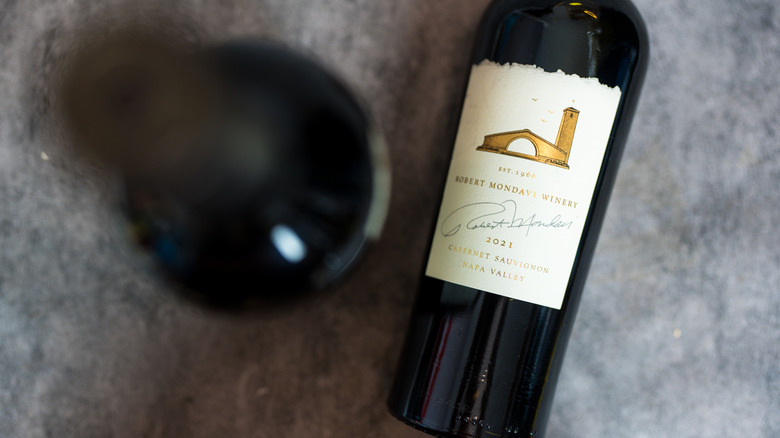
Cabernet sauvignon is known as the undisputed king of red grapes. A natural cross between cabernet franc and sauvignon blanc, it thrives on the Left Bank of Bordeaux, particularly in areas like Graves and Médoc, where gravel-rich soils retain heat, and create ideal growing conditions for the cultivar. California's North Coast (especially Napa Valley and Sonoma County), Chile, and South Australia, are also renowned for producing exceptional examples, including some of the best cabernet sauvignons for every budget.
In general, cabernet sauvignon boasts firm, dense tannins and a structured mouthfeel. This comes largely from the grape's small berries and thick skins, which transfer plenty of these bitter, astringent polyphenolic compounds to the wine. As a result, you can expect dry, full-bodied wines with medium to high acidity, and little to no residual sugar. Cab's flavor profile is dominated by dark fruits such as blackcurrant, black cherry, and blackberry. Depending on where it's grown, you might also pick up notes of green peppercorn or bell pepper and eucalyptus (in cooler climates). Oak aging adds another layer of depth and brings out flavors and aromas of cedar, tobacco, and even graphite.
The variety has tremendous aging potential, thanks to its robust structure, which allows it to mature for decades. It typically contains between 13.5% and 15% alcohol by volume (ABV). It pairs beautifully with hearty dishes, steak, lamb, and beef short ribs. Peppery sauces and aged hard cheeses such as cheddar or gouda are yet another great match for cabernet sauvignon.
Merlot is cabernet sauvignon's softer, fruiter counterpart
Compared to cabernet sauvignon's intensity and robustness, merlot features a gentler, more elegant expression. Unlike its half-sibling, merlot thrives on Bordeaux's Right Bank, especially in the areas of Saint-Émilion and Pomerol, which are dominated by clay and limestone soils. These conditions are well-suited to the grape's early-ripening nature.
Flavor- and texture-wise, merlot lands on the softer, velvety side of the wine spectrum. It produces wines that are usually dry, medium- to full-bodied, and well-rounded. Merlot typically has medium acidity and softer tannins than cabernet sauvignon, partly due to its thinner skins and fewer seeds. This also makes it an excellent blending partner. It can soften the firmer structure and higher acidity of more powerful wines. Its flavor and taste profile often lean toward red plum and cherry in cooler regions. By contrast, warmer climates bring out deeper notes such as black cherry, blackberry, and raspberry. When aged, some merlots can develop more earthy notes such as tobacco, truffle, leather, and even forest floor.
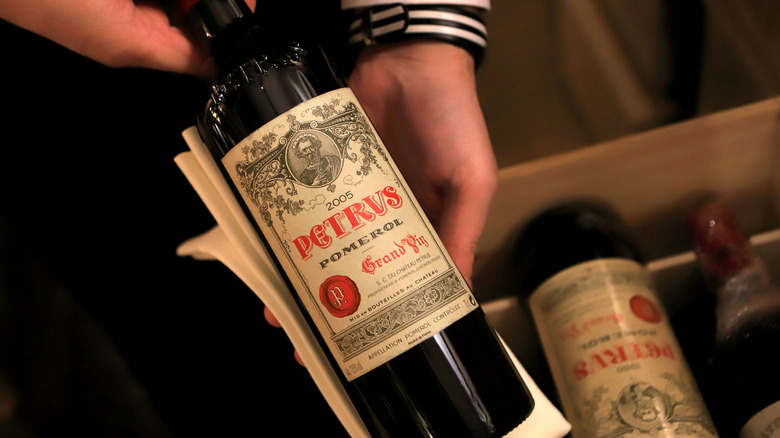
Although merlot suffered a dip in popularity following the release of the 2004 film "Sideways," it still remains the basis of Pétrus, the first wine aged in space, and one of Bordeaux's most prestigious and expensive wines. Because of its balanced character, merlot is incredibly food-friendly. It can greatly complement both lighter meats like chicken, and dark meats like lamb, duck, and beef. At the same time, olives, grilled mushrooms, and caramelized roasted veggies are all excellent vegetarian alternatives.