

For 10x Richer Twice-Baked Potatoes, Don't Forget This Unconventional Ingredient
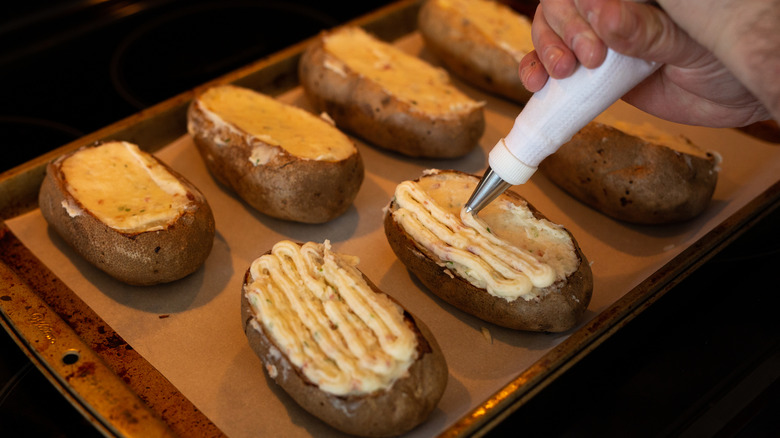
For all of the time and effort it takes to make a twice-baked potato, you want it to taste like it was actually worth double the work. You are baking the darn thing twice, after all. Of course, getting the right time and temperature for the best baked potato to begin with gives you a good foundation. And adaptations like taco night twice-baked potatoes take your spuds to new heights. But sometimes you just want a little enhancement to make your starchy base a bit better while keeping it familiar, and adding egg yolk to that fluffy interior once you remove it from its jacket for mashing adds richness while staying true to classic twice-baked expectations.
This small but impactful addition borrows from the French dish pommes duchesse, which has called for bolstering potatoes with yolks for centuries. The eggs help not only to create a particularly velvety finish, but also to give the mashed component more structural integrity. That helps the filling retain its shape, which is especially useful if you want to pipe your potato mash back into the skins with a little extra aesthetic appeal, rather than just spooning it on. But of course, this egg yolk upgrade is still plenty tasty no matter how rustic or refined you want your finished product to be. And it only takes a minute or two to incorporate it into your usual twice-baked preparation.
Tips for enriching twice-baked potatoes with egg yolks
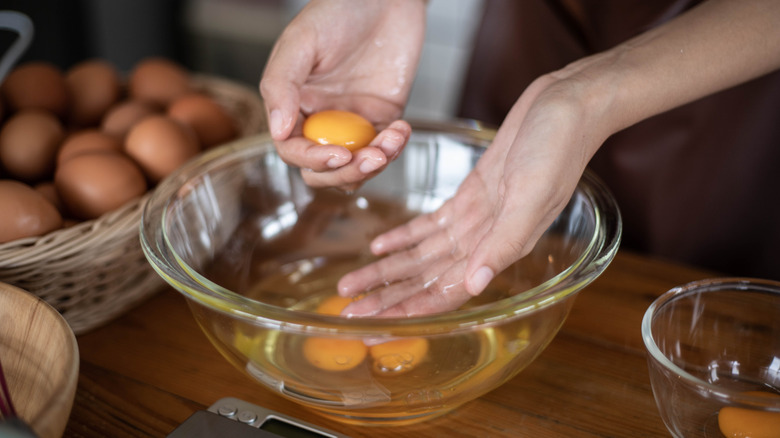
The hour or so it takes to initially bake your potatoes in a 350-degree Fahrenheit oven is more than enough time to perfect your egg-yolk-separating technique. Whatever gadget or magic works for you is fine, but since you don't need to keep the yolks in perfect shape, you might want to try the trusty bare-hand extraction method (letting the whites drip through your barely spread fingers). However you separate them, though, expect to use one beaten yolk per pair of potatoes. Beating the yolk helps it distribute better throughout the tubers versus a single yellow sphere.
Once the spuds are done with their first round in the oven and cool enough to handle, you'll take about a half inch off the tops and scoop the insides out into a separate bowl until you're left with potato-skin shells. Don't get too close to the peel with your spoon, however, or it will tear or just become too flimsy to hold the filling. You can mash the filling how you normally would, including a tablespoon of milk and a couple of tablespoons of butter per potato along with seasonings to taste. Save the beaten egg for last. At this point, the potato mix should be pretty close to room temperature, between waiting for the whole potatoes to cool enough to touch and then all the mashing. Adding the egg in at the end prevents it from solidifying and turning clumpy, rather than coalescing with the potatoes. That second pass in the oven will heat it while also giving you a nicely browned top.