

The Common Kitchen Appliance That Can Shatter Your Pyrex Dishes
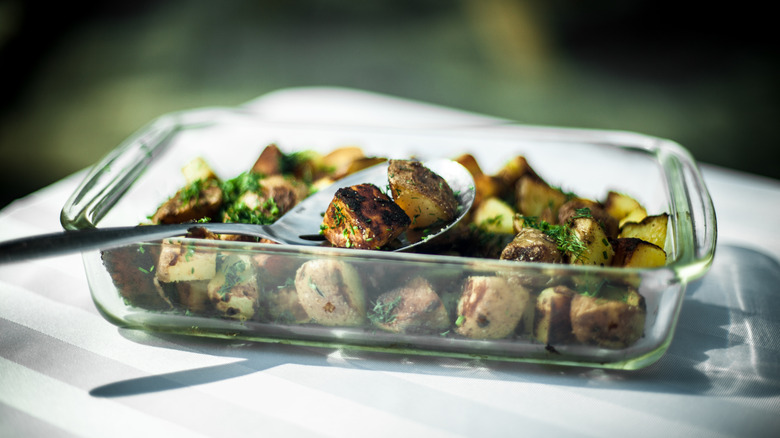
Maybe you have Pyrex cookware that once belonged to someone else in your family, or you bought your own because you love its renowned durability. Sturdy, long-lasting dishes are a major benefit for the home cook, and their versatility makes them invaluable. But if you want your Pyrex to last as long as possible, putting it in the toaster oven is one thing you should never do. Though Pyrex isn't just your regular glassware, sudden shifts in temperature and exposure to direct heat can still compromise its structure and cause it to shatter.
Heat increases the separation between a material's atoms, which causes the material itself to expand. The glass in Pyrex cookware — either soda-lime or borosilicate — can withstand thermal expansion, but if one area is hotter than the surrounding glass, this puts stress on the whole structure. This is known as thermal shock. The different amounts of stress being exerted throughout the structure can cause the cookware to fracture or shatter. Toaster ovens can cause shattering because they heat up quickly due to their compact size, and the heating element is closer to the dish. However, Pyrex cookware can be safely used in a preheated convection or conventional oven.
Safety tips still apply when using Pyrex for baking and oven cooking. If you're cooking a refrigerated or frozen dish, give the glass time to reach room temperature before putting it in the oven. Use a baking sheet as a buffer between the glass and rack. Additionally, be aware of other issues that can affect your Pyrex.
Other mistakes to avoid when cooking with Pyrex
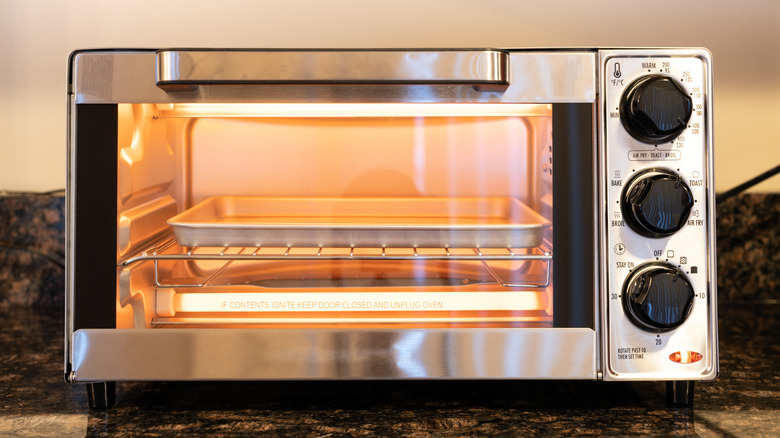
Toaster ovens aren't the only kitchen staple that can harm your glass cookware. Though Pyrex can go in the conventional or convection oven, never place it on any kind of stovetop — this is a harmful source of direct heat. Broilers, air fryers, and grills are also off limits. Fortunately, microwaves are safe when you need a quick reheat, though you should keep the lid off so the food can release steam and avoid microwaving a cold dish.
Once you've finished cooking, the countertop is generally a safe resting spot for a hot Pyrex dish as long as you place a potholder or dry cutting board down first. Putting the dish on a cold or wet counter, however, can trigger the thermal shock that causes shattering. Even if you do everything right temperature-wise, a Pyrex dish with deep chips or scratches can be prone to breaking, so it might be time to upgrade if your cookware has significant wear and tear. Whether you go thrifting or buy your cookware brand new, be aware that Pyrex's glass formula changed over the decades — and telling the difference isn't something you can easily confirm based on the logo.