

Pyrex Isn't Just Regular Glass: Here's What It's Made Of
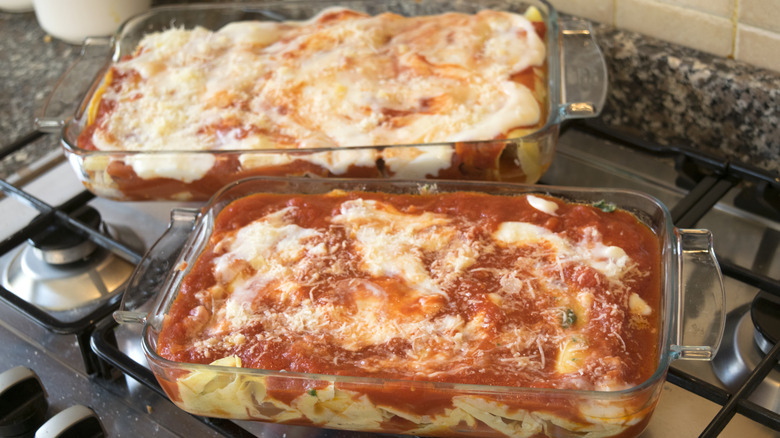
Pyrex changed home cooking forever when it was developed in the early 20th century. The glass material used in the original PYREX products — the name was styled with all capital letters — is different from the (lowercase) Pyrex products currently sold in the United States, which are manufactured by Corelle Brands. However, modern Pyrex is still better than regular glass for cooking because of its composition and manufacturing process.
Modern Pyrex cookware is made from tempered soda-lime glass. The term soda-lime refers to the glass's components; sodium carbonate, or washing soda; and lime, from limestone, which is made of calcium carbonate. Sodium atoms soften the glass so it can be formed at lower temperatures, and also cause it to expand when heated. Soda-lime glass is the most common type of glass on the planet, accounting for about 90% of glass products produced.It's used in windows, glass containers, bakeware, and more. It's common because it's a very inexpensive type of glass to manufacture.
Importantly for home cooks, tempered soda-lime glass is three times stronger than regular soda-lime glass. Tempered soda-lime glass expands when it's exposed to high heat, and though it doesn't respond as favorably to thermal shock from rapid temperature fluctuation as the original PYREX did, Pyrex made from tempered soda-lime glass is durable enough to use in day-to-day kitchen tasks.
How the history of glass inspired the creation of Pyrex
Glass originally developed around 3,500 years ago in Mesopotamia and Egypt was the starting point for the use of soda-lime. The first actual soda-lime glass was a specialty glass that had the unique property of being workable at lower temperatures. Today's Pyrex, made with tempered soda-lime, and other glass recipes, are an evolution based on centuries of glass experimentation, made possible by the knowledge of chemistry and atomic behavior.
The original cookware, branded as PYREX, was created by Corning, which held the patent from 1915-1936. PYREX was made with borosilicate glass that resists chemicals, electricity, and heat; is shock-resistant; and can withstand thermal expansion. In the 1950s, Corning started producing clear Pyrex with tempered soda-lime, while some manufacturing plants continued to make PYREX cookware with borosilicate glass.Corning transitioned the formula over decades until the company that purchased Corning's cookware business in 1998 switched the recipe for all of its U.S. glass to tempered soda-lime.
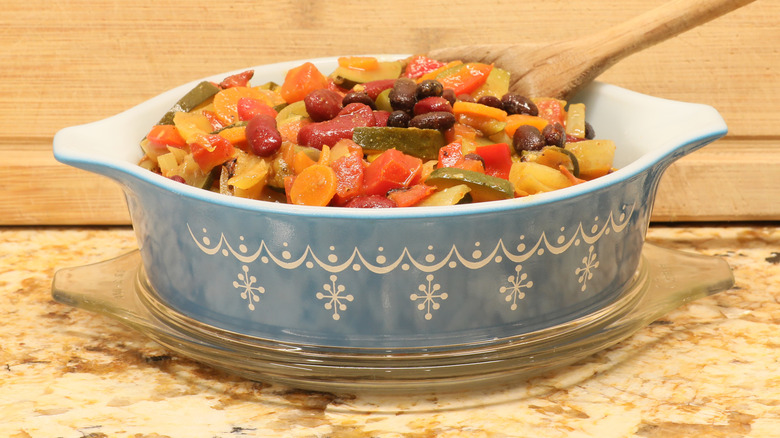
Original PYREX cookware continues to be popular, so much so that it's one brand of vintage dishware to look for at thrift stores. A good sign that a piece made after 1936 is borosilicate is having the all-capital PYREX brand name. Yet, to be sure, the edge of your dish will have a blueish-green tint if it's made out of soda-lime; if it's borosilicate, there should be no color. If you suspect your PYREX is an original borosilicate piece, especially from the 1940s to 1980s, it may be worthwhile to determine the value of your vintage PYREX dishware, as it can sell from between $20 to $4,000 — or even more, depending on its condition.