

For A More Affordable Pot Roast-Style Dinner, Try This Underrated And Delicious Swap
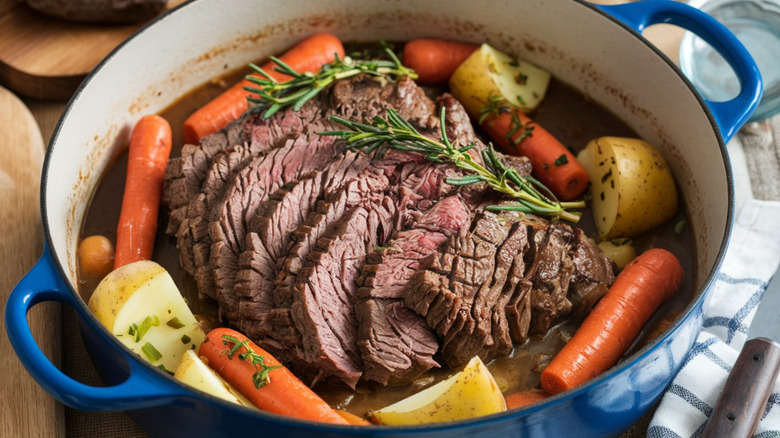
Pot roast is typically made with chuck roast, which comes from the cow's shoulder and lends itself well to low and slow cooking due to its tough composition. Chuck roast is known as a relatively inexpensive cut of beef because it's not as tender as other cuts, but you might be looking for an even cheaper alternative if you're buying meat on a budget. An effective way to find affordable beef cuts is to go for the less-popular ones, and the sub-primal cut known as beef knuckle fits right into this category. (You'll sometimes hear beef knuckle referred to as sirloin tip or round tip at the grocery store or butcher.)
Beef knuckle is located in the round primal cut above the knee and has a lean quality which stems from this area of the cow getting a lot of exercise. Importantly, beef knuckle is flavorful enough to be the main star in a dish like pot roast, and like chuck roast it cooks best when you take your time with it. Both cuts get their abundant flavor from the connective tissue, which breaks down and becomes gelatinous when cooked; enhancing tenderness. Though they're both lean cuts, beef knuckle has even less marbling, which is something to consider when cooking.
How to cook this cut of beef as a pot roast
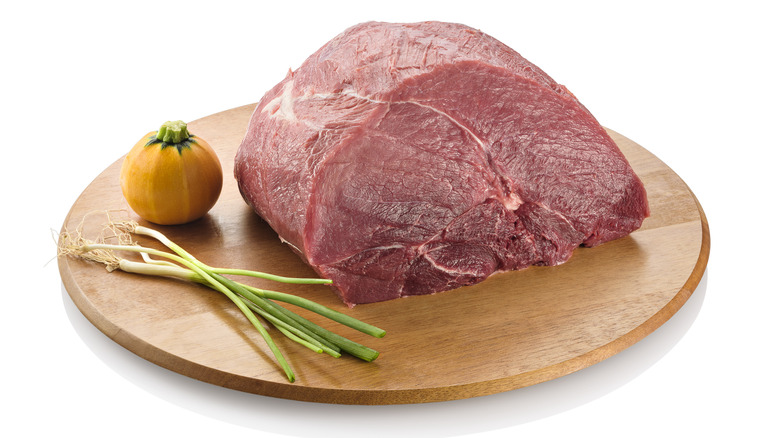
Cooking a beef knuckle pot roast is much the same as a chuck roast, though you might want to pay special attention to the tenderization process with this leaner cut. Acid marinades are commonly used to help achieve tenderness in beef as the acidity softens the muscle fibers. Giving the acid plenty of time to work its way into the meat (such as with overnight marination) is key to getting a tender result. Marinade ingredients that work well while also adding complex flavor include citrus juices, tomatoes, vinegar, and wine.
Once the meat has marinated, pat it dry and season it well before searing to get a nice crust. The right seasonings and herbs for a pot roast depend on your personal taste, but bay leaves, rosemary, and thyme are common components that hold up well in slow-cooked dishes. The meat and vegetables will make their own liquid while cooking, but most recipes incorporate wine or broth — just be sure not to cover the roast completely. Too much liquid can dilute the flavor and prevent that delicious browning that makes it all worth it.