

The Kitchen Appliance You're Better Off Getting At The Thrift Store Over New
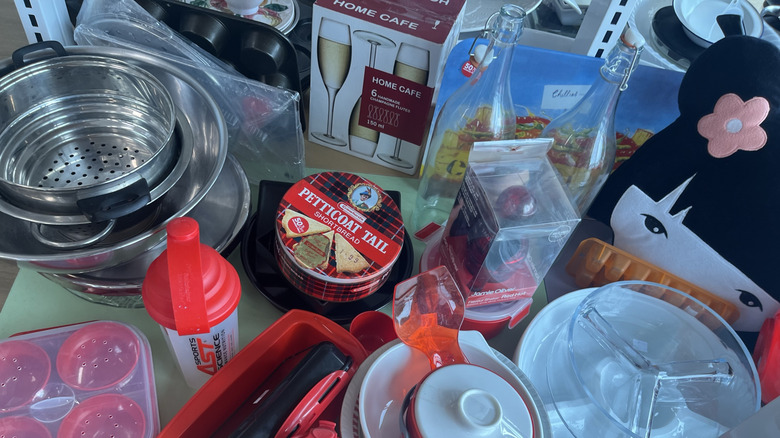
One of the biggest obstacles to getting into cooking is the equipment. While it's true that you can get by with a pretty minimalist kitchen and a few good knives for a lot of recipes, eventually you'll want to try something that requires a machine. If you're eyeing a brand new food processor, however, be sure to check the thrift store first. You might be surprised by how many perfectly good kitchen tools you can find at your local secondhand store, which are often barely used and almost always on sale for a fraction of the price of buying new.
Kitchen tools and appliances are evergreen items, which makes them some of the easiest things to find secondhand. A good blender, hand mixer, or rice cooker doesn't suddenly become useless just because it's a few years old unless it's actually broken, but these appliances end up in the thrift stores all the time because homeowners are constantly downsizing or replacing older models with the latest and greatest gadgets. A quality food processor, in particular, can be a pretty expensive investment when you buy new, but with a little patience and some smart shopping, you can score a great deal at the thrift. Unlike white whales like a Le Creuset Dutch oven which you have to be lucky enough to find, there's usually plenty of food processors to choose from in the small appliance aisle, all just waiting for you to give them a chance.
Scoring the best secondhand food processor
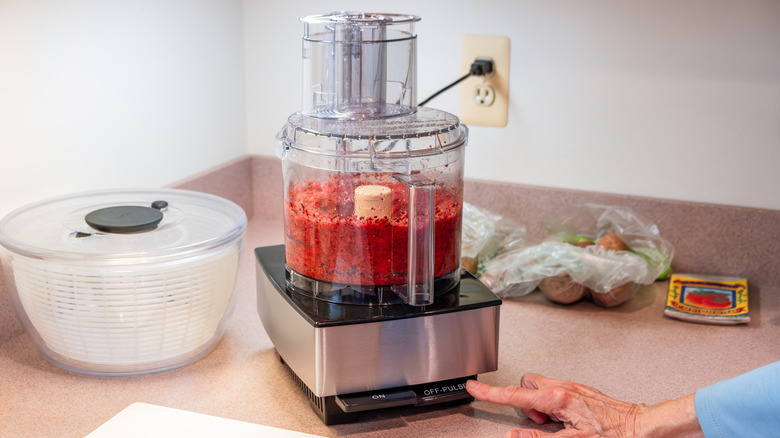
Shopping for secondhand kitchen items requires some careful inspection before you take anything home, especially for machines like food processors that have multiple detachable parts. If you come across one in the wild, give it a careful once-over to see if all the essential pieces are included, like the blade, lid, and shredding discs. Replacement parts are usually readily available on eBay and elsewhere online, but they do come at a price (more on that in a minute).
Next, carefully check the bowl and lid for cracks, chips, or deep scratches that can hold bacteria, and inspect the metal parts for rust or other physical damage like bending. Finally, if the store allows it, plug the appliance in and run it for a minute on each setting to make sure it actually works and doesn't wobble or shake, make weird noises, or give off any burning smells.
If the machine looks to be in pretty good shape, and you're ready to buy it, it's not a bad idea to do a Google image search before you drop it in your cart. The search will give you an idea as to whether you're getting a good price for a secondhand machine. Sometimes it will also turn up helpful reviews so that you know whether or not you're buying a lemon (here's our list of the 12 best food processor models to look out for).
Don't be afraid to buy an incomplete food processor
It's not unusual to come across a food processor that's missing a few parts in thrift stores. Pieces get lost over the years when people move, and instead of replacing them, they often just decide it's time for a new machine. Missing parts doesn't mean you necessarily need to pass on a good deal, however. Just make sure that the missing piece is something you can actually afford to replace before you buy the unit.
Find the serial number on the food processor and use it to do an internet search right at the store so that you can decide if an extra order is worth the effort. A $10 food processor isn't that great of a deal if you have to spend $50 to replace the bowl, for example. On the other hand, lots of parts are cheap. I bought a vintage Cuisinart Little Pro Plus at a thrift store for $5, but it came with no attachments. The replacement blade cost around $20 on eBay, which I decided was still a better deal than buying a new machine or buying the same model with all the parts intact (around $50 on eBay). I've owned it for a year and have not missed owning any of the discs, so in my case, the $25 food processor was absolutely worth the gamble.