

For The Most Flavorful 10-Minute Pasta Sauce, Grab Some Garlic, Oil, And A Blender
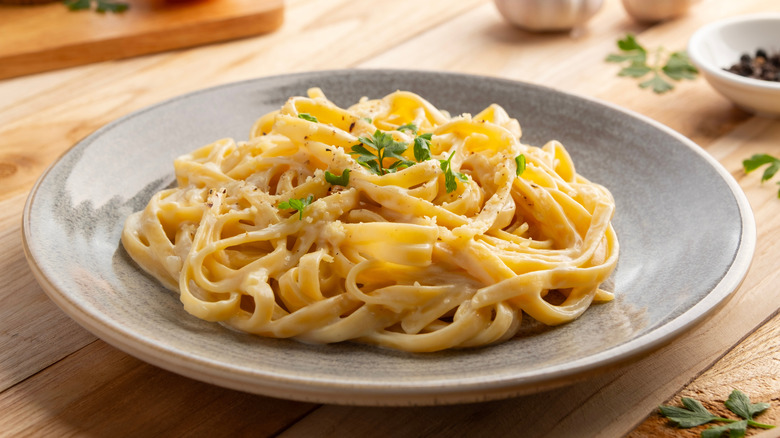
If you've got nothing but a few cloves of garlic and some pantry staples in the kitchen, there's no need to run to the store just yet — you're actually already halfway to a surprisingly luxurious pasta dinner. If you cook the garlic and then blend it with olive oil and a splash of water, you've got a silky, garlicky sauce that is anything but lacking in flavor. It takes its inspiration from a classic Italian pasta sauce called aglio e olio, which translates to "garlic and oil." It's a go-to dish in Italian households when time is of the essence, traditionally associated with spaghettata di mezzanotte or "midnight pasta." This blender method takes the same basic flavors and just gives them a bit of a different texture.
It's a particularly useful move when you're cooking pasta, as you can use some of the starchy cooking water from that instead of plain water. Pasta water, salted just the right amount, helps the oil and liquid bind together in addition to adding some extra seasoning to the dish. And this is only the starting point because with a few simple additions, you can take this garlicky base in all kinds of different directions.
Make this garlic sauce your own
While you can keep this recipe simple — served with nothing but Parmesan and black pepper — you can also add a pinch of parsley or chili flakes to the blended sauce, the latter making a dish closer to aglio, olio e peperoncino. You can even use it as the basis for a more complex sauce by blending in other ingredients, like roasted red peppers, sun-dried tomatoes, or lemon zest, which will expand on the flavor without losing the creamy, garlicky base.
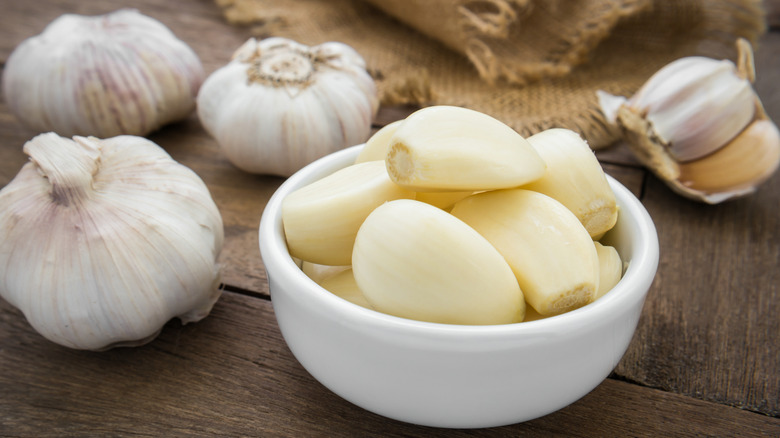
And consider the garlic itself too. You can sauté, boil, or roast your garlic cloves until they are soft, then blend them with equal parts olive oil and water (roughly a quarter cup each per six to eight cloves of garlic) to make a smooth sauce. Boiling will give you a bit of a milder flavor, while roasting makes the cloves sweeter. It is best to cook the garlic first and blend it while it is still warm. Then add the oil gradually, not all at once, to help it properly emulsify with the water. Spaghetti is the obvious choice if you want to replicate aglio e olio, but there are many types of pasta shapes it could work with, long or short. With such a tiny ingredient list, it's easy to overlook this one, but there is a reason Italian pasta often relies on few ingredients. It's all in the technique.