

How A Flashlight In Your Fridge Can Save You Big Money Down The Road
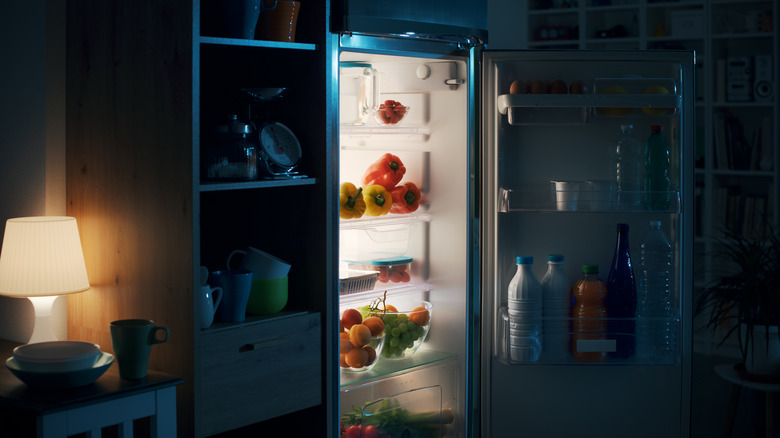
When you have a drafty window or door during the winter, you know it right away. A drafty refrigerator door, by contrast, can go completely unnoticed, unless you take initiative and use the flashlight test. Yes, a handy flashlight can light your path to the kitchen for a midnight snack without disturbing the family. It can help you check eggs for freshness. And it can help you see where cold refrigerator air is escaping the room and taking your money along with it.
The flashlight test doesn't take long and it can help you extend the life of your fridge and save you money. A refrigerator uses an internal thermostat to run in cycles, telling the motor, or compressor, to run at full strength to reach the necessary temperature to store your food: around 37 degrees Fahrenheit (3 degrees Celsius) for the fridge and 0 degrees Fahrenheit (-18 degrees Celsius) for the freezer. Upon reaching the temperature, the compressor pauses until the temperature increases and the cycle begins again.
The door gasket, or seal, is that soft rubbery part that runs along the edges of the door that's meant to close shut and trap the air inside. When this gasket does not seal correctly, cold air escapes and the refrigerator's compressor must work harder to hit that optimal temperature. The immediate hit to your wallet is a higher electricity bill, but unchecked seals can eventually reduce the lifespan of your fridge, costing you even more. That's why it's so important to fix sealing issues quickly.
Spot and stop the leak
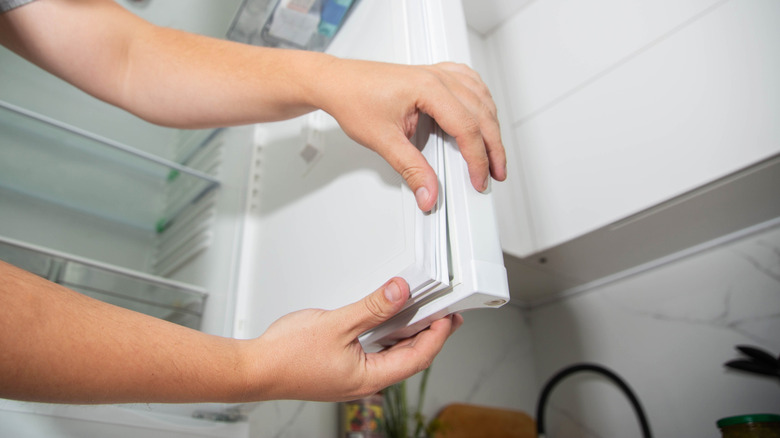
You may have heard of the dollar bill test before to check for bad fridge seals (in which you close the fridge door on a dollar bill to see whether the seal is secure enough to hold up the bill), but this test is incredibly tedious, as you have to test all around the gasket with the bill. On the other hand, the flashlight test is quick and easy: grab a flashlight, turn it on, and set it on a shelf pointing toward the refrigerator door. Close the fridge door and look all around the door gasket for signs of light, signifying the areas where the seal is failing. Use fresh batteries in a flashlight you know to be bright, because a dull flashlight could lead you to think everything is fine when in reality the light is too dim to reach the problem areas. Also, because you're trying to use light to identify a problem, this test works best at night with the lights in your kitchen turned off.
As you identify areas where light is shining through, mark the spots with a pen or a small strip of painter's tape so you can address the problems. Before thinking about major repairs, start by following best practices for cleaning your fridge, which should include the door seal. You can use dish soap with water or use a more natural mixture of lemon or vinegar. If the issue persists, try applying Vaseline (or other brand of petroleum jelly) to the gasket surface to restore its flexibility and sealing ability. And if that doesn't work, a replacement gasket is neither expensive nor difficult to install. Flashlights help you see in the dark but with this trick, they can also help you see when your refrigerator is silently crying out for help.