

Toss The Store-Bought Stuff — Make Homemade Deli Mustard With Just 4 Pantry Staples
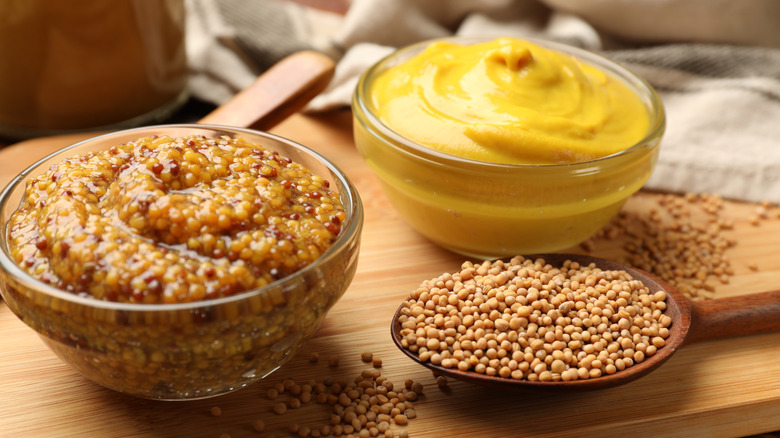
One of the coolest things about mustard (other than the fact that it's delicious on practically anything) is that humans have been making and enjoying the condiment for thousands of years. The biggest difference is that mustard enthusiasts in ancient Greece and Rome had to grind it themselves from seeds rather than picking up a jar at their local grocery store, which may honestly be the best way to enjoy high-quality deli mustard.
Whether you're team stone-ground or Dijon (though stone-ground Dijon also exists), homemade deli mustard is elite as a spread that's more flavorful and potentially much cheaper than the store-bought stuff. Even the generic brands cost up to 15 cents per ounce, while the homemade version could run you as little as 7 cents per ounce if you shop savvily. Even better, the mustard-making process is fairly simple and requires just four common ingredients (mustard seeds, honey, vinegar, and salt), plus a high-speed blender and a little bit of time.
Tiny, pungent brown seeds from the leafy mustard plant marinate in the vinegar of your choice along with salt, both of which protect the seeds' signature zesty flavor. After a day or two hanging out in the fridge, you can blitz everything up into a smooth (or slightly grainy) mustard spread. If it tastes bitter at first, don't worry — the harshness will fade as it ages for a week or two in the cool shadows of your fridge, collapsing into the sharp, tangy richness the best deli mustards are known for.
Getting granular about customizing your deli mustard
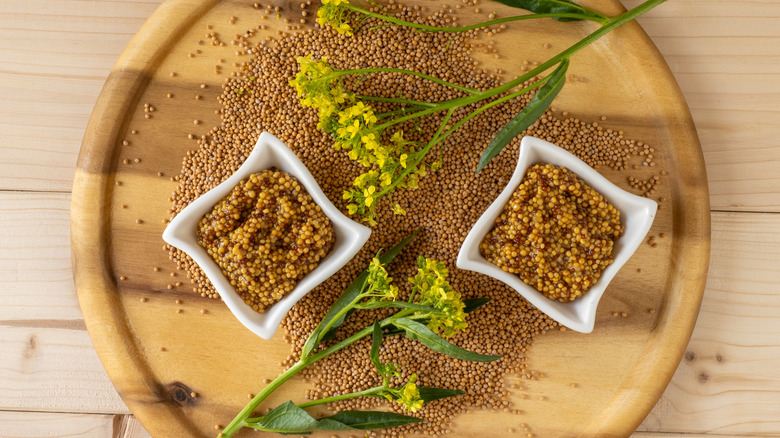
While brown mustard seeds are traditional for coarse deli-style mustard, an underrated benefit of making your own condiments is creating more flavor combinations than you can find at your local grocery store, starting with your seed choice. The darker the mustard seeds, the sharper and spicier your mustard will be. That means if you prefer the mild flavor of honey mustard, which is perfect for coleslaw, you can try a mix of white and brown seeds. If you're a spicy mustard connoisseur, try mixing brown and black, since black seeds are the sharpest, while brown are zestier than white, but milder than black.
Next comes your choice of vinegar. White wine vinegar is great for deli mustard and perfect if you love Dijon; it provides a beautifully zesty punch with a hint of sweetness. Red wine vinegar creates a deeper, fruitier flavor (and will also make your mustard pink!). Apple cider vinegar is perfect for mustards with a lovely sweet-meets-sharp balance, and goes especially well with honey, garlic, or both. Some recipes also use beer, or even plain water, but vinegar is essential to prevent your mustard's flavor from fading.
Before blitzing your mustard to your preferred texture, you can also add herbs and spices. Stick with classic deli mustard ingredients like turmeric and nutmeg, or try other popular mustard add-ins such as minced dried onion, freshly cracked black pepper, and tarragon. Though this homemade version isn't technically shelf-stable, it should stay fresh for up to a year if kept refrigerated in an airtight container.