

How To Clean Cabbage: The Easy Way To Prep Every Variety
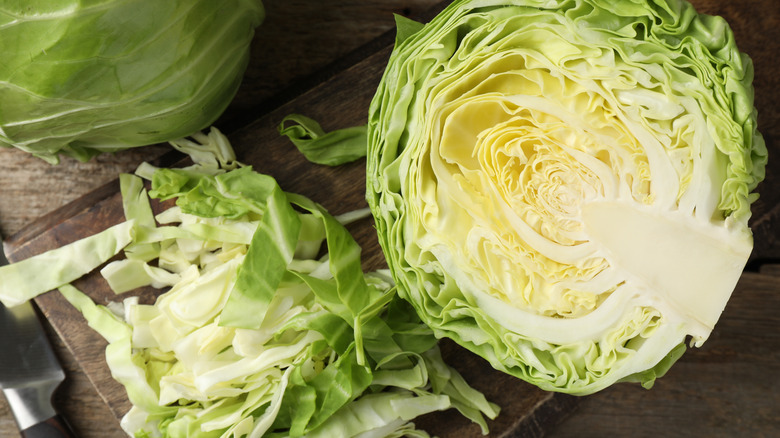
Don't let a tight, clean-looking head of cabbage fool you. Dirt, bacteria, pesticide residue, and even small insects can still hide between the leaves, so washing it properly matters even when the outside looks clean. When it comes to whole heads of green and red cabbage, the basic method is fairly straightforward because their tightly packed leaves make it harder for debris to get deep inside. Start by washing your hands thoroughly under hot, soapy water. Then remove and discard the outermost leaves, even if they don't look wilted or damaged. Once they're gone, cut the head into wedges or whatever pieces your recipe calls for and rinse each one under plain old running water, gently opening the layers as needed to flush out anything trapped inside.
The FDA recommends skipping soap, detergent, and commercial produce washes. Soap and household detergents can be absorbed by porous produce and make you sick, while commercial produce washes haven't been adequately tested to determine how effective or safe they are. If you want to be extra thorough, give your washed cabbage slices a five- to 10- minute soak in cold water, then rinse them one more time. Finally, for slaw or another raw dish, dry the cabbage well with a clean towel or salad spinner so excess water doesn't dilute the dressing. While these steps work for green and red cabbage, varieties like Napa, Savoy, and bok choy have different shapes that change where dirt can hide and how you'll want to rinse them.
How to clean Savoy, Napa, and bok choy
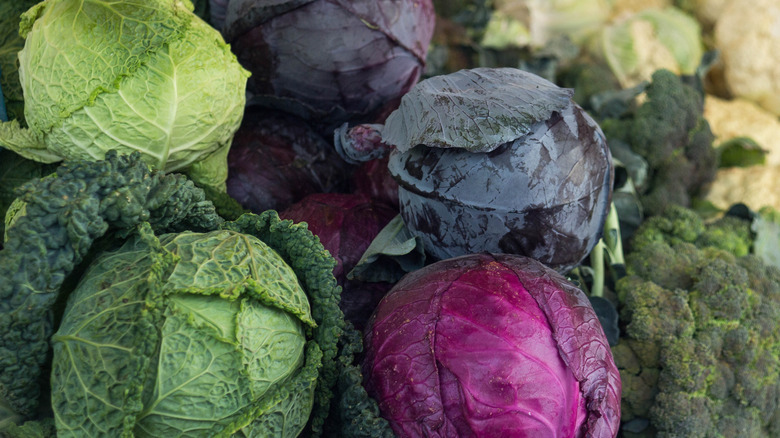
Not only do different cabbage varieties lend themselves to different cooking methods, their shape and texture can also affect where you'll want to pay attention while washing them. Savoy cabbage's leaves are lacy and very puckered and crinkled, so there are many nooks and crannies for dirt to lodge into. The best way to address this is by taking the head apart and rinsing each leaf individually. Napa cabbage, commonly seen as kimchi, has a longer, looser shape than heads of white or red cabbage, allowing dirt to penetrate more deeply, along with lots of crinkly bits. If you're making a simple stir-fry or any dish that doesn't require intact halves of Napa, it's easiest to chop it up and rinse the pieces several times in a salad spinner, using your hands to lift and rub the slices. For halves or quarters, the same idea goes — just be extra careful to clean all the nooks.
Bok choy has a comparably very open structure, but soil can still settle between its overlapping stalks and leaves. Wash it carefully before preparing it, paying particular attention to those inner layers. Full-sized bok choy can be cut into smaller pieces before rinsing, while baby bok choy can be halved or quartered depending on the recipe. Whichever variety you're using, cool running water and a careful check between the layers and crinkles are usually all you need.