

This Type Of Cabbage Is The Gold Standard For Kimchi, According To Korean Chefs

A lot of vegetables can become kimchi. In fact, almost any leafy, crisp vegetable can do the job. However, for a classic cabbage kimchi recipe, it has to be napa cabbage. Known as "baechu" in Korean, this cabbage is known for its thin, tender leaves that absorb the seasoning, and thick stems that stay crunchy even after being fermented. Culinary director Teddy Kim, of Michelin-starred Oiji Mi and bōm, and Ara Cho, CEO of missKOREA BBQ, both spoke exclusively with Chowhound and they agreed: Napa cabbage is the best choice if a traditional kimchi is the goal.
Napa is the perfect middle ground between soft and hard, described by Kim as having a great structure and contrast. This texture is an important element; long before it develops its tangy, spicy fermented flavors, the cabbage needs to survive a heaving salty to soften it. If you try this with a delicate cabbage, it may lose its bite. On the other hand, a tough, dense cabbage doesn't absorb flavors as easily, which is one of napa cabbage's best qualities, according to Cho. Even if you try and speed up kimchi's fermentation process, there's still a significant amount of time that the leaves have to stay submerged in the brine, which inevitably changes its texture.
The best napa cabbage should feel heavy for its size
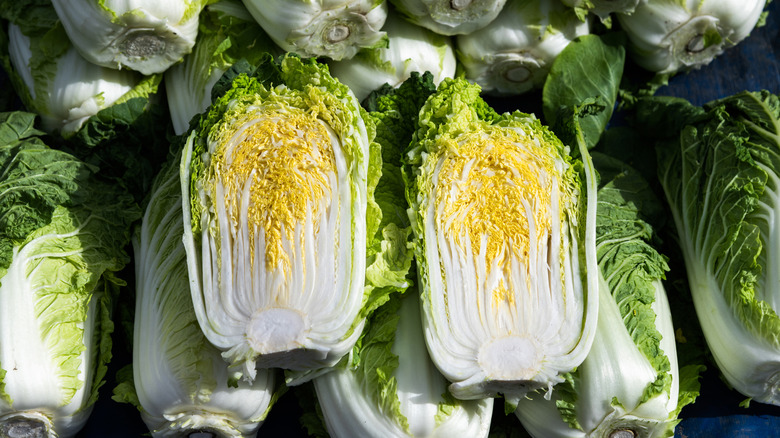
Now you know why you should choose napa cabbage, but don't just grab the first head you see. There's a more tactile approach to choosing the best. Both Teddy Kim and Ara Cho have advice that points to the same quality: density. Kim says, if you're making kimchi at home, look for a fresh, tightly packed, dense-as-possible head. He then shared a charming family trick for judging them: "I remember my dad always lifting the cabbage up and down in one hand at the market to feel how dense it was before purchasing."
Cho uses a similar test, recommending a head that feels heavy for its size. There's a good reason these chefs pay attention to this detail: A heavy, dense head with thin leaves is often considered the best option. However, while you want a lot of leaves, you don't want overly thick ones; they may leach too much water as the kimchi ferments.
If the produce aisle betrays you and there isn't a decent napa cabbage in sight, you can theoretically use another type of cabbage to make kimchi. The chefs have their own favorites. Kim named mustard leaf, cilantro, celery, tomato, and chayote while Cho's personal pick is cucumber kimchi, which is even easier to make at home. Kimchi is a broad concept at the end of the day, so switching up the vegetable means you're making a different style of kimchi rather than simply replacing napa cabbage in a traditional baechu kimchi recipe. The important part is choosing a vegetable with enough texture that can stand up to both the salting and fermentation.