

For Sourdough Packed With 10x More Flavor, Swap Water For This Fizzy Drink
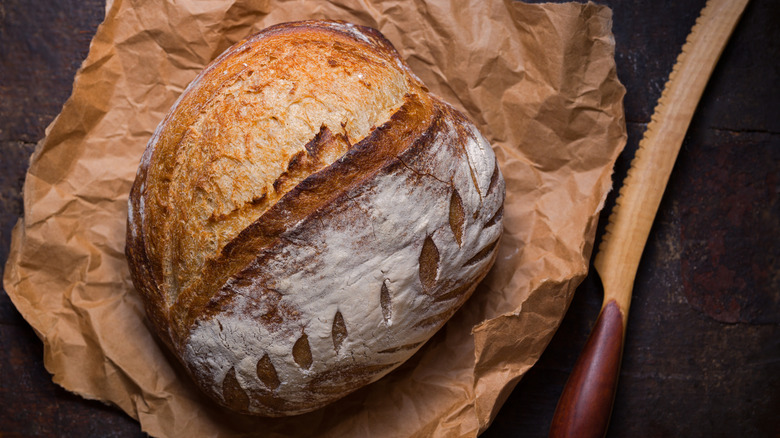
Sourdough bread is a bit of a scientific phenomenon. A simple combination of flour and water, covered and left to rest, transforms into something beautiful (and bubbly) through the fermentation process. Add flour, water, and salt to a tablespoon of sourdough starter, and bam — you've got a scrumptious loaf in the making. It's the combination of lactic acid bacteria and yeast that gives sourdough its signature flavor. Feeding your sourdough starter is a symbiotic relationship: You give it food, and it gives you bread. Swap the water for beer at a one-to-one ratio, and you can take that science experiment to a whole new dimension.
When you think about it, the components of beer and sourdough are fairly similar, and both rely on fermentation. Adding beer to a sourdough loaf can affect the baking process in several ways. The alcohol in beer can slow the dough's rise, while its sugars contribute a malty flavor and subtle sweetness. Beer can also encourage a darker, more deeply caramelized crust.
Home bakers and professionals alike who have used beer in bread baking are big fans, noting the distinct aroma of beer as well as a softer, more tender crumb, aka the interior's porous gas pockets created during the fermentation process. One Redditor who tried it described the crumb as "billowy," and commented that their guests gobbled it up before they could snap a photo of their finished product.
What types of beer to use and how to use it
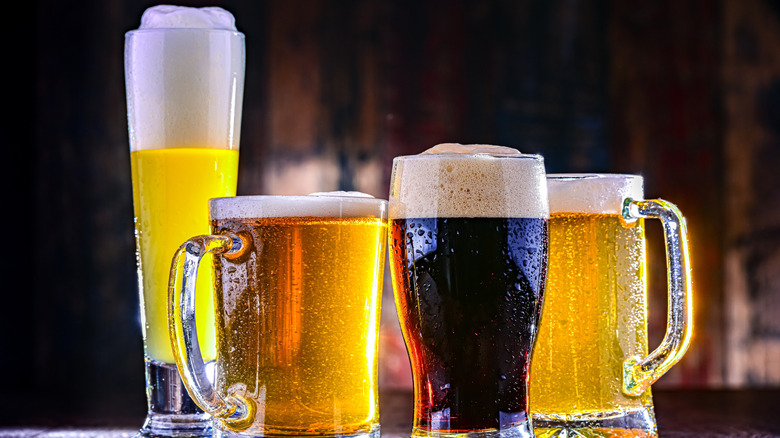
A wide variety of beers work well for this substitution — it all depends on your desired flavor profile. Lighter lagers and pilsners will give your sourdough a mild and delicate flavor, while darker ambers and brown ales lend a nutty vibe. Going deeper into the color spectrum, stouts and porters create a super-rich and dark loaf with chocolate or coffee flavors — a particularly fun loaf for grilled cheese sandwiches. Hoppy beers like IPAs, however, tend to give sourdough a distinct bitterness during the baking process (one Redditor stated that while they love drinking an IPA, they don't enjoy eating it).
It's also worth noting that whichever beer you choose should be flat when you pour it, as measuring beer devoid of foam will help you get the exact volume of liquid needed for your loaf. Homemade sourdough starter already contains plenty of carbon dioxide from fermentation, so the extra carbonation isn't necessary. Additionally, make sure your beer is at room temperature before adding it to your dough. Cold beer can lower the temperature of the dough, which may slow fermentation too much and, in turn, extend the time it takes for your sourdough to rise.