

Why Do So Many Grocery Stores Throw Food Out Vs Donating It?
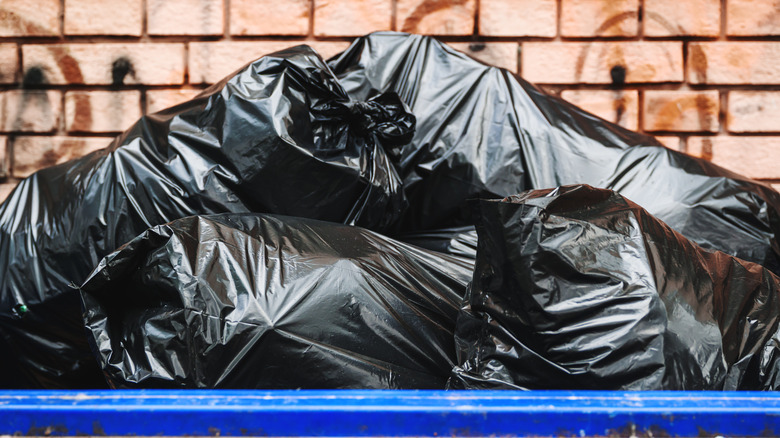
According to the Upcycled Food Association, grocery stores throw away more than 43 billion pounds of food each year. In the United States alone, more than 13% of households experience food insecurity, so it can be frustrating to hear that tons (literally, tons) of perfectly good food goes to waste. While the obvious answer to the problem is for grocery stores to donate unsold food, it's not quite that simple, unfortunately.
Logistics are a primary factor when it comes to getting unsold food to charitable organizations. Dairy products, for example, require temperature control and monitoring to safely move from one location to another. In this case (and some others), grocery retailers may decide not to spend the money required to safely transport food donations from store locations to charities. Restaurants struggle with this issue as well, as some can't always donate leftover food at the end of the day due to food safety and transportation issues. Labor also matters — some stores simply don't have enough employees to coordinate the process of getting fresh food donations into the right hands before they go bad.
Legal liability isn't the biggest obstacle to donating food — grocery stores can actually get tax breaks for donating leftover food to charitable organizations. More often, it's an issue of paying workers to manage food donations, coordinate transportation, and handle other logistical issues. Thankfully, some of the food that goes unsold at grocery stores does get donated.
How some grocery stores are working to reduce food waste
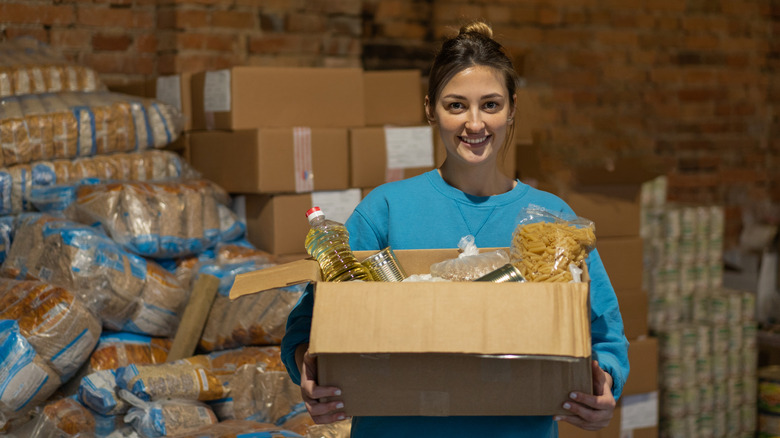
Some grocery stores are working to ensure that unsold food gets into the hands of people in need, despite the additional planning required to keep food out of the dumpster. According to The Conversation, about 30% of the food distributed by food banks comes from retailer donations. Kroger is an example of a grocery store that's making a difference — much of its unsold food is donated through its Zero Hunger | Zero Waste program. Trader Joe's is another retailer doing its part. The store's Neighborhood Shares Program donates 100% of its unsold products that are still fit to be consumed to local charities. Aldi also donates a portion of leftover food products, and Whole Foods invites charities to apply for its In-Kind Donation program by reaching out to their local Whole Foods store directly.
Donating perishable food certainly requires more coordination than donating nonperishable food, so it makes sense that donating the former would be harder for grocery stores to coordinate. According to the USDA, a 2023 law expanded liability protections to those who donate food in good faith, making it a little bit easier for grocery stores to move perishable food items to food banks and other charitable organizations. While donating unsold food instead of tossing it into the dumpster certainly requires effort (and, often, money), we're glad to see that some grocery stores are doing the hard work of getting surplus food to the people who need it most.