

10 Tips For Making The Perfect Guacamole, According To Professional Chefs
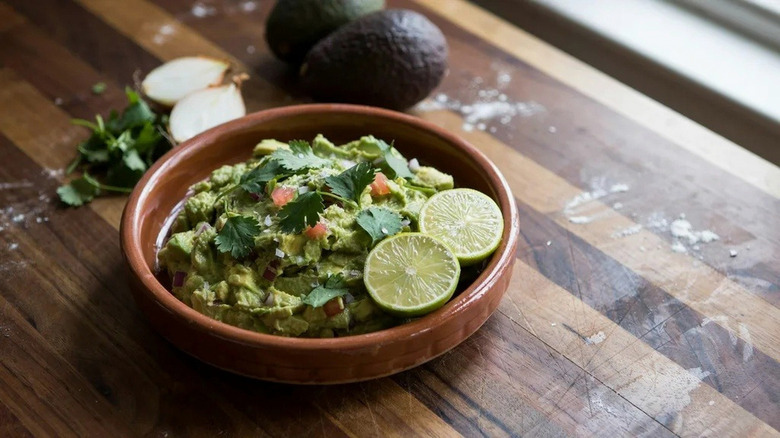
Few things are more satisfying than a perfectly prepared bowl of guacamole — with just the right balance of salty, fatty, and acidic flavors and a creamy texture that makes it perfect for dipping chips, stuffing into tacos, or topping grilled protein. While no single origin story for guacamole is agreed on, food historians trace its earliest iterations to the 14th through 16th centuries. More specifically, it's likened to a recipe for "ahuacamolli," a mashed avocado condiment that combines the Nahuatl words ahucatl (avocado) and molli (sauce). Since then, guacamole has become a pillar of Mexican cuisine.
"Everyone has the guacamole they grew up with or simply prefer. Some people like it more acidic, some others add tomato dices, some want it very spicy, and others keep it mild," says Alam Méndez, chef and owner of restaurant Apapacho Taqueria in Washington, D.C., which was given the prestigious Sello M award by the Mexican government for its dedication to Mexican culinary tradition.
We spoke with Méndez, as well as Christian Irabién, chef and owner of Amparo Fondita, a Michelin Bib Gourmand restaurant in Washington, D.C., to learn some of their best advice for taking homemade guacamole to the next level.
1. Pay attention to where your avocados come from
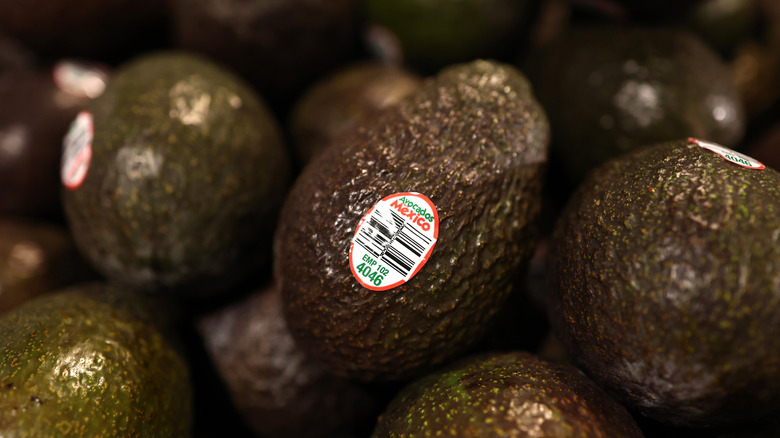
When it comes to the avocados in your guacamole, chefs agree that sourcing matters. Hundreds of avocado varietals are grown around the world, and each has a unique flavor and consistency.
Christian Irabién says the perfect avocado for guacamole is a no-brainer. "For us, it's really important to work with avocados from Mexico," he says. "We try to source only from Mexico for a million reasons, a lot of it having to do with the soil that they're grown on."
Plenty of qualities set Mexican avocados apart from other varieties and make them particularly well suited for guacamole. Avocados are native to Mexico, and food historians believe the fruit began growing in Puebla nearly 10,000 years ago. Between Mexico's abundance of nutrient-rich volcanic soil and topography that lends itself to natural irrigation, the country offers ideal conditions for growing avocados. These conditions give Mexican avocados a naturally high oil content of up to 30%, contributing to their creamy texture and buttery finish.
2. Ensure your avocados are perfectly ripe
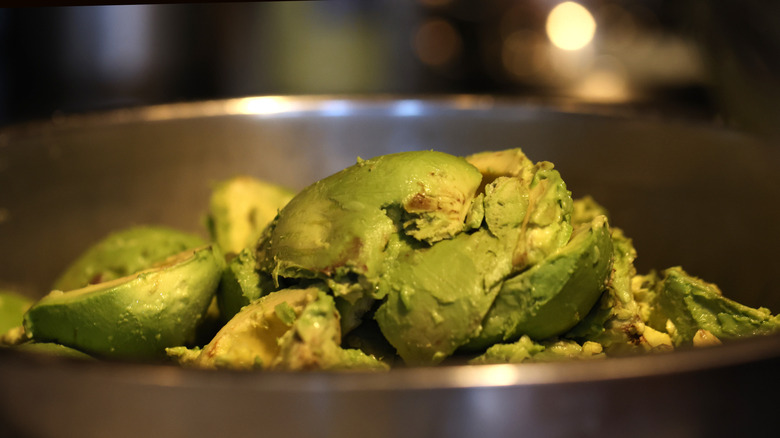
Christian Irabién warns that an avocado's window for optimal ripeness is narrow, and that there's little ripening time between an avocado that is too hard and one that is too soft for guacamole. Luckily, his grandmother taught him a trick that he still uses today when selecting avocados.
"If you push the very corner of your shoulder, right where it hits the bone, it's kind of soft, but then there's a little bit of firmness," Irabién says. "That should be the same texture as your avocado."
Whether you're shopping at the grocery store or just checking the status of the fruit on your kitchen counter, Alam Méndez adds that there is an art to feeling your avocados to test for their ripeness while still preserving their flesh. His advice? Don't squeeze them too hard.
"Usually just holding the avocado and applying very gentle pressure with your fingers is enough," Méndez says. "Try not to keep squeezing avocados when choosing them; that bruises the fruit before you even cut it open."
3. Don't overseason your avocado
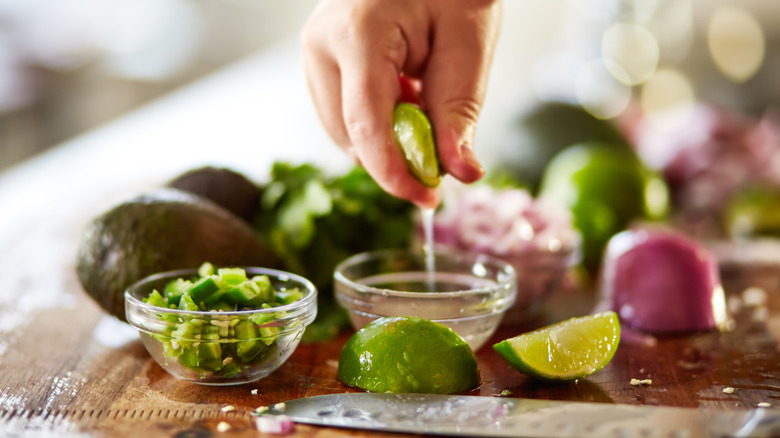
When seasoning avocados for guacamole, both Alam Méndez and Christian Irabién recommend salt and lime. Irabién says, "Just enough lime [to keep] a healthy avocado from oxidizing, but not so much lime that it's straight acid."
Méndez is on the same page. "I like guacamole pretty simple. Sometimes less is more," he says. "I still want the avocado to be the main flavor."
By keeping your avocado seasonings minimal, you do more than shave off prep time. You are also staying loyal, Irabién says, to some of the earliest recipes for the dish. "The very, very, very, very traditional guacamole is literally just avocado and salt," he adds. "Everything we know for guacamole now has been an evolution of people ... making it more adapted to the regions that they're in, or the flavors that they're looking for."
Although neither chef would discourage home cooks from being creative with their avocado seasonings, Irabién does advise against one particular addition. "The biggest mistake I see happening in the U.S. is people adding garlic to the guacamole," he says. "It's such a raw, astringent flavor, and it's not a good pairing."
4. Choose the right tools for mashing
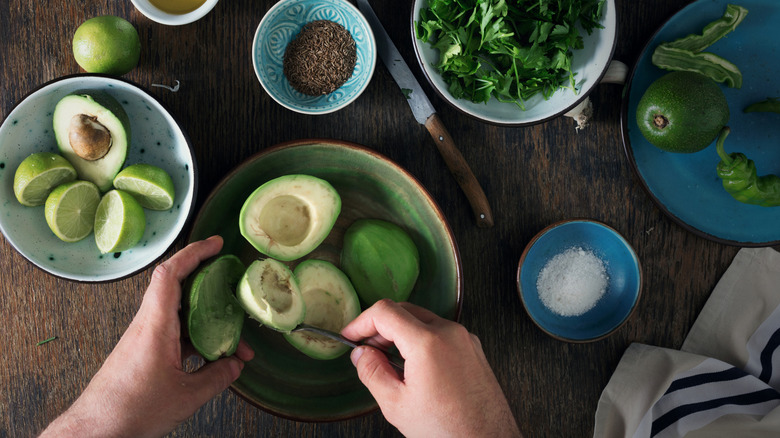
At Amparo Fondita, Christian Irabién says that he and his team mash avocados for guacamole with whisks in large bowls. However, his favorite way to make small-batch guacamole at home is with his molcajete, a type of heavy mortar and pestle traditionally made from the volcanic rock basalt. "There's a certain flavor that comes from the stone. I'm sure it's like a minerality. A lot of it, I'm sure, is also just visual," Irabién says. "I think if you're making a small batch and you have one around, a molcajete is the way to go."
Alam Méndez keeps it even simpler. "I prefer doing it by hand — just a knife to cut the avocados into pieces and a spoon to scoop them out and mix everything together," he says.
That said, both Irabién and Alam Méndez say you don't need specialty tools to make a delicious bowl of guacamole at home. In fact, as long as you don't use a blender, which will warm the avocado and affect its flavor, there is no "wrong" tool for the job.
5. Don't overmash your avocado
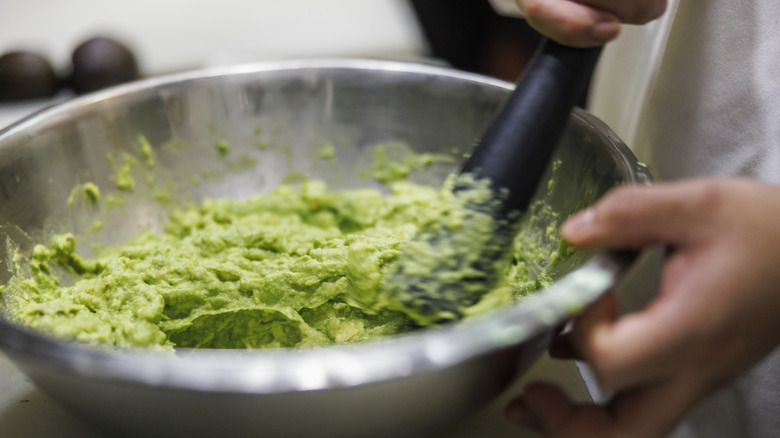
While it's tempting to mash your avocados until they reach a lump-free, creamy consistency, both Christian Irabién and Alam Méndez recommend resisting the urge. Irabién says, "There's a fine line between over-creaming it and leaving it chunky. Obviously, it [shouldn't be] so chunky that you can see the cubes, but definitely chunky enough that you can tell that it's not just paste." He recommends getting a piece of avocado every couple of scoops for a bit of texture.
Méndez has a tried-and-true method for achieving the right balance. "I usually start by cutting the avocado into fairly large cubes, around half an inch. As you season and mix everything together, some of those pieces naturally break down and create the creamy part of the guacamole, while others remain intact," he says. "For me, that combination of creamy avocado with noticeable chunks is the ideal texture."
6. Chop your mix-ins finely
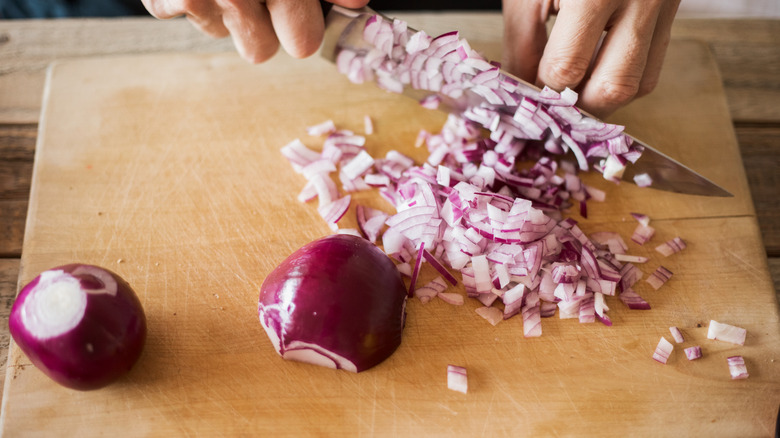
For added flavor and texture, Alam Méndez and Christian Irabién both like to mix serrano peppers into their guacamole. Méndez's favorite mix-ins also include red onion and jalapeños, but he prefers not to bite into large chunks when his guacamole is ready to serve.
"Unlike the avocado itself, I like the mix-ins relatively fine," Méndez says. "I normally cut the onion into a small brunoise as well as the chile, and the cilantro very finely." For the guacamole at Apapacho Taqueria, the same rules apply to the dish's garnish of matchstick-thin radish.
Just like when you're mashing the avocados, it is important not to overmix your guacamole, Irabién says. Instead of stirring in your mix-ins, he recommends "folding" your ingredients into the mashed avocado. Avocado "is a natural fat, and it has a lot of water content," he explains. "The more you mash it or overwork it, it will start separating that liquid from the fat."
7. Experiment with adding salsa
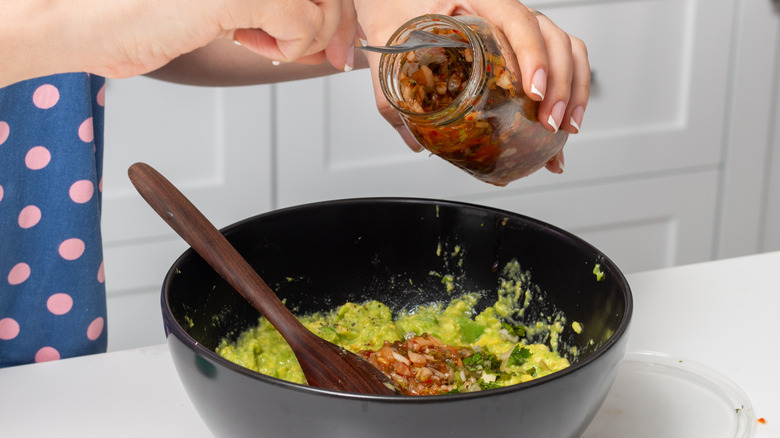
It is no secret that salsa of any kind packs a ton of flavor and imparts it to anything it touches. A bright, acidic salsa often complements a creamy guacamole when served in tandem with chips — and Alam Méndez says that those two flavors and textures work just as well when mixed together.
"Sometimes I make a little dried-chile salsa (tomatillo, garlic, onion and morita chile), cook everything, blend it into a salsa, and let it cool completely before folding a little into the avocado," Méndez says. "The final guacamole might not have that perfectly bright green color everyone expects, but the flavor is delicious — smoky, slightly spicy and acidic."
When it comes to the type of salsa you want to include in your guacamole, you have plenty of options. If you are looking for some inspiration, try out our classic five-ingredient pico de gallo or incredible tomatillo salsa verde. No matter what salsa you pick, it will add a new dimension of flavor to your bowl of guacamole.
8. Throw in some fresh seasonal fruit
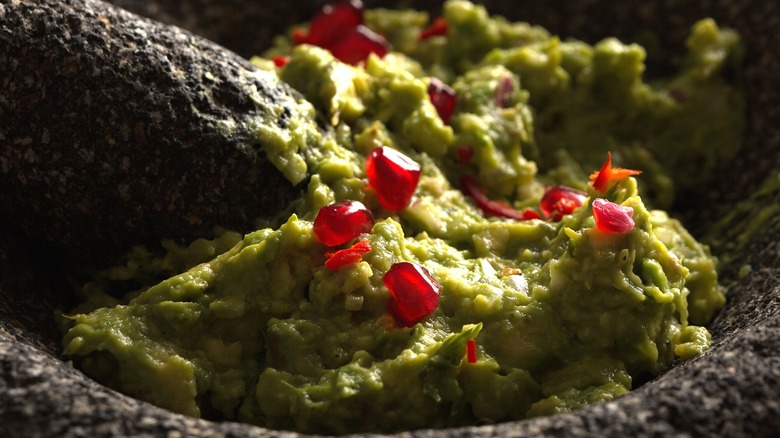
"Mexico is such a vast region of climates and things that are grown around the country," Christian Irabién says. One of his favorite ways to celebrate Mexico's culinary bounty is by adding fresh, local fruit to his guacamole. Whether he is preparing some for his restaurant's dinner service or whipping up a quick batch at home, he says that he always reaches for fruit in season.
"For September, adding fresh pomegranate seeds to it is a really fun thing. Sometimes, when bright mangoes are around, we like to throw in some mango. In fall, once persimmons start hitting, we like to throw in a little bit of persimmon," he says. "It's kind of like taking the idea of having a tomato, but if tomatoes are not in season, what else has that nice, soft texture, with a little bit of sweetness, that can go into it?"
9. Finish with fresh herbs (not just cilantro!)
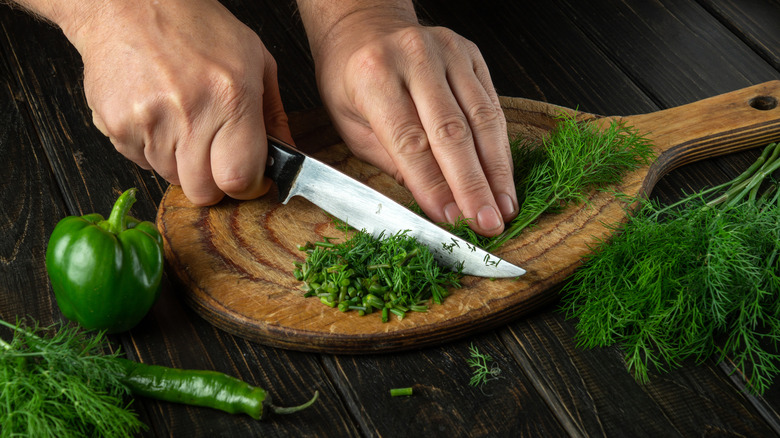
Cilantro may be the classic herb for guacamole, but it doesn't have to be the only one. Christian Irabién likes to use a mix of fresh herbs, including basil, dill, mint, and a little cilantro. At Amparo Fondita, the herbs are generously sprinkled atop miniature molcajetes of guacamole. "We do a mix of basil, dill, mint, and a little bit of cilantro," he says.
Irabién likes to garnish his guacamole with whole leaves, so that guests "can get a full mouthful of that herb rather than just a hint of it," while Alam Méndez likes to chop his cilantro more finely before incorporating it into the guacamole. If you go the chopped route, Méndez says there are a few techniques to keep your herbs fresh and incorporate them nicely into the mashed avocado.
"The cilantro should be completely dry before cutting it," he says. He also recommends using a very sharp knife for chopping to prevent the cilantro from turning black.
10. Be mindful of when you're serving it
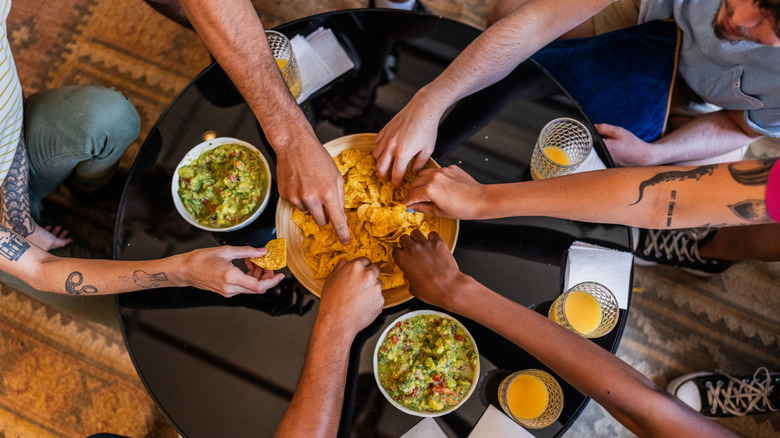
No chef will object to the notion of preparing guacamole ahead of time before serving (after all, that is the way they do it at your favorite restaurant). However, some ingredients will make your guacamole taste worse over time — while others will help you preserve it for longer.
For this reason, Christian Irabién advises against adding onion to your guacamole if you won't serve it immediately, as he has found it can degrade the avocado's flavor over time. On the flip side, Alam Méndez has ingredient recommendations for those who plan to serve their guacamole later.
"I sometimes blend in a small batch of salsa verde cruda (tomatillo, cilantro, lime, salt, and jalapeño without water)," Méndez says. At Apapacho Taqueria, he serves this salsa and many others on the side for guests to try with guacamole. "It adds acidity and freshness and can also help slow down browning."