

Make Leftover Peach Cobbler Taste Like New In Under 20 Minutes — Here's How
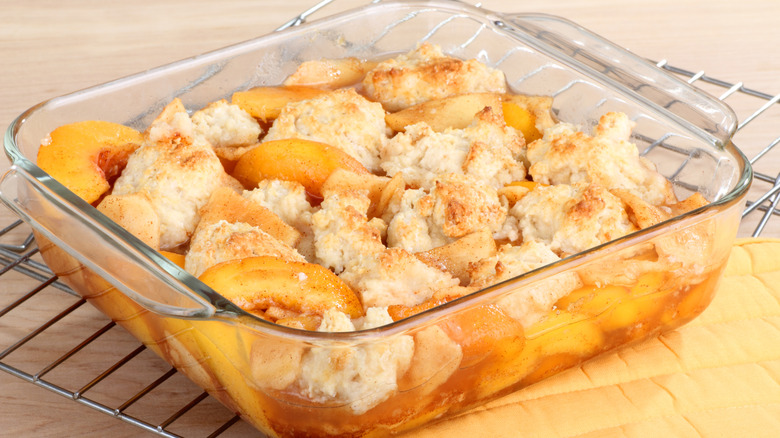
If you made a delicious peach cobbler yesterday, but today it has come out of the fridge looking like it's had better days, then the oven is your new best friend. While it is definitely important to choose juicy peaches when making a cobbler from scratch, there's no need to add extra moisture like water or butter when reheating yesterday's. In fact, adding more liquid can leave you with a topping that's soggy rather than crisp.
Simply place the refrigerated cobbler in the oven with a foil covering for 10 minutes at 350 degrees Fahrenheit. Then, after 10 minutes, remove the foil and give it an extra five. The exact method may vary depending on the cobbler itself — some chefs recommend a longer reheating time, while others only suggest you bake it covered and bypass taking off the foil altogether.
However, taking off the foil is quite important if you want a crispy top. The time spent covered in the oven will heat up the fruit in a gentle and humid environment, warming the center without drying out the topping. Then, the quick blast of dry heat should restore the texture of a topping that would've softened after sitting in all of the peach's natural juices. And it doesn't matter whether you've made a classic recipe or opted for a gluten-free peach cobbler, the biscuit will inevitably get damp overnight as it absorbs the moisture of the peach filling.
Store it right in the first place
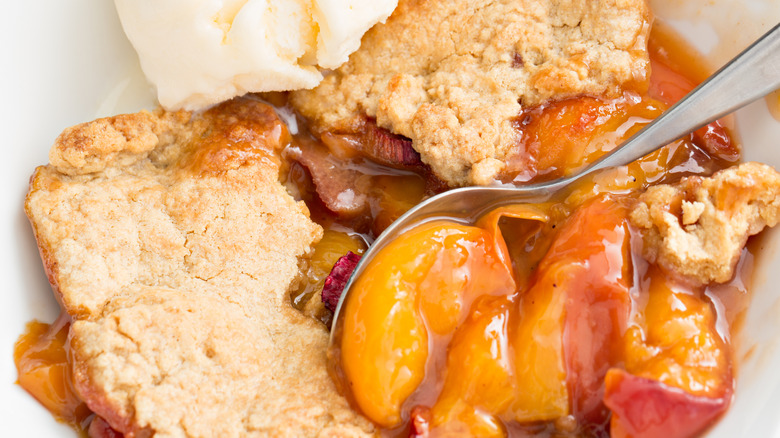
When making something like a peach cobbler, it's always a good idea to store it in portions, as that way you can reheat slices when you need them easily. All you have to do is put individual portions into small oven-safe dishes so they are ready to get thrown in the oven when the craving strikes. And good storage is everything, actually. The gentle reheating will only work properly if you've stored your cobbler properly in the first place — so once it cools the first time you bake it, cover the cobbler well and put it in the fridge as soon as possible, rather than letting it sit at room temperature.
Covering it tightly is essential to prevent the peaches from drying out, as well as picking up other odors from food in the fridge. These storage mistakes that can spoil your food are very important to avoid, especially when it comes to this kind of fruity dessert. Their moist fillings can actually make it more difficult to judge their condition by simply looking at them. The USDA recommends that most refrigerated leftovers be eaten within three to four days, so be mindful of the time that has passed since you first made it. If you're unsure, it's better to skip it than risk getting too excited about that forgotten cobbler lurking at the back of the fridge.