

Rotisserie Vs Roasting: Which Method Is Best For Cooking A Whole Chicken?
We may receive a commission on purchases made from links.
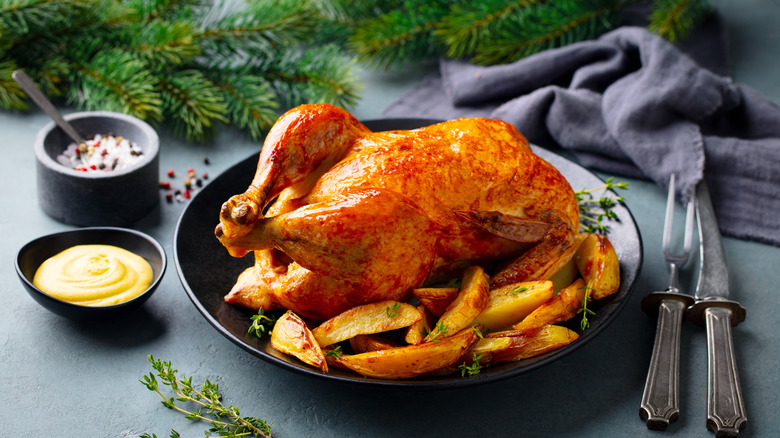
If you'd like to prepare a whole chicken at home, both rotisserie-style and roasting are options that yield crispy skin and tender, juicy meat. But there are pros and cons to each. When choosing a method, consider cost of supplies, ease of preparation, cooking time, and — importantly — the overall taste and texture of the final dish.
The ingredients and cooking time for roasting a chicken are similar to a rotisserie, but the methods can create very different outcomes. Using a rotisserie can enhance the chicken's flavor and texture compared to traditional roasting thanks to the way the method promotes even browning and coats the entire bird in rendered fat as it turns. That said, rotisserie comes with the upfront cost of the machine (or at least an attachment for your oven or grill) and the associated storage requirements. Plus, there can be heat buildup if you're using it indoors.
The upfront cost for roasting a chicken at home can be significantly less, as ovens are a standard kitchen appliance in most homes and one of those old-fashioned but dependable Granite Ware roasting pans is under $30. It also requires less setup. There are also ways to make pan-roasted chicken just as flavorful as a rotisserie bird, with similar results, though that may require more work on your part. But ultimately, if you have the money and space, rotisserie is the best way to achieve even browning and luscious flavor.
The benefits and drawbacks of making rotisserie chicken
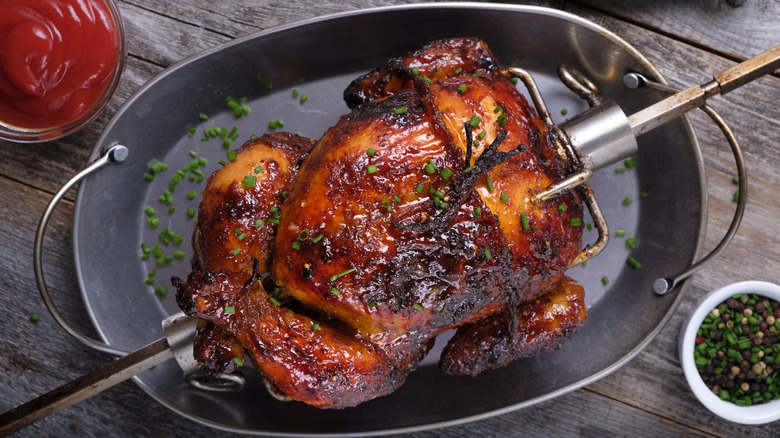
One of the most appealing aspects of rotisserie chicken is what the rotating spit does for its texture and flavor. The constant rotation allows the bird's rendered fat to roll across the exterior, turning the skin brown and crispy all over, intensifying flavor, and allowing for even cooking across the chicken. That's a step up over traditional pan roasting, which limits airflow to the bottom of the bird.
However, cooking rotisserie chicken requires you to invest in either a grill or oven rotisserie attachment or a countertop home rotisserie. How much that costs depends on what you need. For example, a rotating rotisserie grill attachment costs about $50 to $150. Models for your oven cost about the same, but they're rarer and may not fit. And a stand-alone model can be even pricier. A NutriChef Vertical Countertop Rotisserie runs about $125. A Ronco 6000 Platinum Digital Countertop Rotisserie Oven, which can cook two whole chickens, costs about $250. There's also the space to consider. While grill or oven attachments are fairly small, a countertop rotisserie takes up valuable space, so you'll need to find a storage spot when it's not in use.
The rotisserie appliances also come with other considerations. They can give off unwanted heat while they're on. There's also maintenance. A countertop rotisserie oven needs to be cleaned after use, as grease from the drippings builds up easily. You have to wash your pan after roasting chicken too, but that's a much simpler prospect than cleaning the spit, forks, drip tray and interior of a separate appliance with components you submerge in the sink. That said, roasting has its pros and cons too.
The benefits and drawbacks of roasting a whole chicken
Oven-roasting chicken is a good method if you don't think you'd use a rotisserie enough to justify purchasing one. It's also a perfectly fine method if you just don't want another appliance taking up space. In fact, Chowhound's basic but foolproof recipe for roasted chicken is a lot less effort than a rotisserie.
There is a caveat, though: if you enjoy crispy skin, roasting falls short. Fortunately, if you're willing to refine your roasting technique, you can still use the oven to prepare a tasty bird with many of the benefits of a rotisserie.
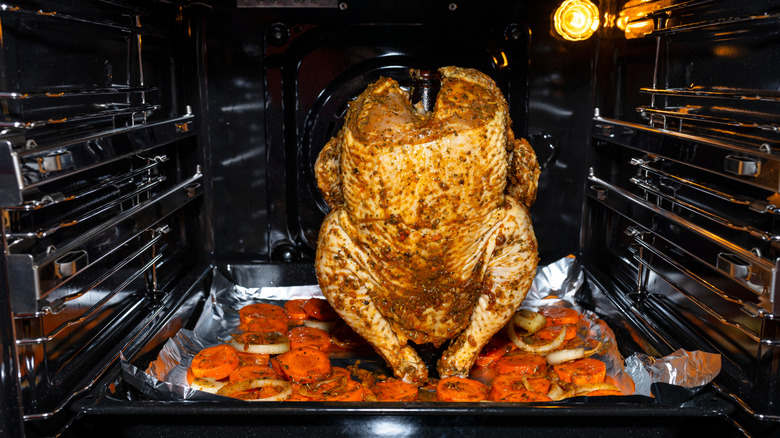
One option is to dry-brine your chicken, which seasons the bird evenly while making it juicy and crisping the skin. Another possibility is coating the bird in an oil or fat and cooking it in a hot oven to brown and crisp the skin. Be sure to use a roasting rack to prevent it from sitting in its own juices, which inhibits crisping. You can buy a GoodCook V-shaped roasting rack for about $10 or, even better, use an inexpensive vertical chicken roasting rack from QWLWBU, available for $8, which holds a whole chicken in place vertically, like beer can chicken, enabling more even cooking all around. You can also approximate making a rotisserie chicken in a conventional oven by using an S-hook to suspend the chicken from the top oven rack for a similar effect. These roasting methods will deliver comparable results in the oven; however, they may not give you the exact same depth of flavor and wonderful texture as a rotisserie chicken.