

Should You Season Pork Ribs Before, During, Or After Cooking?
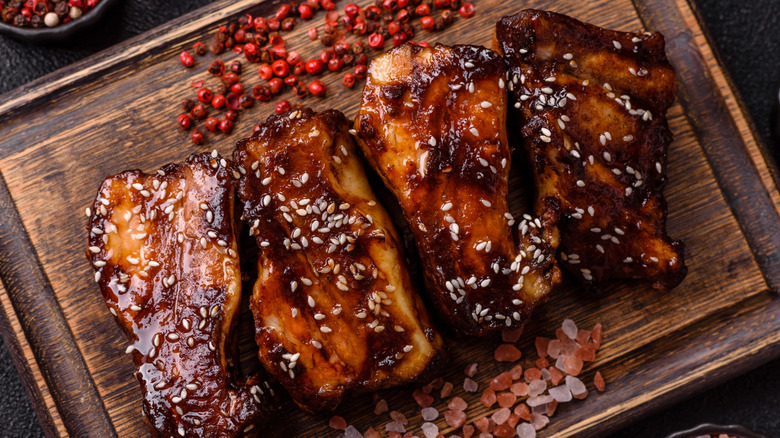
It's one thing to know the best spices and herbs for BBQ pork ribs, but it's another to know when to actually start adding them. Chowhound spoke exclusively with Heath Riles — 83-time BBQ Grand Champion and four-time Memphis in May World Rib Champion — to find out what an expert like him recommends. "I season ribs before cooking to help build the bark, usually with my garlic-jalapeño and competition BBQ rubs, and then won't season them again until the finishing stages," he says. He then incorporates a technique well-known in the Memphis barbecue world. "At this point," he explains, "I typically add a light sprinkle of a finely ground rub as a flavor pop. This is known as Memphis Muddy style, where the ribs are sauced, sprinkled with rub, and then returned to the grill for about 10 to 15 more minutes to let the sauce caramelize."
The Memphis Muddy style of seasoning is basically using the city's beloved mixture of dry and wet seasoning to create a layered, flavor-packed coating and a caramelized finish. That just leaves a couple of obvious questions: Why should you really season before the start and end of cooking, and why does it matter?
Layering and timing are the stars of this pork ribs dish
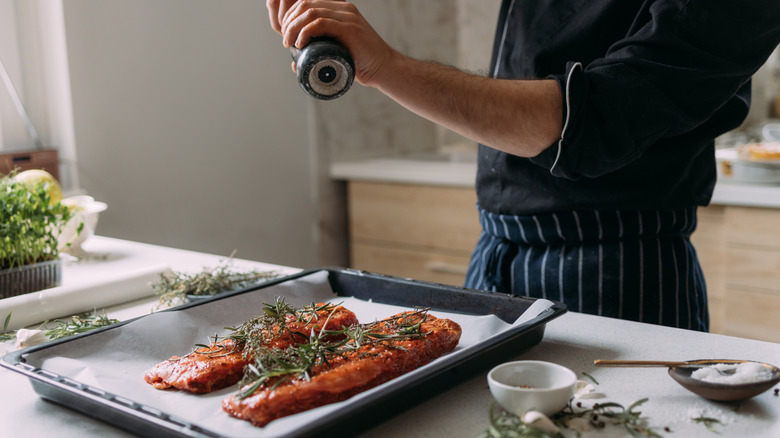
Timing is essential in cooking, especially when it comes to flavor. You miss a seasoning window, and you also miss out on the chance to make the dish even better, one of the many seasoning mistakes everyone makes. For example, adding salt to meat before you cook it creates an environment that helps the juices lock in, allowing for a tender finish. It also helps the flavor seep into the meat more effectively, pulling out the moisture and dissolving it, which creates a brine that's reabsorbed, resulting in more pronounced flavors.
This is where the art of layering flavors comes in. "The whole process of seasoning, along with saucing and finishing, is about building and layering flavors to ensure you have the best bite possible," Heath Riles says. That's why he finishes his pork ribs with a touch of finely ground rub to punctuate the flavors. Seasoning again near the finish line maintains the vibrancy of the seasonings even better, so the flavors are more robust. This also prevents the scenario of spices burning when left on the grill for long periods, which is common with ground spices. Glaze goes on toward the end to avoid the risk of burning while still giving it plenty of leeway to achieve a satisfying, sticky caramelization. Other than helping the flavor by following the chemistry behind cooking, it also makes sense to start with a modest amount of seasoning and work your way up toward the end to avoid adding too much.