

Here's What An Instant Pot Can Do That A Crock-Pot Can't
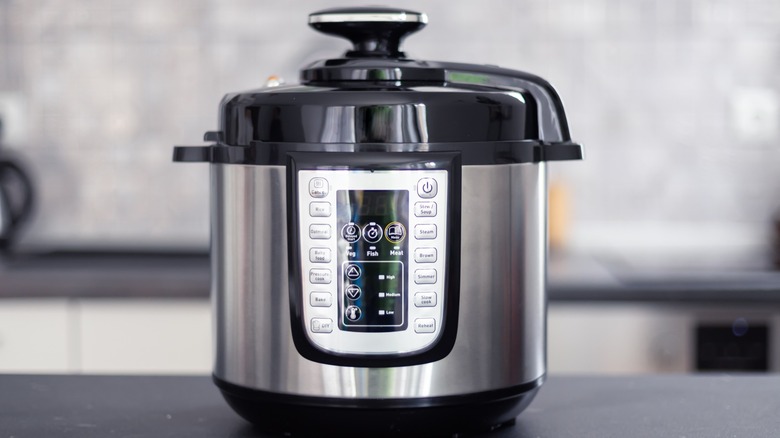
Even if you use your Crock-Pot like an absolute pro (kudos to you), one of the main advantages of an Instant Pot is that it can do everything a traditional slow cooker does, along with quite a few additional things. Depending on the model, an Instant Pot can pressure cook, slow cook, sauté, cook rice, steam, keep food warm, and even make yogurt. As the name suggests, the Instant Pot is a friend to those in a hurry to get dinner on the table.
That said, it's worth laying out exactly what the differences are between an Instant Pot and a Crock-Pot. Crock-Pot is a brand of slow cooker, which is a type of countertop electrical appliance designed to cook food gently over several hours. An Instant Pot is a brand of countertop electric pressure cooker and multicooker that can function as a slow cooker, but can also use pressure to cook food much more quickly.
If you're already thinking that a Crock-Pot is an overrated kitchen appliance, then your next best option might just be an Instant Pot. An electric pressure cooker offers more functionality than a Crock-Pot — cue mushroom risotto, Instant Pot-made burgers, and more.
Here's where an Instant Pot outshines a standard Crock-Pot
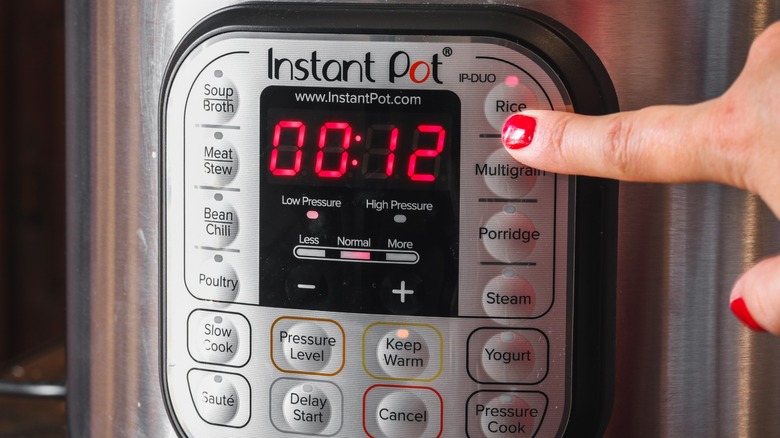
For most people, any tool that helps put dinner on the table quickly or easily is worth the attention and money. When it comes to the Instant Pot-versus-Crock-Pot debate, however, not everyone wants (or needs) to own both. In addition to cooking food faster, the device functions available on an Instant Pot give it more versatility than a Crock-Pot, and allow you to perform multiple cooking tasks with the same appliance.
Its cooking speed can also make an Instant Pot especially useful when you haven't planned dinner hours in advance. Dried beans, for example, can be cooked without soaking them overnight. The appliance is even able to cook meat straight from the freezer. One Reddit user reported that it can cook chunks of frozen meat in about 20 to 25 minutes. Let's see a slow cooker do that.
The sauté function on the Instant Pot also allows you to do things like brown meat for your stews the way you would in a Dutch oven. You can also sauté onions and other aromatics before adding liquid and switching to pressure cooking, helping build layers of flavor without dirtying a separate skillet. With a traditional Crock-Pot, you'd need to brown those ingredients on the stovetop before transferring them to the slow cooker.
Limitations of an Instant Pot (and when a Crock-Pot might actually be for you instead)
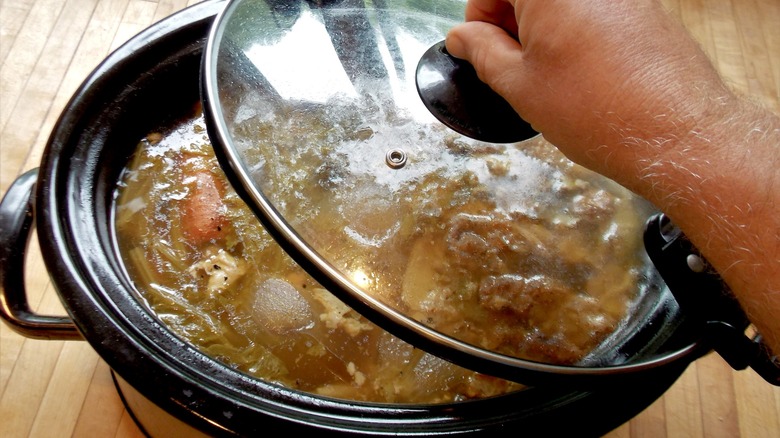
Despite all those fancy features, there are still reasons to choose a Crock-Pot over an Instant Pot. Slow cookers work well for those who prefer to cook a variety of things over a long period of time with less monitoring. Traditional slow cookers are also available in a wide range of shapes and sizes, including oval models that can accommodate larger or oblong cuts of meat. If you're not planning on making a variety of dishes outside of stews and roasts, the Instant Pot and its many features might not matter so much to you.
The glass lid on a Crock-Pot also allows you to check on your food while it's cooking without opening the appliance. Unlike a pressure cooker, which is sealed while cooking under pressure, you can open a slow cooker to futz with seasonings along the way. Crock-Pots are also generally less expensive than Instant Pots, and there's little reason to pay more for all the extra functions if you don't expect to use them. Ultimately, the choice comes down to your personal cooking habits. If you're in the market for one of these appliances, ask yourself how much you value speed and versatility versus simplicity, affordability, and an easy way to let food cook throughout the day.