

Why Dairy Products Belong At The Back Of Your Fridge
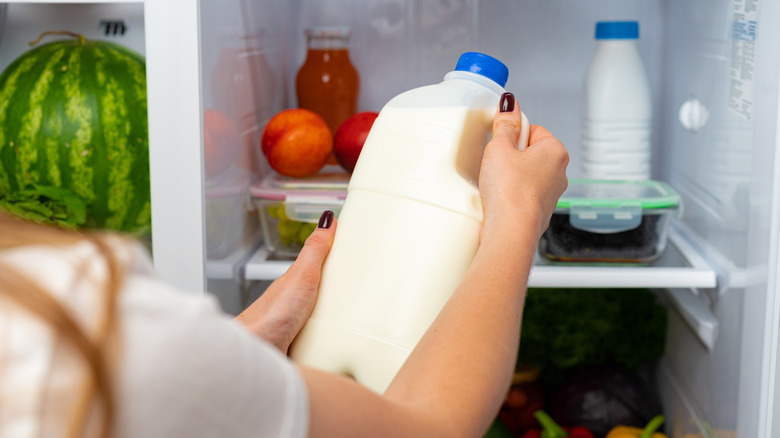
Open the refrigerator in millions of American kitchens, and its shelves will tell just as many different stories of carefully home-cooked meals, condiment habits, and hasty takeout decisions. But one item's placement is so ubiquitous that you could probably predict its location with as much accuracy as any fancy smart appliance camera: milk in the door. For all its familiarity, this is actually the worst place to store this perishable grocery, along with related goods like cream and yogurt. The back of the refrigerator has better conditions for staving off premature spoilage from these and similar foodstuffs.
The door is your refrigerator's warmest spot because it's more easily exposed to room-temperature air every time you take a peek inside. The back of the refrigerator is just less vulnerable to these threats. Even the expiration date printed on a cup or carton can only reasonably be relied upon in the best conditions. And the best conditions for keeping any potentially harmful bacteria at bay start with chilling your dairy to the USDA-recommended 40 degrees Fahrenheit or below, more reliably found in the depths of the appliance. "Or below" is actually your refrigerator's temperature sweet spot, which should hover from around 35 to 38 degrees Fahrenheit for a comfortable margin of error. Hitting that zone and removing your milk, cream, and yogurt from the balmy door to the brisker environs of the machine's main cabinet are among the best things you can do for your dairy.
More storage considerations for maximum dairy longevity

Television commercials have created the false impression that milk is best served in big, glass pitchers. But this can do more harm than good. Attractive as they may be, those pitchers expose your milk to unsafe contaminants, not to mention innocuous but flavor-ruining odors that might be floating around the fridge. The cardboard carton or gallon plastic jug that your milk is likely sold from keeps it safer from both. One exception might be at something like a brunch event cereal bar where you want your guests to have easy access to a splash. Go ahead and decant your milk in that case, but only keep it out for two hours, max. The same goes for the cream you might put out for coffee and the yogurt you provide for parfaits.
Of course, there's plenty more dairy than these liquid and/or milk-adjacent forms. Folks have gone to culinary war over how long butter can sit out on the counter. A day or two is fine in the short term, according to the USDA. But it doesn't hurt to move those golden sticks from their often manufacturer-made dedicated door spot to the colder back of the refrigerator when you're trying to preserve them for longer. All the world's vast and varied cheeses may have their own nuances, but they're all best kept cold and humid, ideally in a breathable wrapper. The average grocery store stuff will probably fare the best — you guessed it — in back with all of the above. If you're ever in doubt, it's often best to just close the door on storing your dairy there.