

Forget Soy Sauce — Pack Plain White Rice With Flavor By Using This Chinese Condiment
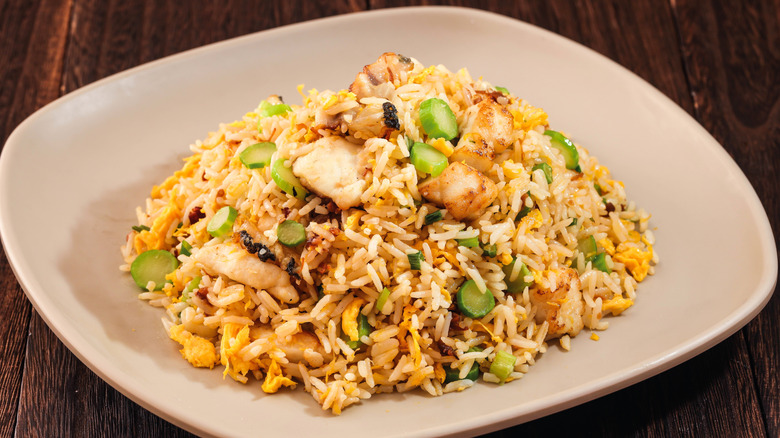
Visit a Hong Kong-style restaurant, and you may have spotted a jar of red-brown sauce that's an intriguing blend of umami, smoky, and a little fishy. That's XO sauce, and it's something worth adding to your culinary repertoire. That mixed flavor is due to a fairly wide-ranging set of ingredients. XO Sauce brings together dried scallops and dried shrimp, which are then fried with garlic, shallots, chiles, and cured ham. So, it merges briny tastes from the seafood alongside heat, a pungent hit of aromatics, and saltiness from the ham. It's a thicker sauce that's a little bit clumpy, closer to a chutney consistency than something you can pour right out of a bottle.
If you're wondering why you haven't heard of it, it could be because it's (relatively speaking) a "new" culinary creation — while soy sauce goes back thousands of years, XO Sauce first surfaced in Hong Kong in the 1980s. Its exact origin story is not settled: One Hong Kong fine dining restaurant called Spring Moon took credit for inventing it in 1986, with the restaurant placing it on tables as a complimentary condiment. However, there are indications that a similar sauce existed beforehand, perhaps as early as the 1970s. That said, Spring Moon did coin the name, which references "extra old" ("XO") cognac — XO Sauce isn't aged like whiskey, but instead, it's meant to give a high-end air (like that of cognac) to the sauce.
How to use it and where to get it
XO Sauce tends to be used as a finishing sauce rather than a base for dishes. It's so intense in flavor that you could turn plain white rice into something tasty with a spoonful or two of it. Otherwise, add it to leftover fried rice or noodle dishes for a spicy, umami hit. Go easy, though: The flavor is intense, so you won't want to pile it on. You can work it into eggs or add it to stir-fried or steamed veggies, too. It can go neatly with seafood — steamed fish is one possible pairing (it's somewhat oily, so you might not want to add it to a dish that's already cooked in oil). It also goes well with dim sum staples like rice rolls or turnip cake.
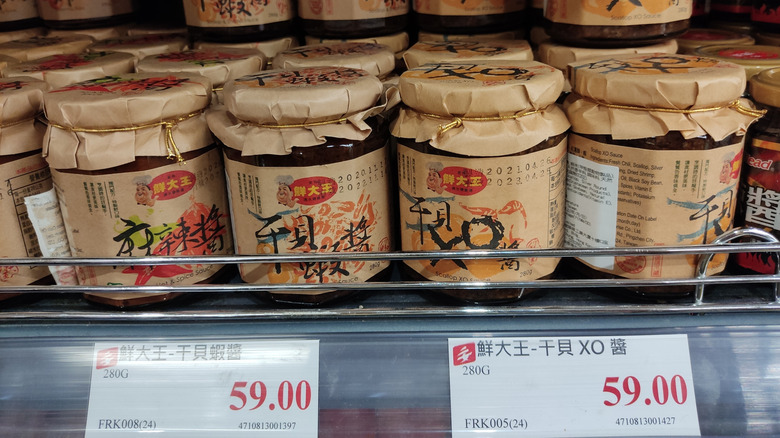
XO Sauce is something that you can theoretically make at home, but it's relatively time-consuming, as a lot of ingredients need to be fried separately. Some chefs have spent hours on a single batch of it. You might be better off just buying a pre-prepared version: It's moved out of its fine dining setting, and brands like prominent sauce-maker Lee Kum Kee now make their own versions (although they're considered to go lighter on the seafood ingredients). You can likely find this and other brands in Asian grocery stores, although anecdotally, it's not ubiquitous in such stores, and you may want to look for grocers that focus more on Chinese cuisine or shop online.