

Avoid These Red Flags When Buying An Espresso Machine From A Thrift Store
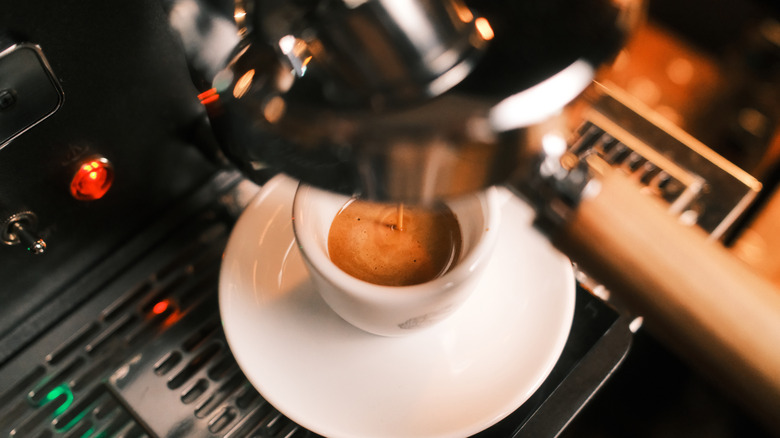
Great espresso machines, even ones for beginners, can be costly, so it makes sense to source one secondhand. But as with any thrift store appliance, you have to be careful and inspect it properly. Otherwise, you might be looking at costly repairs that, in some cases, could be almost as expensive as a brand-new machine.
Its external condition is a good starting point. Any major dents or cracks might indicate a bigger, unforeseen issue, though pristine cosmetic condition doesn't mean it's working properly. You can also tinker with the machine and test out the various controls and components. A jammed knob is automatically a problem that you'll need to have fixed, which might turn costly. To ensure compatibility, examine the detachable components, as some might not be right for the model — or you might even spot missing parts.
You can investigate further by checking the cord and other external components, making sure to avoid purchasing a machine with faulty wiring, rust, or similar problems. It's generally a good idea to avoid older models, as they could already be nearing the end of their average lifespan. If they break down, it might also be difficult to find replacement parts. The water reservoir, or tank, shouldn't have mineral-scale buildup or traces of mold, for obvious reasons. When in doubt about what to look for, it helps to research the machine beforehand and identify common issues so you know what to focus on. Considering how many things could go wrong when buying a used espresso machine, is it still worth purchasing one to save a few bucks?
Secondhand espresso machines can be a gamble
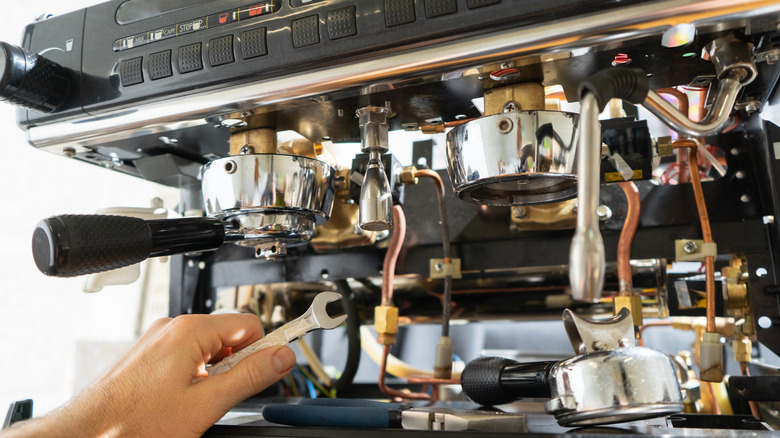
There are plenty of decent espresso machines that won't cost you a fortune. However, if you're eyeing one from a prestigious brand, like La Marzocco, buying secondhand might be worth a shot. Some internal issues, such as limescale buildup, won't usually be apparent unless you take the appliance apart or test it thoroughly. Limescale can contribute to off-tasting espresso and inefficient water flow, while corroded metal parts can result in leaks. These problems can potentially indicate that the machine wasn't properly maintained, as descaling is a maintenance task that may need to be performed every three to six months.
If possible, you can ask a thrift store employee a few questions to gauge whether the espresso machine is worth buying — including when the water filter was most recently replaced — but it's possible that they won't know anything about it. Unless you're purchasing from a source that can provide information about where the appliance was stored, as exposure to temperature fluctuations can damage internal lines, or whether service records are available, among other details, it might be a good idea to leave it on the shelf.
Overall, creating an at-home coffee bar is a breeze, but a secondhand espresso machine can give you headaches and lead to expenses you never saw coming. However, if you know your way around the technical components and can fix the machine when necessary — or, even better, if it comes with a warranty — that's when we think it might be worth the risk.