

How To Tell If Spices Are Low Quality Before You Even Buy Them
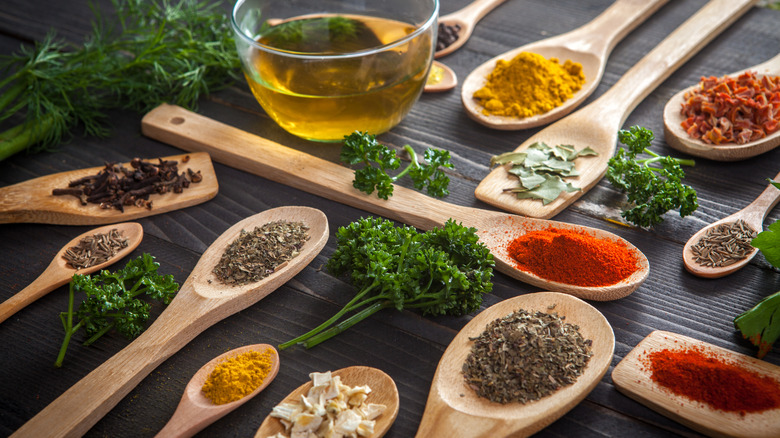
No kitchen would be complete without spices — but assessing their quality before you buy them can be tricky, though it no longer has to be. Chowhound spoke exclusively with Victoria Thorburn (owner and herbalist at Sprig Herbals) and Kristina Zito (CEO and creative director for Selefina, an online premium spice shop) to learn how to properly discern low quality from ones that will actually deliver. But here's something to remember: There's no single factor that could tell you the quality, but it pays to know where to start looking.
Thorburn recommends contacting the producers and asking for Certificates of Analysis documents (COAs). "That would be the gold standard for me and typically includes verification of identity for the herbs and spices used, contaminant testing for things like heavy metals and pesticide residue, and frequently also includes information around harvest date and sometimes processing date," she says. If they're unable to deliver, she would pay attention to the packaging, ingredient list, and best-by dates.
Zito shares the pain of assessing spice quality, recommending asking for samples when possible. She also advises being on the lookout for labels that don't tell you the specifics. For instance, just indicating "cinnamon," instead of making it clear whether it's Ceylon, can potentially be a red flag. Moreover, too good a price, which seems like a sweeter deal compared to other sellers, might also be indicative that it's blended with other ingredients, so the flavor you're after won't be as robust. At times like these, it makes buying name-brand spices worth it, though these and other factors should help eliminate the guessing game and improve how you develop your fantastic meals with quality spices.
How to never buy low quality spices ever again
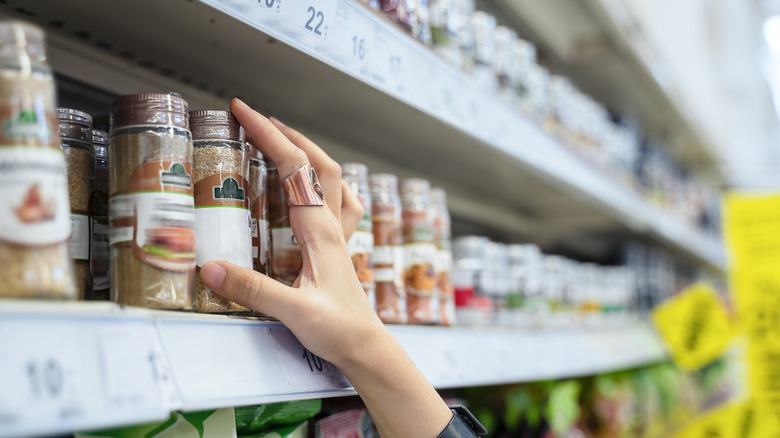
Victoria Thorburn also mentions the importance of proper packaging, saying, "When assessing the quality of a spice — or any powdered herb — I am looking for vibrant color [and] a well-sealed container with minimal to no air, as powdered plant materials are highly susceptible to oxidation and volatile oils easily dissipate." Volatile oils are the culprit behind a lot of the flavor, and they're present in whole spices, from leaves to bark. Thorburn further recommends checking if you can smell the spice through the packaging, which is indicative that it wasn't properly sealed. It's crucial to properly store spices for the longest lasting flavor.
"Packaging has different oxygen transmission rates (OTR evaluates how much oxygen passes through the packaging)," Kristina Zito says. Glass OTR is almost zero, but make sure the lid is airtight or it will be pointless. Foil-lined packaging is your best bet and maintains the freshness of spices longer. Color can also clue you in; if the color isn't vibrant, it could mean that it's old and not as robust in taste. However, some companies introduce coloring to spices to give the impression of freshness. This is why sometimes, it pays to grind your own spices and find companies you actually trust. Meanwhile, clumping is a sign that the spices were exposed to moisture, which can be a sign of spoilage, especially if it comes with a weird smell and taste. That said, it can be naturally occurring in some spices, and can simply make it challenging to break down into pieces for your dish.