

The World's First Ketchup Didn't Start With Tomatoes
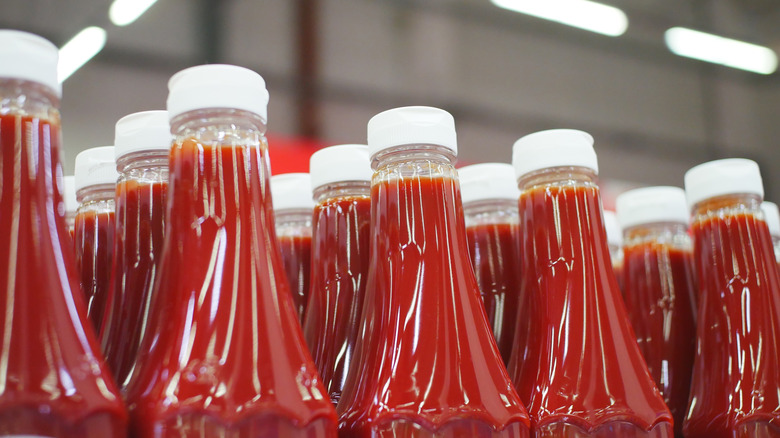
Long before Americans were squirting tomato ketchup on their burgers, hot dogs, fries (and, yes, scrambled eggs), folks in Southeast Asia and China were enjoying the sauce that likely gave birth to this ubiquitous red condiment. It was called kê-tsiap in the Amoy Chinese dialect and dates back to at least 300 B.C. There was nary a tomato to be seen in the mother of all ketchups. It was instead made with fish entrails. The word translates to "the brine of pickled fish" and most probably originated in what is today Northern Vietnam, according to "Pure Ketchup: A History of America's National Condiment" by Andrew F. Smith. Fish-based condiments were and continue to be a staple in Southeast Asia.
To get to what we today think of as ketchup, or catchup, or catsup, depending on which spelling you prefer, we have to go through the British via Indonesia where they first likely came in contact with the term kê-tsiap, or its later form kecap, in the 17th century. Some historians believe the British used it as a generic term for soy sauce, which is made from fermented soy beans and other ingredients. Others postulate that the British considered it as a type of savory sauce distinctly different from soy sauce. Back in England, people began to make their own versions with the very first known written English recipe dating to 1727. Its base ingredient was anchovies and while it did contain vinegar, cloves, and pepper, which you'll find in today's ketchup, there were still no tomatoes.
It took a long time for tomatoes to become a ketchup ingredient
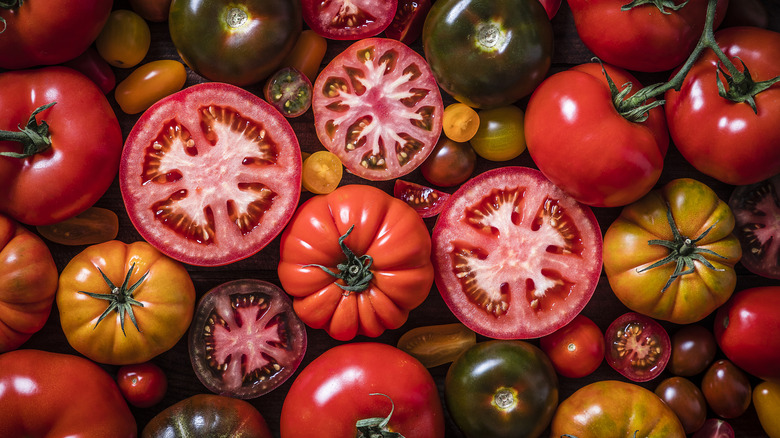
Besides anchovies, early British versions of ketchup included ingredients like mushrooms, oysters, walnuts, fruits, and kidney beans, among other things. Although by the late 16th century the English had access to tomatoes, which were first domesticated in Central America, they were rarely eaten by the British since it was a commonly held belief that tomatoes were poisonous. By the 19th century, tomatoes were being grown for food there, although it took their American cousins to make the leap to tomato ketchup.
While there are a few alleged instances of Americans making a tomato-based ketchup in the 1700s, it wasn't until 1812, when the first known recipe was created by a horticulturalist from Philadelphia named James Mease, although he included brandy in the recipe and not many spices. It took Henry J. Heinz to produce a tomato ketchup in 1876 that we'd recognize today.
Considering the long list of base ingredients ketchup has gone through — from fish entrails to walnuts — Heinz's variety of weird ketchup flavors, like its bright blue version or one made with balsamic vinegar, doesn't seem that weird after all. So the next time you slather ketchup on your burger consider the rich history that went into this everyday condiment that began as an Asian fish sauce.