

How To Correctly Add Spices To Your Dish For Maximum Flavor
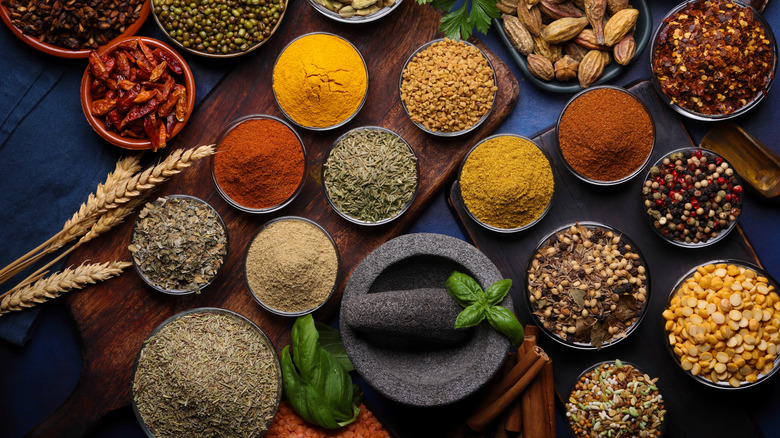
Every home cook knows that spices bring the flavor to a great dish. No wonder some (like pepper, cinnamon, and nutmeg) were once worth more than gold. Luckily, today you can find even the most uncommon spices in most grocery stores. But stocking your spice rack is the simple part. According to Anne Milneck — chef and owner of Louisiana's Red Stick Spice Company, and a chef instructor at the John Folse Culinary Institute at Nicholls State University — knowing how to use them is the real game changer.
Milneck revealed that adding spices at the right time can seriously improve a dish's flavor. "Add ground spices early in the cooking process when aromatics or protein are being sautéed in fat," the chef told Chowhound in an exclusive talk. "If you add spices at the end of cooking a soup, you're picking a fight with physics." The reason for this is pretty simple: most spices are lipophilic and hydrophobic. In other words, they love fat but repel water. While they will still do their job when incorporated into a liquid, sauteing them in fat first will get more flavor out of them.
Dried herbs, however, are hydrophilic and thrive in water, and should be sprinkled in toward the end. "Add Italian Seasoning with dried basil, oregano and thyme at the end of cooking a marinara or tomato soup," Milneck suggested. "If you add dried herbs too early, they lose their flavorful properties by cooking too long in a liquid environment like a soup or stew."
You can make the most of your spices with these simple techniques
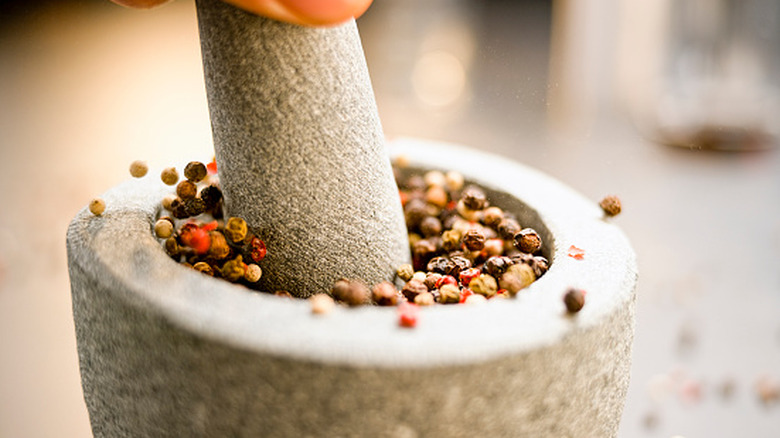
To bring out the best of your spices, there are three effortless tricks worth a try which seriously unlock their full flavor profile. To use whole spices like a professional chef, an easy step is to toast them in a dry skillet to release their flavorful oils and aromas. Grinding is yet another option, and it requires a mortar and pestle, a spice grinder, or a pepper mill. "Grinding increases the surface area of a spice and unlocks flavors — especially when the spice has first been toasted," Anne Milneck explained.
Blooming them in oil is the other simple method to get more flavor from your spices. In simple terms, you'll need to briefly cook your ground spices in hot oil (or fat) before adding the rest of the ingredients. It will draw out their fat-soluble flavor compounds and make the dish more flavorful and aromatic. "Ground spices really wake up when bloomed in fat as part of the cooking process," Milneck explained.
These steps can have a huge impact on the final result. By releasing the spices' volatile compounds, they can deepen the flavor and bring the entire dish together. However, as per Milneck, it's crucial to work them into the dish from the start, rather than treating them as a quick fix at the end. "Look at your recipe, if you are sauteing aromatics like onion, celery and garlic in oil or butter as one of the first steps, add your spices then, giving the spices an opportunity to bloom and deliver big flavors," she concluded.