

Sweet Potatoes Are More Flavorful With This Tangy, Crunchy Topping
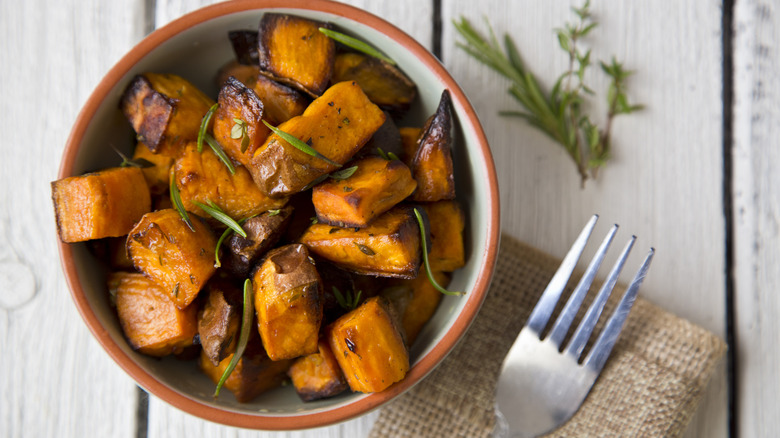
We love sweet potatoes, but with their creamy texture and mild flavor, they can sometimes feel a tiny bit lacking. To switch that up, pair them with something that has bite — something like kimchi. If you are unfamiliar, kimchi is a staple in Korean cuisine, a side dish made from fermented vegetables and seasonings that can bring a lot of the acidity, heat, salt, and crunch that a roasted or baked sweet potato lacks. And while a classic napa cabbage kimchi recipe is the one you probably know best, kimchi is not just a job for cabbage — kimchi can also be made with radish, cucumber, or other vegetables.
That more commonly known, bright red, chili-heavy kimchi that you find in grocery stores today is actually much more of a recent development than other forms, because chili peppers didn't arrive in Korea until the Joseon period 500 years ago. And similarly, sweet potatoes also arrived in Korea during the same period, so these two ingredients that make such a good pairing are both relative newcomers to Korean cuisine. And a good pairing they most certainly are — the potato's mellow sweetness takes the edge off kimchi's acidity and heat, while the fermented cabbage adds a savory and garlicky punch the potatoes so need. Texturally too, a fluffy baked or roasted sweet potato really benefits when it has something crisp and juicy to work against it.
How to use kimchi on sweet potatoes

To really master this pairing, first, follow our tips to make the absolute best baked sweet potato, roasted sweet potato cubes, or wedges. However you want to cook your sweet potato is up to you, it's just important to add the kimchi once the potato is already cooked. Spoon some chopped kimchi over the hot flesh or toss it through wedges — the main idea is simply to keep the kimchi out of the oven so it stays punchy and crunchy.
Then, consider how much kimchi you actually want to use. This food tends to be salty and strongly seasoned already, so just few forkfuls should be enough to wake up one average-sized sweet potato. If you have a particularly spicy version on your hands, cool it down and add some creamy texture to the mix in the form of a spoonful of mayonnaise or sour cream, some avocado slices, or a drizzle of tahini or tzatziki. A scattering of sesame seeds and scallions on top is the final chef's-kiss moment. If you're keeping the dish vegetarian or vegan, don't forget to check the label first, as traditional kimchi is sometimes made with fish sauce, shrimp paste, or salted seafood, although plant-based versions are increasingly easier to find.