

Stop Storing These 2 Ingredients Together In Your Fridge
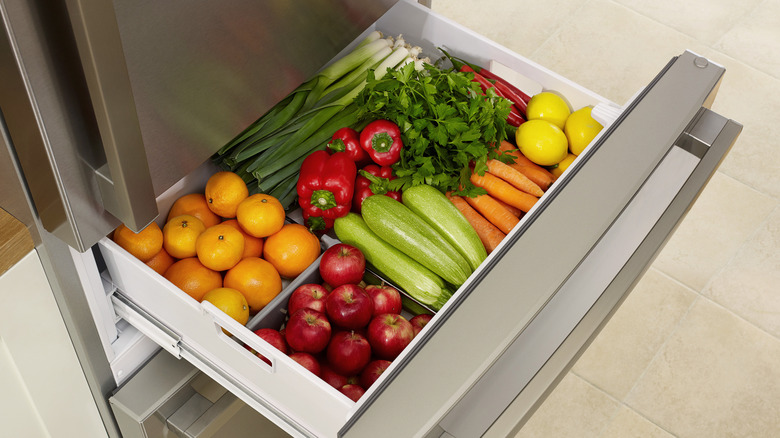
Storing food in the fridge seems straightforward — you toss it in or put it in an airtight container and call it a day. But there's a right way to store fresh produce together, and there are ingredients that should be placed further apart, like tomatoes and cucumbers. Otherwise, one of them will lose its peak freshness faster than you'd like.
The one that will get the shorter end of the stick in this scenario is the cucumber, accelerating the time it takes for it to spoil, lose its crisp texture, and turn its skin from lively green to dull yellow while developing a shriveled exterior. Even worse, the cucumbers can turn soggy and mushy, which means it's best to throw them out. The sneaky culprit? The ethylene gas from tomatoes. It's not as bad as it sounds, though, as it naturally occurs in plants. Tomatoes are one of the products that emit ethylene gas, which is a plant hormone that aids fruits and vegetables to become ripe. But let them sit next to ethylene-sensitive perishables, and they can trigger a faster spoilage process.
In the process of reaching maturity, ethylene levels increase, so unripe ones usually produce very little. However, the amount of ethylene gas produced can vary depending on the tomato cultivar. Additionally, factors like bruising, cuts, and the like can cause them to produce more ethylene, so look out for those signs as well. Generally, make sure to store ethylene producers, like tomatoes, bananas, and cantaloupes, separately from ethylene-sensitive ones, like cucumbers, onions, and collard greens. Grouping them all together in the crisper drawer is a common mistake that causes them to spoil faster.
Observing proper storage
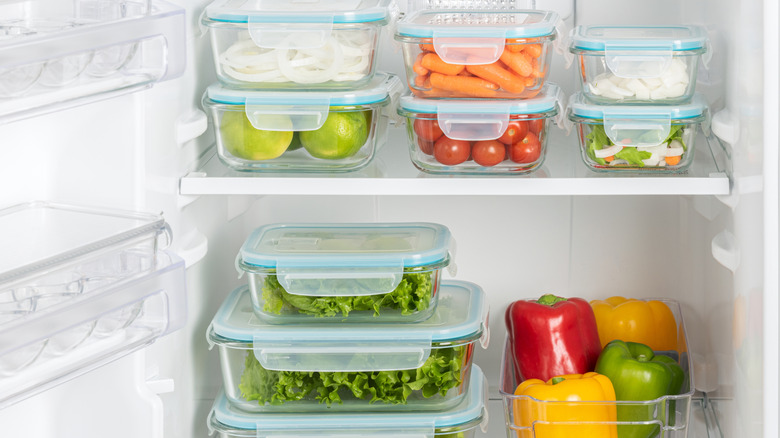
What you should be doing instead to store vegetables (and fruits) in the fridge and make them last longer is to assign different sections for ethylene producers and ethylene-sensitive products. For good measure, you can even store ethylene-sensitive fruits and veggies in a sealed container. But, fair warning, some ethylene-sensitive products are Trojan horses because they can also be producers, like apples and avocados, so keep them away from both ethylene-sensitive ones (like cucumbers, mangoes, and watermelons) and ethylene-producers (such as bananas, peaches, and pears). Putting them in a sealed container can also cause them to spoil faster, as it can trap ethylene gas.
However, if your goal is to ripen a fruit pronto, you can take advantage of ethylene-producers — just store sensitive products with them, and it might just be ready to be consumed the next day. There are also certain ingredients that aren't sensitive to the gas, including blueberries, pineapples, and potatoes, so you can always store them next to producers like tomatoes. You can benefit from ethylene absorbers, which soak up extra ethylene, helping keep your produce fresh. But they should only serve as a supplement to prolong the product's lifespan; you should still observe proper separation.
So, if you've ever wondered why some of your produce suddenly spoils faster, ethylene producers might be to blame. The good thing is, though, there's an easy fix, and now that you know which ingredients produce ethylene, you can make sure they don't mingle with those that are sensitive to it.