

What Are Center-Cut Pork Chops?
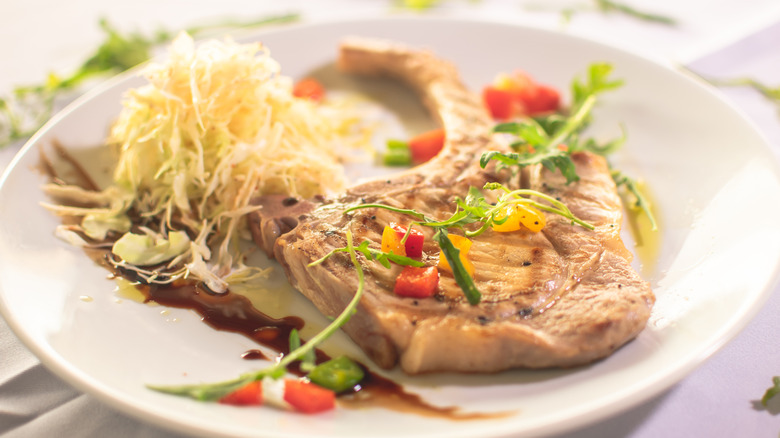
There are several pork cuts that are tasty, versatile, and repeatedly find their way to our dinner tables. Not all of them are created equal though, and some get more attention than most (ahem, bacon). Center-cut pork chops deserve your attention if you want to indulge in a milder pork taste that includes both loin and tenderloin meat.
This cut comes from the hip and center loin (mostly from the back of the pig) and is considered to be a leaner piece of meat. Center-cut pork chops may come as a bone-in or boneless form. The T-bone shape offers lighter loin meat, and then on the opposite side, darker-hued tenderloin meat. Pork loin and tenderloin are significantly different types of meat, with tenderloin offering a succulent touch and the loin a leaner piece of meat. However, the more tenderloin present in the chop, the more the price may increase. When looking for center-cut pork chops, you'll sometimes come across other names such as porterhouse chop, top-loin chop, center loin chop, loin pork chop, or pork loin end chop. No matter how you come across it, your preparation method is what truly what encourages the tasty flavors to come through from this versatile cut of pork.
How to prepare center-cut pork chops
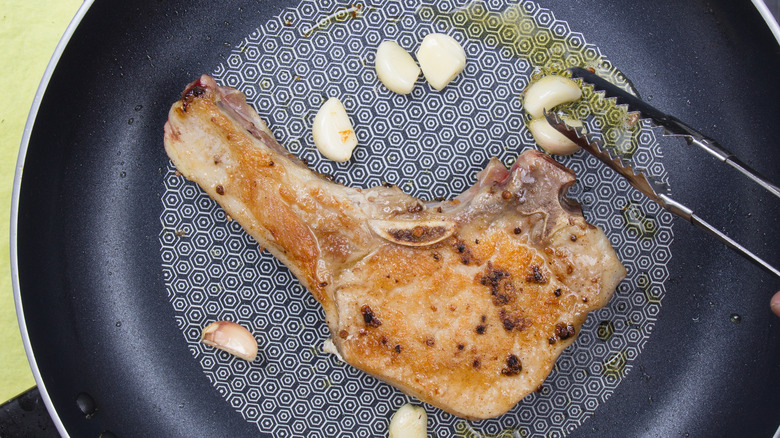
This particular pork chop is known for providing a succulent flavor when pan-seared, sear-roasted, grilled, or broiled. Since this cut is quite lean, paying attention to not overcooking is important so that you don't lose the juiciness. Opting for bone-in over boneless chops might be best for a lesser chance of dryness, since the bone contains collagen, which melts when heated and helps retain moisture. The bone also insulates the meat.
It's worth noting that cooking this type of pork chop may require extra attention, since these two parts of the meat cook at different rates. Even while the T-shaped bone gives your chop an enticing look, it's the most challenging part most cooks mess up. This is because the tenderloin section is smaller, which means it has a tendency to cook faster than the other side of the bone. You can prevent this by ensuring the pan is hot before searing or cooking (this way you're not just steaming it slowly and can allow a crust to develop). You can take the meat off at 140 degrees Fahrenheit to ensure it doesn't burn up, and keep in mind that the USDA recommends ensuring the meat's internal temperature reaches 145 degrees Fahrenheit.
Remember that a marinade or brine can save the day and prevent dryness in your pork chops, and a creamy buttery sauce can bring out the flavor in a way that may not stand out with a more flavor-rich, marbled cut of pork. Once you're ready to put your cooking skills to the test with your center cut, ensure your homemade pork chops come out restaurant-level to really make an impression.