

To Get The Most Nutritional Value Out Of Blueberries, Stop Eating Them With This Other Fruit
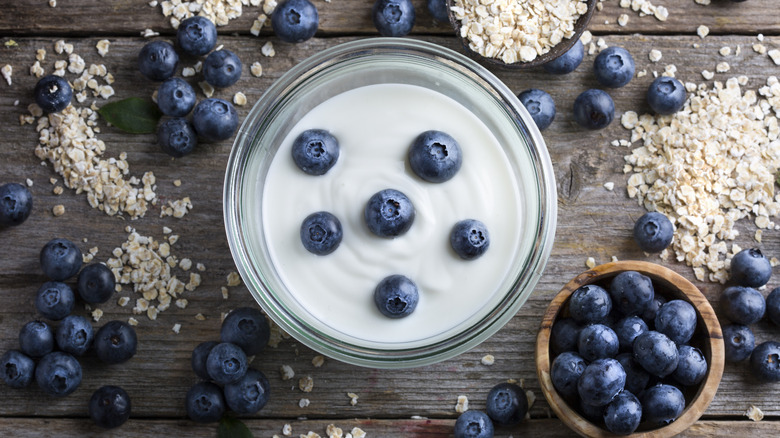
Blueberries are totally versatile, whether you enjoy them fresh, frozen, or even baked into muffins, cakes, or other treats. They're naturally sweet yet slightly tart, which means that there is plenty of room to experiment when it comes to pairing them with other ingredients. In fact, just a pinch of this pantry staple makes blueberries taste 20x better. But not every pairing brings out the best in blueberries, which is why you might want to avoid combining them with bananas.
If you're anything like the rest of the world, chances are you've been mixing bananas and blueberries (and yogurt) into your morning smoothies ever since you discovered that smoothies were a thing. Still, before you start questioning every breakfast choice you've ever made, let's clear one thing up first: combining the two isn't harmful. But according to a 2023 study involving researchers at the University of California, Davis, bananas may interfere with your body's ability to absorb certain beneficial compounds found in fruits like blueberries.
As it turns out, bananas have high polyphenol oxidase (PPO) activity. If you've never come across this enzyme before, simply think of a banana turning brown. Once the damaged banana cells come into contact with oxygen, the enzyme gets to work and then triggers the browning reaction. The research team unveiled that PPO can also make it harder to absorb flavanols, a group of antioxidants found in blueberries, as well as red wine, cocoa beans, grapes, and even green tea.
There's no reason to stop making blueberry smoothies
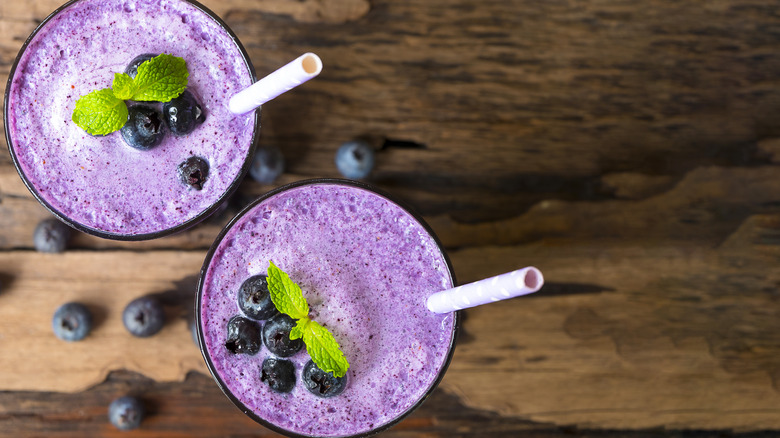
Making a smoothie is one of at least a dozen tasty ways to use overripe bananas. However, according to the relatively small study, both groups consumed the same amount of flavanols, yet the participants who also drank a banana-based smoothie had about 84% lower levels of flavanols in their bodies than those who consumed the same amount of flavanols without the banana. Since research suggests that consuming just half a gram of flavanols a day could reduce the risk of death by heart disease by 25%, getting enough of these bioactive compounds is evidently important. Still, that doesn't mean that you have to give up on banana smoothies for good. But what does that mean?
Well, in general, the university's findings apply to flavanols specifically. Blueberries, however, are a nutrient bomb, which means they're packed with many other nutrients your body will thank you for. We're talking ascorbic acid (vitamin C), vitamin K, fiber, manganese, and many other antioxidants. However, if you've really set your mind on those flavanols, you could perhaps swap the banana for other ingredients that will deliver the same amount of creaminess without compromising flavanol absorption.
First, you want to include ingredients with low PPO activity. Pineapple is one great example. It will also add a tropical, sweet, and tart note to your smoothie. For a thick and silky base, mangoes and oranges are also worth a try. Also, don't forget about other citrus fruits and kiwis for a refreshing tang, as well as beet greens for a sweet and earthy note. Finally, Greek yogurt, kefir, and other types of yogurt can also provide the smoother texture you're aiming for, with some added protein to boot.