

Where Does Trader Joe's Chicken Come From?
It's pretty well known that Trader Joe's store-label foods are produced by third-party manufacturers, and its meats and poultry are no exception. Though some Trader Joe's ground beef is sourced from companies outside the U.S. as stated on its website, Trader Joe's doesn't reveal the specific farms that raise its chickens: looking at the available evidence will point you to specific processing plants.
A handful of big companies and their subsidiaries sell chicken to Trader Joe's (and other retailers across the country): Tyson Foods, Pilgrim's, owned primarily by JBS Foods Group, Sanderson Farms, Mountaire Farms, and Perdue Farms. The practice of white-labeling foods is far from transparent, and some grocery stores with store-brand products avoid advertising that it's happening, much less who provides what. The Cornucopia Institute, which investigates organic labeling, suggests that much private-label organic chicken is made by industrial-scale organic manufacturers, such as Perdue Farms. In a story published by nonprofit news organization ProPublica in 2021, a limited number of reader submissions linked TJ's-brand poultry (including turkey) to at least 15 processing plants. This doesn't necessarily represent all confirmed Trader Joe's suppliers as numerous production facilities may be a supplier at a given time.
Using large-scale farms is a common practice, as Trader Joe's sources its eggs from big suppliers too. And Trader Joe's doesn't reveal which specific companies make the meat it sells at any given time. But you can get an idea of where its chicken comes from by looking at the USDA inspection label.
Using the label and more to find out which food companies process Trader Joe's poultry
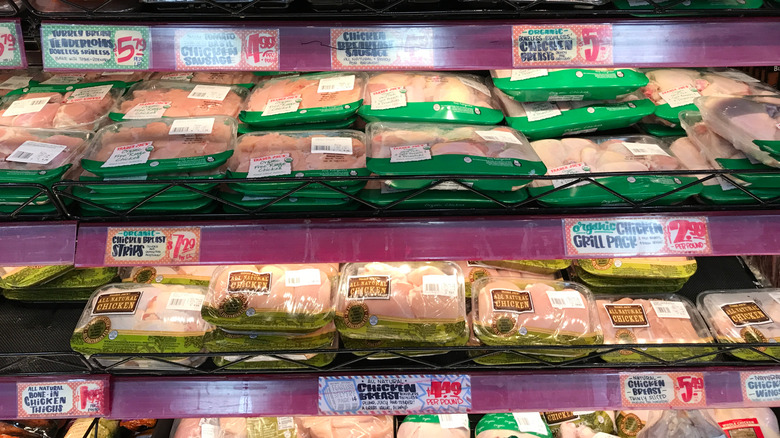
When you're looking for tips on how to pick the best chicken at the grocery store, the label will provide useful information. To determine the source of packaged chicken, look at the P-number, the "P" being specific to poultry, on the USDA inspection label. This is known as the establishment number. If you don't find the establishment number on the label itself, it will explain where to find it (such as "on metal clip" or "on pan"). The USDA published a PDF document that acts as a legend for these numbers, but it's almost 600 pages long (and dated 2021). Besides, ProPublica created a better way. You can do a search on a web-based tool it made called a Chicken Checker, originally built to conduct its 2021 investigation into the sources of grocery store's poultry products. Using the P-number will tell you which plant a package of chicken comes from; to find out where that chicken was hatched, raised, and harvested, check the country-of-origin statement.
Another option is to check for recalls on the USDA Food Safety and Inspection Service website. Recalls will link specified products, lots, and production dates to a facility. This provides you with clues about where your Trader Joe's chicken came from, assuming there are recent recall records available.
The description for Trader Joe's Organic Free Range Boneless Chicken Breasts does say, "Trader Joe's Organic Chicken Breasts come from chickens raised specifically for us primarily on family farms, under the strict USDA guidelines for Organic Certification." But lack of transparency makes it difficult to pin down the exact sources for poultry without a little sleuthing.