

How Long Are Sweet Potatoes Really Good For?
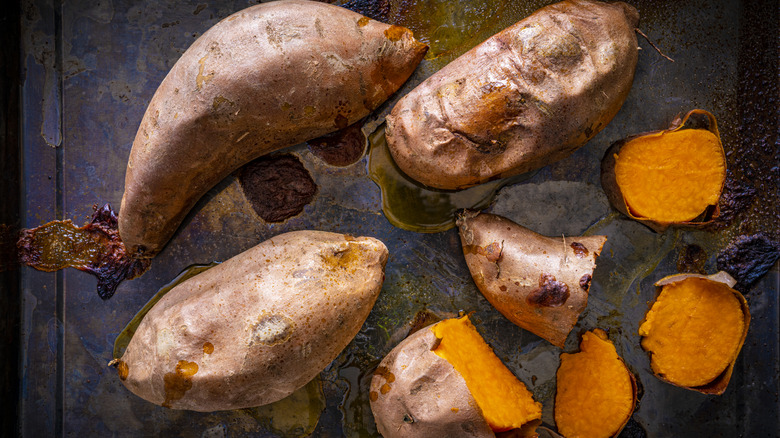
Sweet, starchy, and slightly nutty, sweet potatoes make an incredibly delicious side dish. Especially when oven-roasted and paired with pork chops, salmon, or even chicken casserole. Still, there are at least a dozen different ways to cook sweet potatoes beyond baking. But before you decide to sauté, boil, or grill them, you'll want to know how long they're good for. This mostly depends on the storage method, but if you're wondering how to store raw sweet potatoes, they can last up to two months when kept unwrapped in a cool, dark place at up to 60 degrees Fahrenheit (via Michigan State University). For the best quality, they should be consumed up to three weeks from when they were initially purchased.
On the other hand, at room temperature, they will last for one to two weeks. Past that point, you can expect your sweet potatoes to start going bad. Simply put, this means losing their color, turning soft, or sprouting. In worst-case scenarios, they can even start to rot. Then you'll know it's definitely time to grab a fresh bag at the store. Cooked sweet potatoes, in turn, will remain safe to eat for up to a year when frozen. With that in mind, if you'd rather not freeze them, then just keep them in the fridge and make sure to consume them within five days.
Proper storage is key for extending your sweet potatoes' shelf life
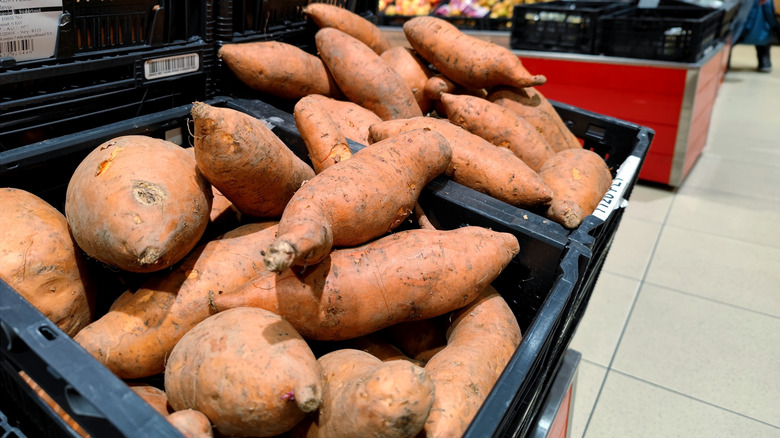
When it comes to prolonging your sweet potatoes' shelf life, a few simple tips can go a long way. First, make sure you skip the fridge when they're still uncooked. The U.S. Department of Agriculture advises against refrigerating raw sweet potatoes. The real reason you should never store your uncooked sweet potatoes in the fridge is that they will undergo structural changes, and turn bitter as a result of a process known as cold-induced sweetening. When this happens, the fridge's cold temperatures activate the enzyme invertase, which will then break down the sucrose into simple sugars, such as glucose and fructose.
In addition, washing your hands before handling sweet potatoes is a must to reduce the risk of foodborne illnesses. Moreover, don't rinse the tubers until you're ready to cook them, as excess moisture can lead to spoilage. A vegetable brush can also come in handy to scrub away stubborn dirt and pesticides.
Once cooked, if you're looking to freeze your sweet potatoes, store them in airtight freezer bags or vacuum-sealed containers. Don't forget to date and label the packages before storing them. Pressure canning is another way to extend their shelf life for up to a year. On that note, always keep them well away from raw meat to prevent cross-contamination. Lastly, avoid leaving cooked potatoes out in the open for more than two hours, since they'll spend too long in the "Danger Zone" where harmful bacteria may develop.