

The Unique Vintage Pasta Dish Only The Bravest Home Cooks Should Try
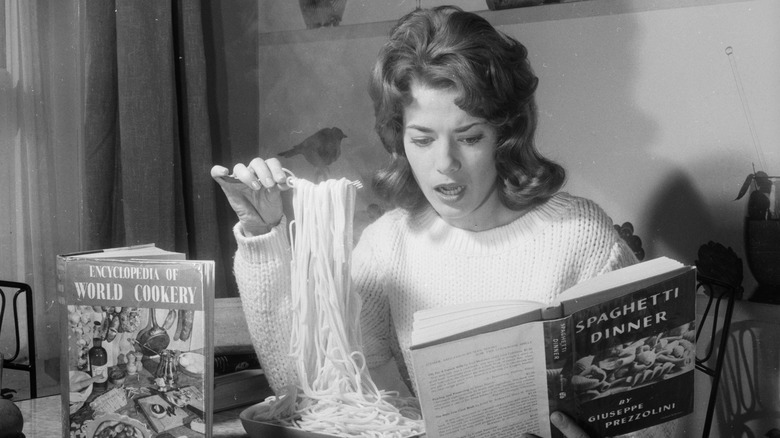
Kitchens were a wild time in the 20th century. The post-World War II era saw a rise in encased meats, such as bologna and Spam; Jell-O was a prominent ingredient in both sweet and savory dishes; and Betty Crocker and Oscar Mayer were household names. The humble casserole, too, was king in suburban homes around the country. A simple mixture of foods, be it pasta, rice, meats, vegetables, and oftentimes featuring a canned soup binder, many of them, including the classic tuna casserole, survived the retro days and beyond.
One dish that also saw its heyday during this era was the mighty noodle ring, a dish made by combining cooked noodles with milk, butter, eggs, and cheese all mixed together then baked. Easily customizable, dozens of variations exist, but what really makes the noodle ring unique — and oh so frightening to make — is the baking vessel: a Bundt pan. The unmolded finished product, if you could get it to come out whole, was a spectacle, wowing dinner guests, especially when the center was filled with an accompaniment, such as meat sauce or sliced vegetables.
A conversation piece ahead of its time
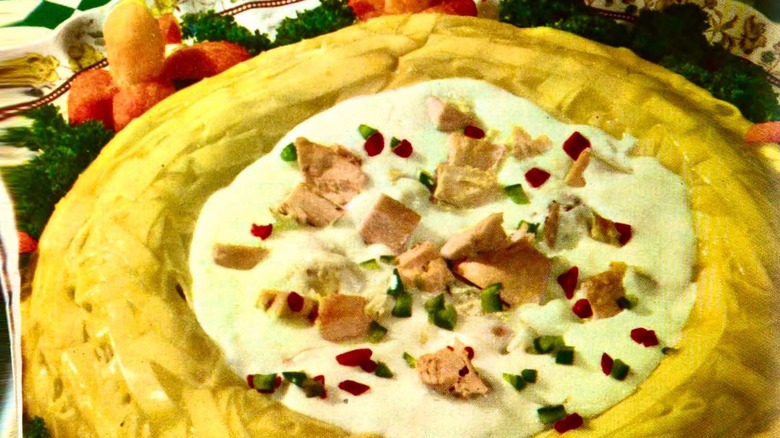
The noodle ring grew in popularity with the introduction of the Bundt pan in 1950. Inspired by the European kugelhopf cake, H. David Dalquist, of kitchenware company Nordic Ware, invented what would become a classic serving dish. Cakes, Jell-O molds, and casserole dishes, including the noodle ring, were all being molded, baked, and served via Bundt pans.
Though Bundt pans have a nonstick coating, you should always coat the pan's entire surface — including those hard to reach nooks and crannies — with baking spray, butter, or Crisco to prevent any sticking upon release when making your own noodle ring. When unmolding your noodle ring, let the Bundt pan rest on a wire rack to cool for a bit to let the pasta set. Then, using a rubber spatula — or one of Nordic Ware's tools designed for the Bundt pan — carefully run it around the interior of the pan to loosen the edges. When inverting onto a plate or rack, gently tap the top and sides to loosen the ring before lifting the pan.
Knowing the base of the noodle ring, you can make any pasta from any cuisine. Whisk in some whole egg yolks and crispy guanciale for a retro riff on classic carbonara, or keep it simple and fill the empty center with a hearty bolognese after unmolding. Your '50s dinner party awaits.